Table of Contents
Mice are disease vectors, they chew through wires, and they reproduce fast. One mouse becomes ten in a month if you ignore the problem. You need to act now, not after you hear scratching for the third night in a row or find droppings behind the toaster.
The good news: mice are predictable. They follow walls, they hate open spaces, and they’re obsessed with food. Use that against them. Get rid of existing mice with traps, block their entry points so new ones can’t get in, and remove anything that makes your house appealing to rodents.
Inspection and Tracking
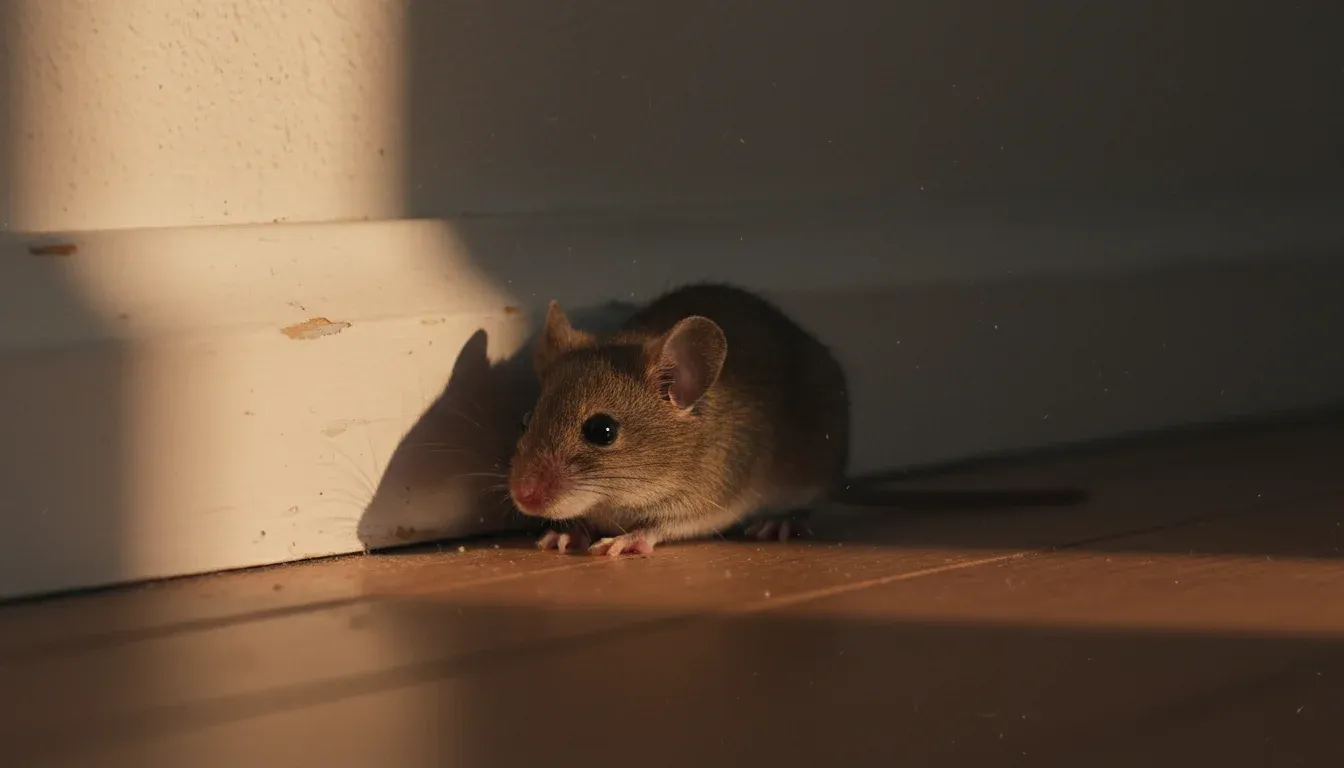
Before you set a single trap, confirm you actually have mice and figure out where they’re concentrated. Droppings (black grains of rice along walls), grease smudges on baseboards, gnaw marks on stored items, and shredded nesting materials in corners are the obvious signs. A musky urine smell in enclosed spaces seals the diagnosis.
Seeing mice during daylight means the infestation is large. Mice are nocturnal – daytime sightings mean the colony has outgrown its territory.
Track their routes with baby powder or baking soda sprinkled along baseboards and near suspected entry points. Mice leave footprints and tail drag marks that tell you exactly where to put traps and where they’re getting in. Check under cabinets, behind appliances, inside pantries, and in void spaces. They usually live within 20 ft (6 m) of their food source.
Exclusion and Structural Sealing
If you can fit a ballpoint pen into a crack, a mouse can fit through. Check where pipes enter walls, around door frames, behind appliances, and where different building materials meet. Foundations are full of gaps.
Stuff holes with steel wool first (they can’t chew through it), then seal over with caulk or expanding foam rated for pest control. Use copper wool instead of steel in wet areas (under sinks, near dryer vents, around floor drains) because it doesn’t rust and leave your seal open six months later.
Add weatherstripping around exterior doors, install door sweeps, and check the gap under your garage door. Don’t forget chimney caps – an uncapped chimney is an open invitation.
Traps
Snap traps work. They’re cheap, reusable, and instant. Place them perpendicular to walls with the trigger end facing the baseboard. Bait with peanut butter, not cheese. Use at least six in a typical house, spaced 10-15 ft (3-4.5 m) apart along walls where you’ve seen droppings.
Electric traps kill instantly and you don’t have to see the result. Good for people with kids or squeamishness about disposal. Live traps are an option if you can commit to checking every few hours and releasing catches at least a mile (1.6 km) away.
Glue traps are effective in tight spaces but they’re cruel. Use them only when no other trap physically fits. Dry ice near confirmed nests suffocates mice quickly in confined spaces like wall voids or tight attic corners.
Rodenticide and Bait Programs
If you’d rather use poison, bait stations are the safer option. Space them 8-12 ft (2.4-3.7 m) apart along walls and near confirmed activity. Refresh bait daily for at least 15 days since mice are cautious eaters.
Place bait wedges in the garage and around the exterior. Use two types (cubes and wedges) to cover different feeding behaviors. If you still hear scratching after a week, add more stations.
One warning: poisoned mice sometimes die inside walls. If you can’t tolerate the smell of decomposition, stick with traps.
Repellents and Deterrents
Peppermint oil and ammonia deter new arrivals but won’t solve an active infestation. Commercial plant-based repellents (EarthKind Stay Away, Fresh Cab) use botanical ingredients and last about 30 days per pouch. Ultrasonic repellers claim to work but evidence is mixed.
Repellents are a support tool, not a solution. Use them after you’ve trapped and sealed.
Sanitation and Habitat Reduction
Mice eat 15-20 times per day in tiny amounts. Remove their food and they leave. Dog food is the number one rodent attractant.
Transfer all dry foods into thick plastic or glass containers. Cardboard boxes and thin bags are worthless. Clean up pet food bowls overnight. Take trash out daily, use cans with tight lids.
Stack firewood at least 20 ft (6 m) from your exterior walls and elevate it off the ground. Trim vegetation within 2 ft (60 cm) of the roofline. Clean gutters twice yearly. Declutter storage areas and replace cardboard boxes with sealed plastic bins.
Where It Shows Up
Mice get into specific areas depending on the structure and access points of your home. Each location needs a different approach:
- Mice in the Attic – detection, trapping, and elimination methods for attic infestations
- Mice in Walls – finding and dealing with mice nesting inside wall cavities
- Mice in the Attic (Prevention) – exclusion and sealing methods to stop them before they get in
Traps alone won’t fix the issue if you’re not sealing entry points. Sealing entry points won’t help if you’re leaving food out. Do all of it, check progress weekly. Most infestations clear in 2-3 weeks if you stay on top of it.