Table of Contents
Trapping mice already in the attic is the easy part. Getting them out and having more move in two weeks later is the frustrating part. These seven steps cut off the access routes. Do them in order, because step one matters more than the other six combined.
1. Seal Entry Points with Foam, Steel Wool, or Cement
This one isn’t negotiable. You can trap every mouse in your attic today and three more will show up tomorrow if you leave the door open.
Mice get through openings the size of a dime (about 6 mm). Check along the roofline, where utilities enter the house, around vents and pipes, and anywhere two different building materials meet. Pay attention to soffits and eaves in particular – those gaps are often an inch wide and completely ignored.
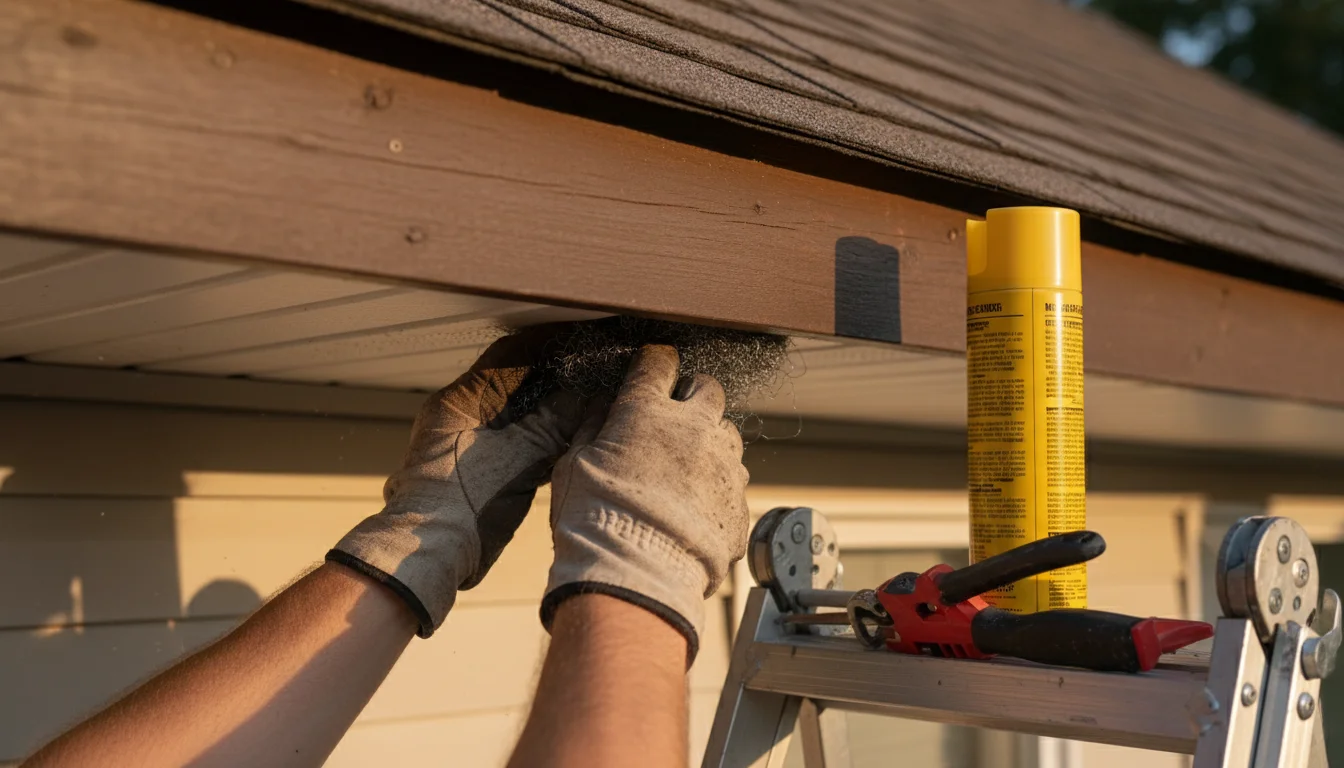
For small gaps, pack tightly with steel wool first, then seal over it with expanding foam. Foam alone won’t hold – mice chew right through it. Steel wool they won’t bother with. For larger holes, cut a piece of hardware cloth (1/4-inch wire mesh), screw it in place, then seal the edges with cement or caulk.
Do this before anything else. There’s no point in any other prevention step if mice can still walk in through your roofline.
2. Add a Chimney Cap and Close the Fireplace Damper
An uncapped chimney is an open door. Mice, squirrels, and birds all use them. They don’t climb down into the fireplace – they drop into the attic from the flue collar or find a gap in the chimney surround.
A metal chimney cap with mesh screening costs under $50 at any hardware store and takes 30 minutes to install. It also keeps rain out. There is no argument for not having one.
If you have a fireplace, keep the damper closed when it’s not in use. Mice can climb up through the firebox just as easily as they climb down from the roof.
3. Trim Vegetation Away from House
Overhanging tree branches are a bypass. Mice are good climbers but they’d rather run along a branch than cross open ground where hawks can see them. Any branch that touches or overhangs the roof gives them direct access to your roofline, bypassing whatever perimeter deterrents you’ve set up.
Trim branches so nothing is within 4 feet (1.2 m) of the structure. Focus on branches that overhang the roof, eaves, or upper-story windows. While you’re up there, clear leaf litter from the gutters – packed debris at the roofline is exactly where mice look for a foothold.
Shrubs tight against the foundation are the same problem at ground level. Keep a clear gap between foundation plantings and the house.
4. Move Firewood Away From Foundation
A woodpile against the house is a mouse condo. They nest in the gaps between logs, breed there through spring and summer, and when the temperature drops they follow the warmth into your walls through gaps you didn’t know existed.
Stack firewood at least 20 feet (6 m) from exterior walls and get it off the ground on a rack or pallets. Elevated storage reduces nesting and keeps the wood dryer anyway.
Check each log before you bring it inside. Not a joke – mice hitch rides in on firewood more often than people realize. Same rule applies to lumber piles and construction material stacked near the foundation. If it’s stacked against your house, get it away.
5. Set Ultrasonic Repellers on High-Traffic Areas
The evidence here is mixed, and that’s being generous. Some people see results. A lot don’t. What seems to matter is frequency variation – mice habituate to a single tone within a few days, so fixed-frequency units are mostly useless after week one.
If you try them, get a model with rotating or variable frequencies. Plug them in near entry points and along walls where you’ve seen activity. Give it two weeks. If you’re still finding fresh droppings, stop spending money on them.
Use ultrasonic repellers as a supplement, not a strategy. Seal the house first. If you’ve done that properly and still want an extra layer, fine. But don’t let repellers substitute for entry point work.
6. Store Attic Items in Sealed Plastic Bins
Cardboard boxes are mouse housing. They chew through the walls for nesting material, nest inside them, and use the stacks as cover while they move around the attic. An attic full of cardboard boxes is a functional mouse habitat.
Replace them with hard plastic bins with tight-fitting lids. Brand doesn’t matter – Rubbermaid, Sterilite, whatever seals properly. Fabric items, old clothes, and holiday decorations are especially attractive for nesting; get those into sealed bins first.
An attic with plastic bins and clear floor space gives mice nowhere to hide and nothing to work with. It also makes fresh droppings much easier to spot.
7. Clean Up Pet Food Immediately
Don’t leave bowls down when pets aren’t actively eating. Mice will work around a sleeping dog to get to a bowl of kibble left out overnight. Pick up bowls after meals, store opened bags in hard-sided sealed containers, and sweep up any spilled kibble on the floor.
For outdoor pets, bring bowls inside at night. An outdoor food station after dark is a guaranteed mouse draw.
Birdseed and wild animal feed are equally attractive – possibly more so, since they’re often stored in the bags they came in, in a shed or garage with gaps. Move them to metal garbage cans with lids. A reliable food source near your house is a strong enough incentive for mice to find the entry points you missed. Remove the food and you remove most of the motivation.