Table of Contents
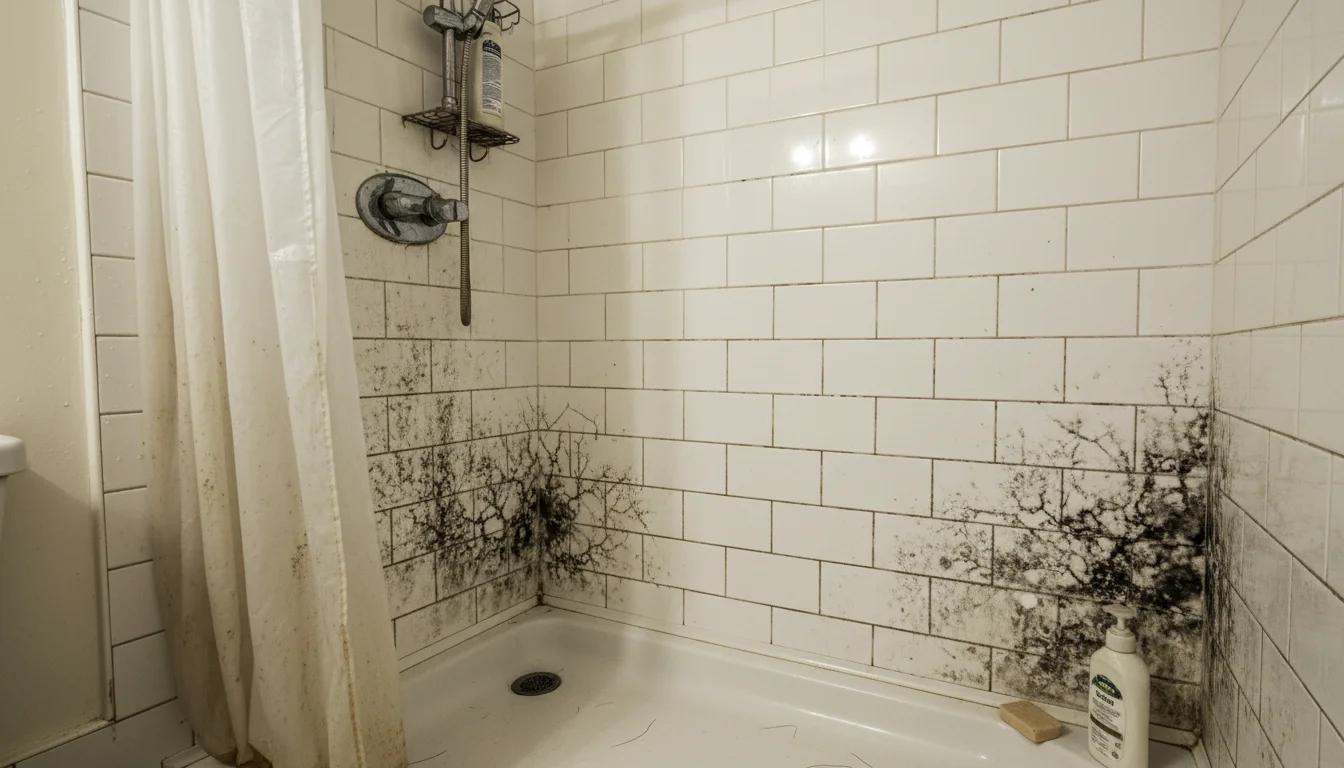
Bathroom mold doesn’t need much. A damp surface, a dark corner, and a few days of neglect will do it. The black or brown spots along your grout lines, around the tub seal, or creeping up the shower curtain are all the same problem: moisture sitting somewhere it shouldn’t. These methods cover removing it and stopping it from coming straight back. They work on tiles, grout, walls, ceiling patches, and doors – wherever you’re seeing it.
1. Clean with Bleach Solution
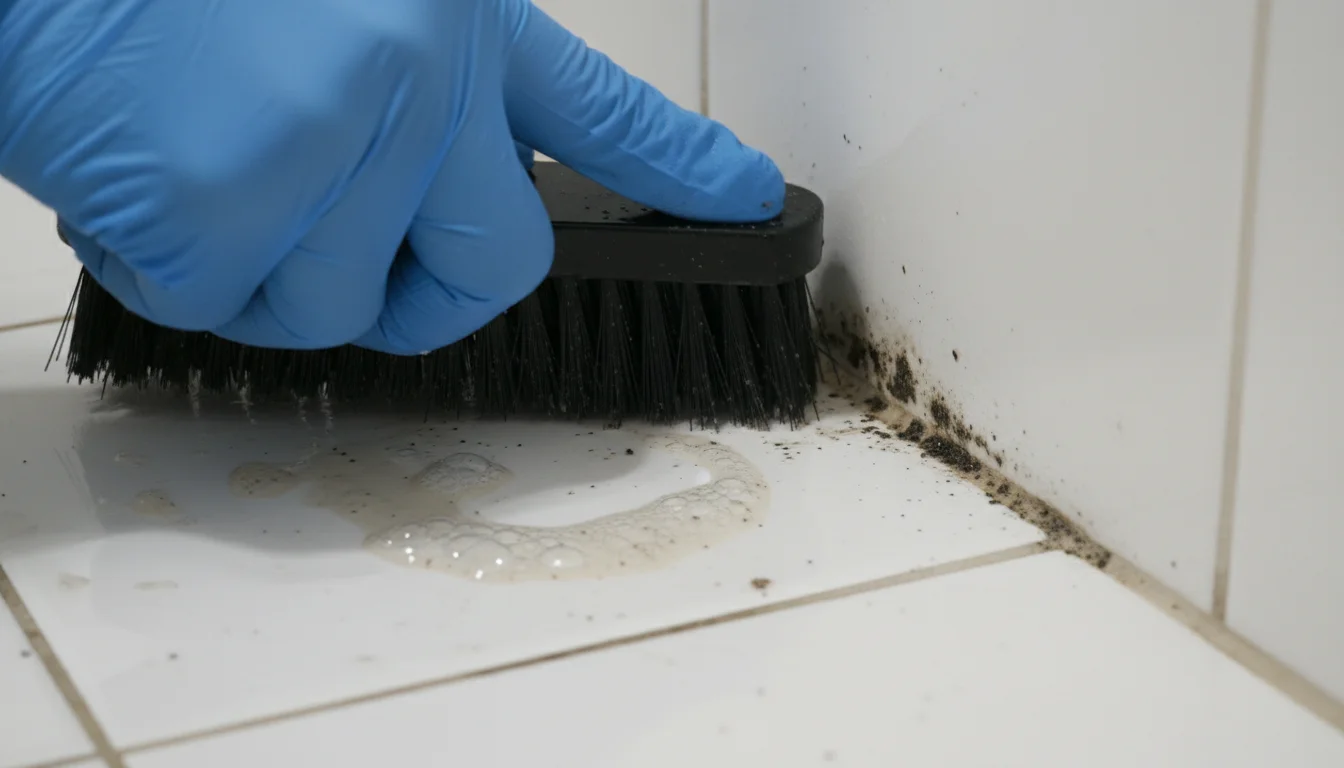
The fastest thing that actually kills bathroom mold. Mix 1 cup (240 ml) of chlorine bleach with 1 gallon (3.8 L) of warm water – this is the ratio the CDC recommends and it’s strong enough to kill mold without being wasteful. Wear rubber gloves, open the window, and turn the fan on before you start.
Dip a stiff-bristled scrubbing brush in the solution and work it into the grout lines and affected tiles. Let it sit for 5 minutes before wiping clean with a damp cloth. The spots should come off with minimal resistance once the bleach has had time to work. For tight grout lines, swap the brush for an old toothbrush and get into the channels properly. Rinse the surface with clean water once you’re done.
Don’t skip the ventilation. Bleach fumes in a small bathroom with no airflow are genuinely unpleasant, and a bathroom is about as enclosed as it gets. Running the fan during and for 15-20 minutes after protects you and helps the treated surfaces dry faster.
2. Use a Commercial Mold Remover Spray
If you’d rather not mix your own bleach solution, commercial mold remover sprays are a solid alternative. They contain fungicides (not just bleach) that kill mold on contact and some include biocides that slow regrowth. They’re also formulated for surface compatibility, so they’re less likely to damage painted walls or coloured grout than straight bleach.
Spray the affected area, wait the full dwell time on the label – usually 10-15 minutes – then wipe clean. The dwell time matters; wiping too early cuts the kill rate. Look for products labelled as mold killers specifically, not just general bathroom cleaners. And don’t mix this with anything else in the process. Combined cleaning products can produce fumes you don’t want in a small room.
3. Clean with Mild Detergent Solution
For light surface mold on painted walls or regular maintenance after heavy mold is gone, bleach is overkill. Mix 1 teaspoon of dish soap with 1 quart (950 ml) of warm water. Dampen a cloth – don’t soak it – and wipe the affected area.
This is also the method to use if you caught the problem early. Rinse with clean water and dry the surface thoroughly after. Leave it damp and you’re just resetting the conditions that caused mold in the first place. The mild soap solution won’t bleach your grout or leave a residue on tiles. Use it weekly on problem areas and you’ll rarely need to reach for the bleach.
4. Dispose of Cleaning Cloths After Use
This one gets skipped, and then people wonder why the mold keeps spreading to surfaces they didn’t even touch.
Mold spores embed in cloth and sponge fibers. Wipe one area, toss the cloth in the sink, pick it up later, and you’ve just seeded the next patch. Put used cleaning materials directly into a plastic bag, seal it, and take it out to the bin immediately. Don’t run moldy cloths through the washing machine either – you’ll contaminate the drum and spread spores through future loads of laundry.
Paper towels are the right tool for mold cleanup. Cheap, single-use, and you can bag them the moment you’re done. The cost is nothing compared to finding mold on surfaces it didn’t start on.
5. Extend Shower Curtain and Run the Fan
This is the single highest-impact daily habit for keeping bathroom mold away. It costs nothing and takes about three seconds.
After every shower, pull the curtain fully extended so it dries flat instead of bunching up in damp folds. Bunched curtains stay wet for hours. The folds are where mold colonies start. Run the exhaust fan for 15-20 minutes after you finish – not just while you’re in the shower, but after you leave. That’s when moisture is still sitting on every surface, slowly being absorbed by grout and caulk and the back of the door.
If you don’t have an exhaust fan, crack the door and a window. The goal is moving air through the room, not just having a vent in the ceiling that rarely gets used.
6. Wash or Replace Shower Curtains Regularly
Fabric shower curtains can go straight in the washing machine. Throw in a couple of old towels with them – they act as scrubbers against the curtain in the drum. Add half a cup (120 ml) of baking soda along with your normal detergent. Run a normal cycle and hang it back up while it’s still slightly damp so it dries flat rather than creased.
Plastic liners are a different problem. They get moldy faster, the spores work into tiny scratches in the surface, and no amount of bleaching clears it completely. Replace them every few months. A plastic liner costs about $5. The time you’d spend trying to scrub it back to clean isn’t worth it when the mold comes back in two weeks anyway. Just toss it and start fresh.
7. Rip Out Any Wall-to-Wall Carpet
Bathroom carpet is a mold factory. It absorbs water, holds moisture for days, and you can’t see what’s happening underneath until the problem has already spread to the subfloor.
Tile, vinyl, or sealed concrete are all fine. If you’ve inherited carpet, take it out. Check the subfloor underneath carefully – there’s a good chance there’s mold already growing on the surface you couldn’t see, and skipping this step means sealing the problem in under new flooring. Treat any affected subfloor area with bleach solution and let it dry completely before you put new flooring down. Washable bath rugs you can throw in the machine every week are fine. Permanent carpet that lives in a room where water gets on the floor regularly is not.