Table of Contents
Mold in your house is a moisture problem wearing a mold costume. You can clean visible patches all you want, but if the underlying humidity and ventilation issues aren’t fixed, it’s back within weeks. The methods below cover both sides: controlling the conditions that let mold thrive, and cleaning it when it’s already there.
Open Windows for Ventilation
The fastest way to improve indoor air quality is also the cheapest: open your windows. Stale air holds moisture; fresh air displaces it.
Open windows on opposite sides of your home to create cross-ventilation. This pulls fresh air through and pushes humid air out more effectively than a single open window. Even in winter, five minutes of fresh air circulation does more than you’d think.
Focus on the worst rooms first. Bathrooms, kitchens, and basements trap moisture. A solid burst of airflow moves out damp, stale air and replaces it with dry air from outside. Make this a daily habit – ten minutes each morning, even in cold weather.
Use Extractor Fans
Extractor fans in bathrooms and kitchens only work if you use them correctly. Turn the fan on before you start showering or cooking, and leave it running for 15-20 minutes after you finish. Not five minutes while you dry off. A full 15-20 after you leave the room.
Clean fan covers and filters monthly. A clogged fan moves almost no air and becomes useless. If your fan is noisy or weak, it probably needs replacing. Modern extractor fans are quiet, energy-efficient, and dramatically better than what was installed in most homes 20 years ago.
Avoid Drying Clothes on Radiators
Drying laundry indoors releases moisture directly into your living space. A single load of washing can release around 2 liters (half a gallon) of water as it dries. When you drape clothes over radiators, that moisture goes straight into the air, raises humidity, and eventually condenses on walls and windows.
If you must dry clothes indoors, use a clothes airer in one room with the window open or a dehumidifier running. Better yet, use a tumble dryer vented to the outside, or dry clothes outdoors when weather permits. The convenience of radiator drying isn’t worth the mold risk.
Wear Protective Gloves and Mask
Before cleaning mold, protect yourself. Mold releases spores when disturbed. Those spores trigger allergies, asthma attacks, and respiratory issues – especially in people who are already sensitive.
Wear rubber gloves, safety goggles, and an N95 respirator mask (not a standard dust mask – N95 or better). Long sleeves and pants prevent skin contact. Open windows for ventilation while you work.
If you have asthma, allergies, or a compromised immune system, don’t clean mold yourself. Hire a professional. The health risks aren’t worth saving money on a cleaning job.
Washing Clothes Regularly
Clothes that have been in humid environments pick up mold spores. Left in a pile or a hamper, they become a spreading point.
If you find moldy clothes, take them outside and brush off visible growth before bringing them indoors. Hand-wash first with soap and water. For machine washing, add 1 cup of white vinegar per load – vinegar breaks down mold and kills the musty smell. Bleach works too, but check care labels first. Some fabrics can’t handle it.
Don’t leave damp clothes sitting in the washing machine drum for hours. They’ll mold faster there than almost anywhere else in the house.
Maintain Humidity Below 50%
Mold needs moisture. Keep indoor humidity between 30-50% and it can’t establish itself. Buy a cheap hygrometer (under $15 at any hardware store) and check it regularly.
If your house is consistently over 50%, you’re creating ideal mold conditions. Run your HVAC system more often, crack windows when weather permits, and fix any leaks immediately. Humidity spikes in summer and in poorly ventilated rooms – monitor it before mold gets a foothold rather than after.
Dehumidifier
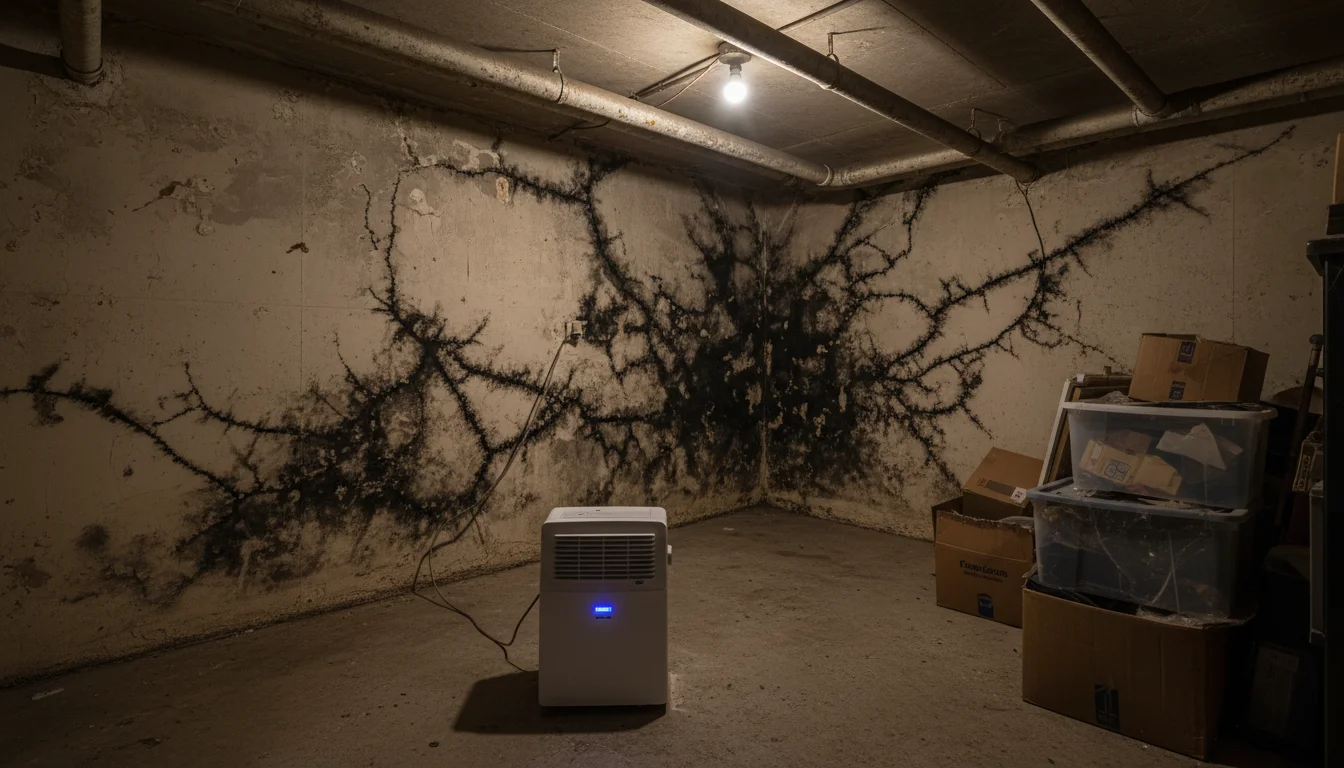
A dehumidifier is the most effective direct tool for moisture control in damp spaces. Set it to maintain 30-50% relative humidity. Empty the reservoir daily, or set up continuous drainage through a hose to a floor drain or sump pump.
Size matters. For consistently damp spaces, you need roughly 30-50 pint capacity for every 1,000 square feet (93 sq meters). Run it continuously during humid summer months. You’ll notice a real improvement in smell and air quality within days once humidity consistently drops below 60%.
Install Multiple Humidity Monitors Throughout Home
One hygrometer in the living room won’t tell you the full story. Humidity varies significantly by room. Your living room might be fine while your basement is a swamp.
Put monitors in the basement, bathrooms, laundry room, and any room that feels damp or smells musty. Digital ones with remote sensors let you check everything from a single display or your phone. Track trends over a few weeks. If one room is always running high, you’ve got a ventilation or moisture source to fix.
AC Equipment Inspection and Cleaning
Your air conditioner pulls moisture out of the air, which makes the coils and drip pans ideal mold environments. Turn off the unit and remove the access panel.
Check the evaporator coils for visible mold or slime buildup. Spray them with a coil cleaner (available at hardware stores) and let it drain. Clean or replace the air filter. Check the condensate drain line and make sure it isn’t clogged – a clogged drain backs up water into the pan, which becomes a mold incubator. Flush the drain line with a mixture of bleach and water once a year to keep it clear.
HEPA Air Purifiers with Carbon Filters
HEPA filters trap mold spores before they settle and start growing. Carbon filters handle the musty odor. Put purifiers in rooms with mold problems or chronic dampness.
Run them continuously during humid months. Change filters on schedule – a clogged filter stops capturing spores and starts blowing them back out. Air purifiers don’t fix the moisture problem, but they reduce airborne spore counts while you’re working on the actual cause.
Professional Inspection and Spore Counting
If you’ve got mold in multiple rooms, recurring growth after cleaning, or you can smell it but can’t find it, call a professional. They’ll do air sampling and spore counts to identify the species and concentration.
Some molds are more hazardous than others. Any mold in high concentrations is a health risk. Professionals use moisture meters and thermal imaging to find hidden mold behind walls or under floors that visual inspection misses entirely. Expect to pay $300-$800 for a thorough inspection.
Professional Mold Remediation
Large infestations (more than 10 square feet), mold in HVAC ducts, or mold caused by sewage or contaminated water require professional remediation. They’ll seal off the area, use HEPA vacuums and air scrubbers, remove contaminated materials, and treat surfaces with antifungal agents.
DIY mold removal is fine for small patches on hard surfaces. But structural damage, recurring mold after repeated cleaning, or health issues mean you need professional equipment and training. Costs range from $500 for a small job to $6,000 or more for severe cases. Expensive, but cheaper than the health and structural costs of leaving it.