Table of Contents
Cleaning mold off a wall is easy. Stopping it from coming back is the part most people skip. If you scrub the patch without fixing the moisture source, it’s back within weeks – usually bigger. Before you reach for anything, you need to know what you’re dealing with: where it is, how bad it is, and why it’s there. That order matters.
1. Understand the Causes of Mold Growth
Mold needs three things: moisture, something to feed on, and time. You can’t remove the food source – dust on walls, paint, paper, and wood are everywhere in a home. You also can’t do much about time. Moisture is the only lever you actually control.
Most wall mold traces back to one of three moisture sources: condensation building up on cold surfaces, ground moisture wicking up through old masonry, or water finding its way in from outside. The fix is completely different for each, so diagnosing the source before cleaning isn’t optional – it’s the whole job. Clean without fixing the source and mold can re-establish within 24-48 hours.
2. Visual Inspection for Black, Green, or Orange Patches
Walk every room with fresh eyes. Mold shows as black, green, or orange patches – sometimes fuzzy, sometimes flat and powdery. Don’t just check the obvious spots like bathroom grout and shower corners.
Check: behind furniture pushed against external walls, inside wardrobes on external walls, under windowsills, in corners where two external walls meet, behind the kickboards under kitchen cabinets, and anywhere below a visible waterline or tide mark. Dry powdery deposits might be old mold, mineral deposits from rising damp, or paint failure – treat them the same. Document where patches appear before you start cleaning so you can track whether they come back and where.
3. Smell Test for Damp, Musty Odor
Your nose will find mold your eyes miss. Mold smells like wet cardboard or rotting wood – damp, earthy, and persistent. If a room smells musty even when it looks clean, there’s active mold somewhere you haven’t found yet.
Get close to walls and sniff in corners, behind built-in furniture, inside cupboards mounted on external walls, and in the gap between the floor and skirting. The smell gets noticeably stronger within a foot or two of the source. Musty smell that disappears in summer but returns in autumn usually points to condensation. A smell that persists year-round and gets stronger after rain suggests penetrating damp or rising damp. That distinction narrows down the fix.
4. Control Condensation
Condensation is behind most wall mold in modern homes, especially in bedrooms and bathrooms. It forms when warm, moist air hits a cold surface – an external wall, a window frame, an uninsulated corner – and the water vapor turns to liquid. You’ll see it as water droplets on windows in the morning before you even notice the mold patches forming nearby.
The scale surprises most people. The average adult releases nearly 0.5 L (17 fl.oz) of water vapor daily just through breathing – add cooking, showers, and drying laundry indoors and you understand why condensation is so persistent.
Tackle it from multiple angles: keep indoor temperatures consistent (sudden drops cause more condensation than steady warmth), insulate cold external walls and corners, and ventilate. Open windows briefly each morning to swap humid indoor air for drier outdoor air. Wipe windowsills when you see moisture building. Furniture pushed against external walls traps cold air behind it and creates damp pockets – pull it 5-10 cm (2-4 in) away from the wall. These aren’t dramatic fixes, but done consistently they break the conditions mold needs.
5. Identify Rising Damp Issues
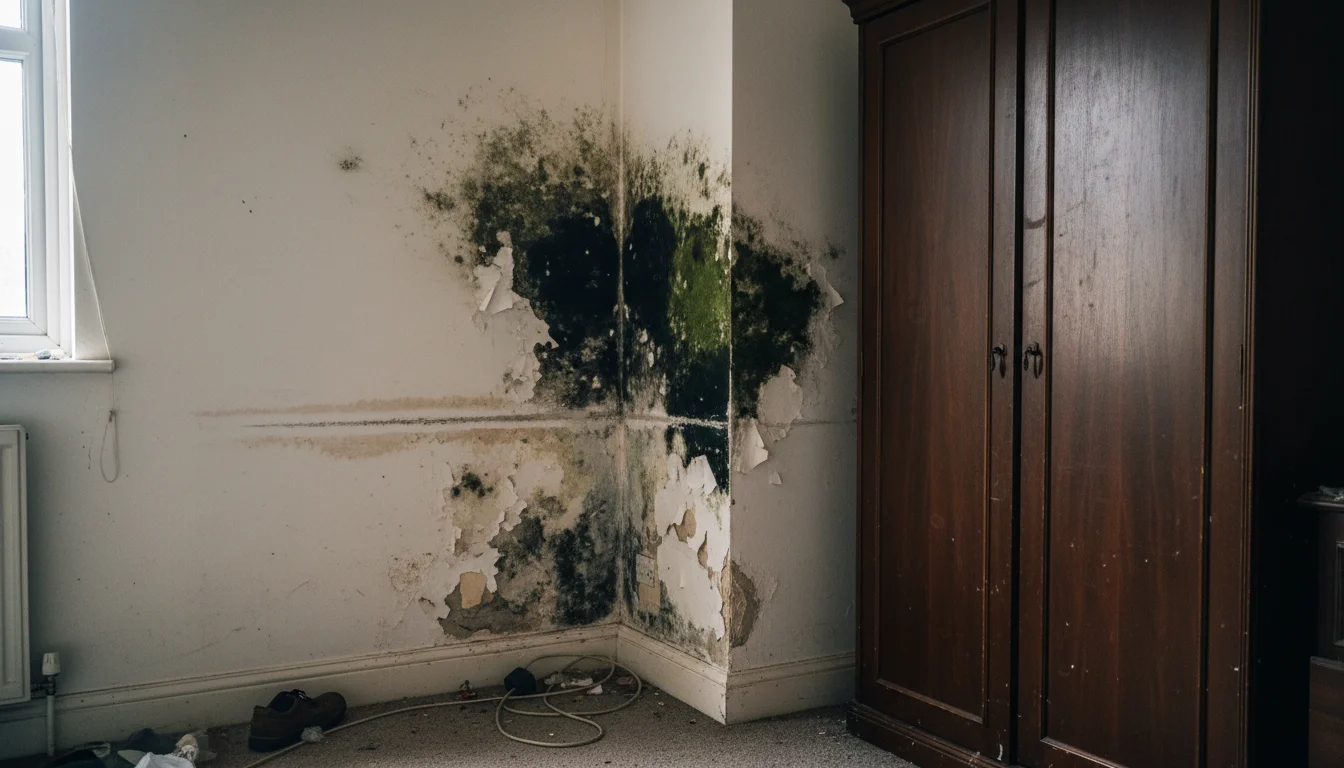
Rising damp is the one readers in older homes need to rule out. It happens when moisture from the ground wicks upward through walls and floors – typically in houses without a functioning damp-proof course or where the existing one has failed. Giveaway signs: tide marks on walls at low levels, peeling wallpaper near the base, crumbling plaster, and a musty smell that doesn’t go away even in summer.
This is different from condensation: condensation mold tends to appear higher on walls and on ceilings, while rising damp stays low. Fixing it requires professional work – a damp-proof course needs to be installed or repaired via chemical injection, electro-osmotic systems, or physical membrane installation. Don’t paint over rising damp with sealant – it’ll come back worse and the wall will eventually need structural repair.
6. Address Penetrating Damp
Penetrating damp is water coming in from outside through damaged brickwork, cracked render, leaking gutters, failed roof tiles, or deteriorated window seals. Unlike rising damp (which stays near the base), penetrating damp can show up anywhere on a wall – and the patch location gives you a clue about the entry point.
Inspect the exterior: missing or cracked roof tiles, blocked gutters, cracked pointing, damaged flashing around chimneys. Inside, note whether damp patches appear after heavy rain and where they sit relative to external features. Fix the water source first, then allow the wall to dry fully before treating the mold – masonry can take weeks to dry depending on how long water has been getting in. Without closing the entry point, nothing you clean it with will last.
7. Monitor Wooden Furniture
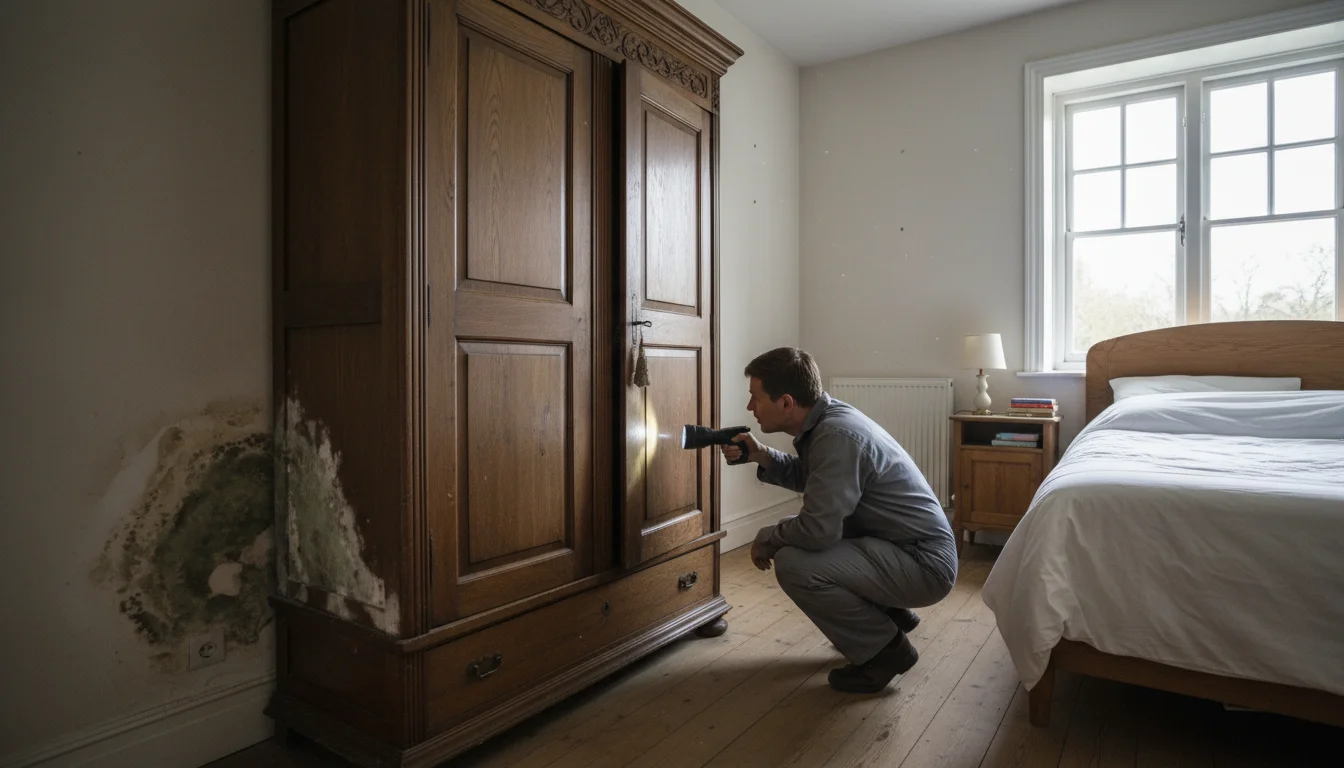
Wooden and wood-composite furniture on external walls or in damp rooms is worth checking separately. It can develop mold on its back panels – the hidden face sitting closest to a cold or damp wall – while the front looks fine. Pull wardrobes, bookcases, and bed frames away from external walls and inspect the backs and the wall section behind them.
If you find mold on furniture: mix dish soap with warm water, soak a cloth, and wipe down the affected surfaces. Keep windows open while you clean and don’t scrub toward your face. If furniture mold keeps returning in the same spot, that’s the wall doing it – the furniture is the symptom, not the problem. Fix the wall moisture and the furniture will stay clean.
8. Vinegar Cleaning Solution
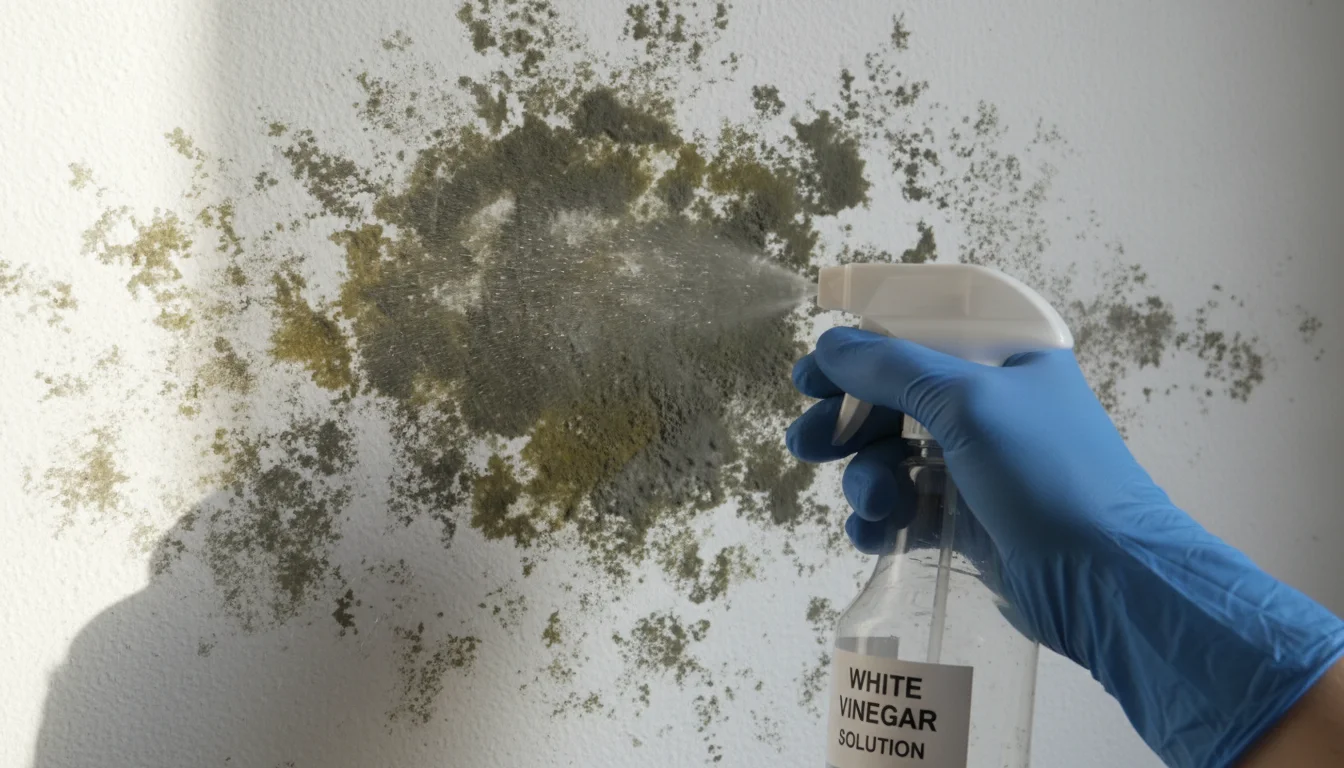
Once the moisture source is under control, clean the surface. White vinegar kills mold on contact and breaks down the staining. Mix equal parts white vinegar and water in a spray bottle, spray directly onto the affected area, and let it sit for at least an hour before scrubbing with a stiff brush and wiping clean.
Works well on painted walls, tiles, grout, and baseboards. The vinegar smell disappears as it dries. Two limits: don’t use this on natural stone (marble, granite, limestone) because the acid etches the surface, and it won’t penetrate deep into porous or crumbling materials. For surface mold on sound painted walls, it does the job without fumes.
9. Clean with Hydrogen Peroxide
For stubborn patches or surfaces where you want something stronger than vinegar without reaching for bleach, 3% hydrogen peroxide (standard drugstore strength) is the escalation. Spray it on undiluted, wait 10 minutes, then scrub and rinse. It’ll fizz when it hits active mold – that’s it breaking down the cell structure.
Effective on non-porous surfaces: tiles, glass, painted walls, sealed grout. Less harsh than bleach, no fumes. The key caution: don’t mix hydrogen peroxide with vinegar or bleach. Use one or the other. If mold patches cover more than roughly 10 sq ft (1 sq m), or if they keep returning despite fixing the moisture source, that’s when you bring in a professional rather than keep cleaning the symptom.