Table of Contents
Mosquitoes don’t just prefer standing water – they require it. Every mosquito biting you this summer started as a larva wriggling in a puddle, a forgotten bucket, or a clogged gutter somewhere on or near your property. You can’t spray your way out of this problem. The only fix that actually works is eliminating the breeding sites. Treat the source, not the symptom.
Eliminate Standing Water with the Tip and Turn Method
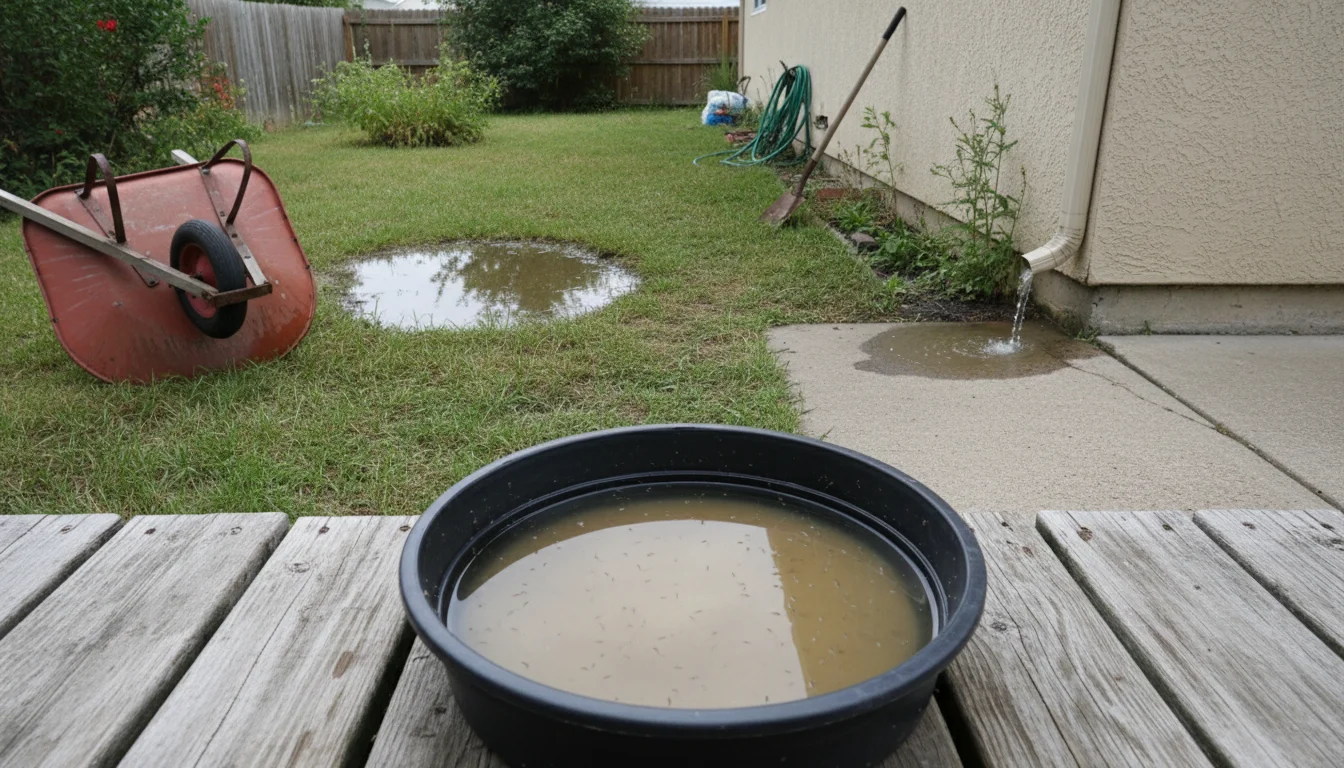
Walk your property and tip over anything that collects water: flower pots, wheelbarrows, buckets, kids’ toys, tarps, grill covers, trash can lids. Turn them upside down so they can’t refill in the next rain.
Pay specific attention after rain. That plastic saucer under your potted plant probably has mosquito larvae wriggling in it right now. Empty it, scrub it with a brush to remove eggs stuck to the sides, and either remove it entirely or check it every five days. This single habit does more to reduce mosquito populations than any repellent spray.
Don’t forget: pool covers, tire swings, tarp folds, low spots in tarps, the base of bird feeders, plant drainage trays, and any container that can hold even an inch of water. Mosquitoes don’t need much.
Empty and Scrub Water Containers Weekly
Some water containers can’t be eliminated – bird baths, pet water bowls, outdoor planters. For these, change the water completely every five to seven days. Mosquito eggs become flying adults in 7-10 days, so a weekly refresh disrupts the lifecycle before it completes.
Scrub the container while you’re changing the water. Mosquito eggs can survive drying out and will hatch when water returns. A quick scrub with a stiff brush removes dormant eggs from the sides and bottom. For bird baths, this routine also keeps the water fresh – better for the birds and eliminates the breeding site simultaneously.
Maintain Gutters and Drainage
Clogged gutters are mosquito factories. Leaves and debris trap standing water that sits for weeks, out of sight and out of mind. Clean your gutters at least twice a year – spring and fall – and check them after heavy storms.
While you’re at it, look for other drainage problems around the property: low spots in the yard that hold water for more than a day after rain, leaking outdoor faucets creating puddles, AC drip pans overflowing, and sump pump discharge areas. Fix leaks and fill low spots with soil or gravel to improve drainage. Every persistent wet spot is a potential breeding ground.
Treat Standing Water with Larvicide
For water you can’t eliminate – ornamental ponds, rain barrels, drainage ditches, large decorative containers – use larvicide products containing Bacillus thuringiensis israelensis, known as Bti. This naturally occurring bacteria kills mosquito larvae but is safe for fish, birds, pets, frogs, and humans.
Mosquito Dunks and Mosquito Bits are the most widely available products. Drop a dunk into standing water and it slowly releases Bti over 30 days. Bits work faster for immediate knockdown. Both are available at garden centers and online.
This is the right tool for larger water features where draining isn’t practical. Use it alongside the tip-and-turn method, not as a replacement for it.