Table of Contents
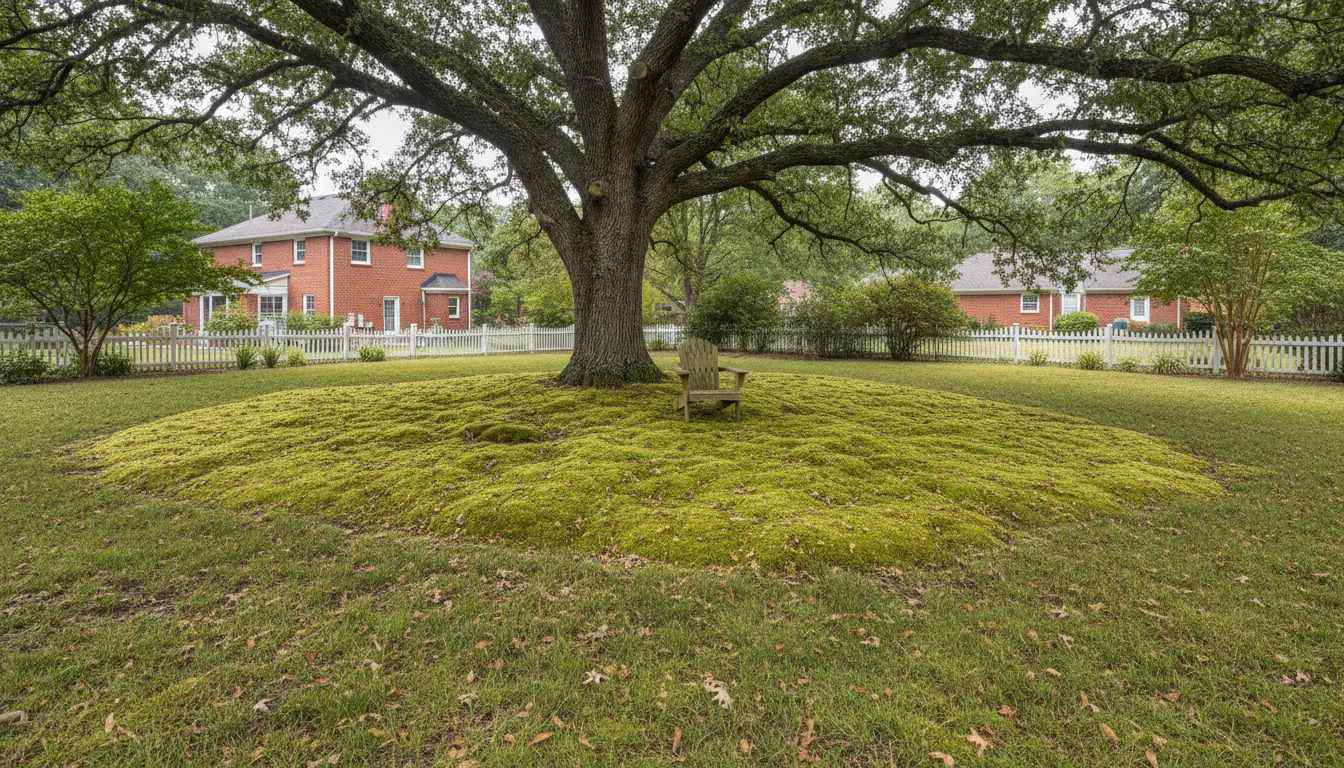
If you’re trying to figure out how to get rid of moss in lawn areas, start here: moss doesn’t invade a healthy lawn – it moves into conditions that grass can’t handle. As Clint Waltz, a turfgrass extension specialist at the University of Georgia, puts it: moss is opportunistic. It doesn’t compete with turf for water and nutrients; it’s there because the conditions aren’t favorable for grass.
That framing matters because it tells you what to do. Raking out moss or spraying it with iron sulfate gives you a temporary window, but if you don’t change the underlying conditions, moss returns every season. The seven methods below are ordered by cause – start with whatever condition matches your lawn.
1. Trim Trees and Shrubs for Light
If your moss is concentrated under trees or near overgrown shrubs, shade is the primary cause. Moss tolerates shade far better than most lawn grasses. Increasing light is a direct solution and worth doing before anything else.
Prune lower limbs on trees to raise the canopy and let more light reach the ground. Removing branches up to 10-15 ft (3-4.5 m) from the ground on mature trees dramatically increases ground-level light without harming the tree – but don’t remove more than 25% of a tree’s canopy in a single season. Thin out dense shrubs. Remove or severely cut back anything creating deep shade over lawn areas.
More light means faster drying after rain, warmer soil, and conditions that favor grass over moss. No amount of lime or aeration will fix moss in an area that only gets two hours of sun per day.
2. Test and Adjust Soil pH
Moss thrives in acidic soil. Most lawn grasses prefer a pH of 6.0-6.5; if your soil is more acidic than that, moss has a competitive advantage. Get a soil test kit from a garden center or send a sample to your county extension service for a detailed analysis (often free or under $15 with nutrient results included).
If pH is below 6.0, apply pelletized lime at the rate specified by the test results. Lime raises pH gradually – wait 2-3 weeks after application before overseeding, and expect 3-6 months before conditions shift enough to see results. Test again the following season to confirm the adjustment held.
This is the most targeted fix for moss because it changes the chemical conditions that favor it over grass. Applying lime without testing is guessing. The test tells you whether pH is actually the problem and what rate to apply.

3. Aerate Compacted Soil
Compacted soil stresses grass by restricting root growth and reducing drainage and air movement. In those conditions, grass weakens and moss fills the gap. Core aeration removes plugs of soil and opens channels for water, oxygen, and nutrients to reach roots.
Rent a core aerator or hire it out. Core aerators outperform spike aerators, which can actually increase compaction by pushing soil sideways rather than removing it. For cool-season lawns (Kentucky bluegrass, fescues, ryegrass), aerate in fall when grass is actively growing. For warm-season grasses (Bermuda, zoysia, St. Augustine), late spring is the right window.
One pass per year is enough for most lawns. Follow up immediately with overseeding and fertilizer – the open soil channels dramatically improve seed establishment. Healthy grass filling in is what pushes moss out.
4. Fix Drainage Issues
Moss needs consistent moisture to establish and spread. Areas where water pools after rain or soil stays soggy for more than a few hours are prime moss territory. After a rainy period, walk your yard and identify low spots or areas with consistently wet soil.
Fixes depend on the problem. A low spot that collects water can often be leveled with topsoil and reseeded. Soil compaction contributing to poor drainage is addressed with aeration (method 3). For chronic waterlogging on slopes or near structures, French drains or dry creek beds redirect water away before it saturates the soil.
In areas where drainage can’t be improved – a naturally wet depression, a spot that stays wet because of a water table – grass rarely wins regardless of other interventions. Method 7 covers what to do there.
5. Reduce Irrigation
Overwatering – especially in shady areas where evaporation is slow – creates the wet conditions moss prefers. Most lawns need about 1 in (2.5 cm) of water per week total, including rainfall. Water deeply once or twice a week rather than shallowly every day. Deep, infrequent watering encourages grass roots to grow deeper, which makes the grass more competitive and reduces the surface moisture moss exploits.
Automatic irrigation schedules are the most common culprit. A shaded area that gets the same schedule as a sunny patch stays wet much longer – sometimes perpetually during cool, cloudy periods. Shaded zones typically need 20-30% less water than sunny zones. If you can’t program zones separately, reduce overall frequency and water manually if needed.
6. Plant Shade-Tolerant Grasses
If you can’t increase light enough for standard grass varieties, switch to species that handle shade. Fine fescues – creeping red fescue, hard fescue, chewings fescue – are the most shade-tolerant cool-season grasses, surviving in 3-4 hours of direct sun where Kentucky bluegrass or perennial ryegrass fail. In warm climates, St. Augustine grass handles more shade than other warm-season options.
Overseed shaded areas in fall with a shade-mix blend that’s primarily fine fescues. Keep those areas consistently moist (not soaked) until established. This method fails if combined with too-frequent irrigation, so adjust your schedule after seeding.
Seeding with a generic mix that’s mostly Kentucky bluegrass into a shaded area is a losing battle. The grass variety selection is often what determines whether a lawn fights moss indefinitely or reaches a stable state.
7. Plant Groundcovers Instead of Grass
Some areas simply won’t support grass regardless of what you do – too shady, too dry under a tree canopy, too rocky, or too compacted to change. In those spots, replace the grass with shade-tolerant groundcovers: pachysandra, vinca minor (periwinkle), ajuga, sweet woodruff, or wild ginger. These establish where grass fails and crowd out moss by filling the ground layer with something that actually thrives in those conditions.
Prepare the area by removing existing moss and vegetation, loosen the top 3-4 in (7-10 cm) of soil, and plant plugs or divisions at 8-12 in (20-30 cm) spacing. Most groundcovers take one full growing season to fill in enough to suppress moss.
This is the most rational choice when the underlying conditions can’t be changed. Trying to grow grass in deep shade under a mature tree means perpetual overseeding, fertilizing, and moss battles – with moss winning anyway. Accepting the conditions and planting something that works there eliminates the problem permanently.
Prevention
The key is maintaining conditions that favor grass over moss year-round. Mow regularly – weekly during active growth – and follow the one-third rule: never remove more than one-third of grass height at once. Consistent mowing encourages lateral growth that shades out moss at ground level.
Test soil pH every 2-3 years and apply lime as needed. Moss can re-establish quickly when pH drifts back into the acidic range, especially in high-rainfall areas where calcium leaches out faster.
For shaded areas, iron sulfate (ferrous sulfate) sprayed at 3-5 oz per 1,000 sq ft (90-150 g per 90 sq m) turns moss black within days and kills it without harming established grass. This is a suppression tool, not a fix – it’s useful when moss appears in otherwise managed areas, but won’t solve the problem in areas where conditions haven’t been corrected.
Keep your lawn fertilized appropriately for your grass type. Dense, actively growing grass is the single best defense against moss. A weak, thin lawn is always at risk.
Frequently Asked Questions
What kills moss in a lawn without killing the grass?
Iron sulfate (ferrous sulfate) kills moss and is safe for grass. Products containing iron sulfate are sold at garden centers specifically for moss control in turf. Spray at 3-5 oz per 1,000 sq ft when moss is actively growing. It turns moss black within a few days. Note: iron sulfate stains concrete permanently – keep it off driveways and pathways.
Why does moss keep coming back after I remove it?
Because removal doesn’t change the conditions that caused it. Raking, burning, or spraying moss gives you a temporary clear patch. If soil pH is acidic, drainage is poor, shade is heavy, or compaction is high, moss re-establishes from spores within one to two seasons. Fix the underlying condition – usually shade, pH, or moisture – or expect to do this annually.
Does moss mean my lawn is unhealthy?
It means conditions favor moss over grass in that spot. That could be temporary (a wet spring, a tree that’s grown larger) or chronic (permanent shade, poor drainage, naturally acidic soil). Moss itself isn’t damaging to soil – it’s a sign of conditions that need addressing if you want grass there.
How long does it take to get rid of moss in a lawn?
Depends on which method you use. Iron sulfate kills active moss in a week. pH correction takes 3-6 months to shift conditions measurably. Drainage fixes and groundcover establishment take one growing season. Pruning for light shows results within weeks. Expect a full year of consistent effort before moss is consistently suppressed in most problem areas.