Table of Contents
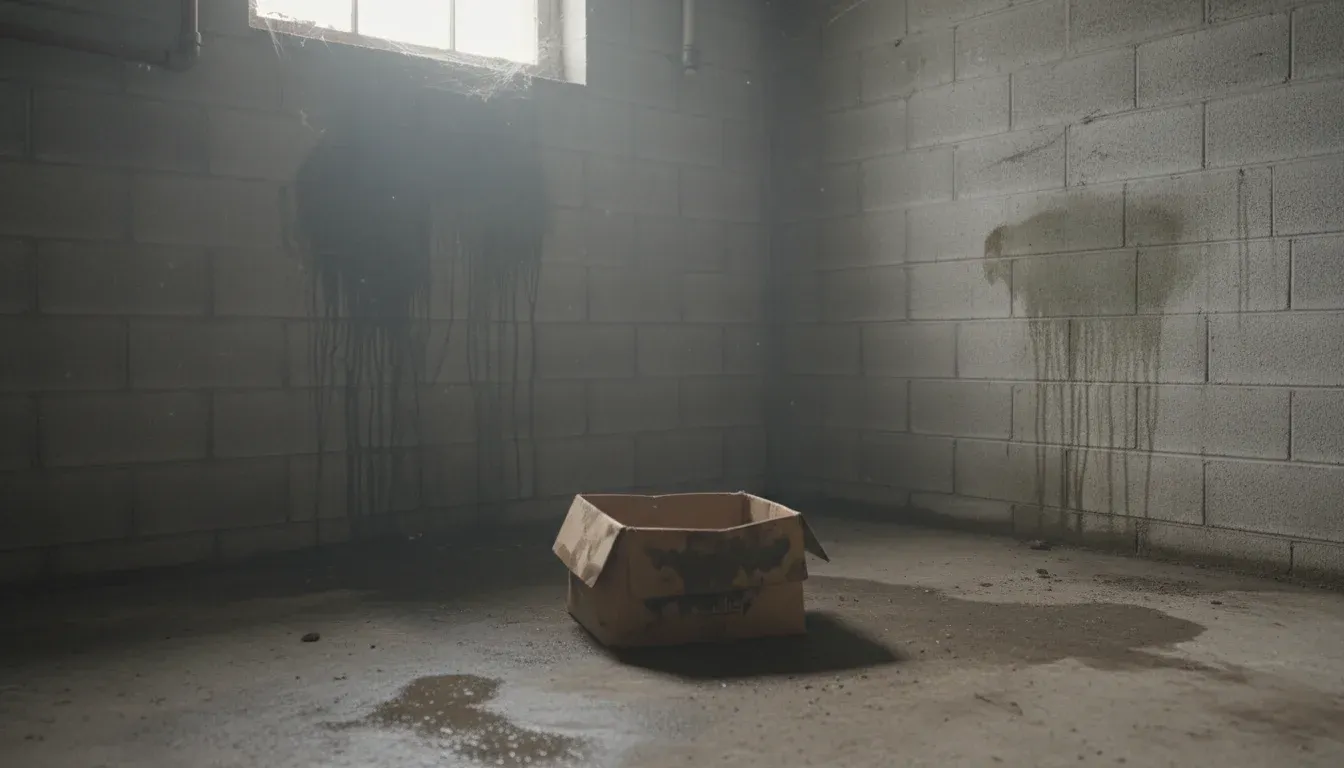
Musty basement smell means moisture, biology, or both. The odor is microbial – mold and mildew releasing volatile compounds – and no amount of air freshener kills it. You have to fix what’s feeding it. In most basements that’s a combination of slow moisture intrusion, inadequate airflow, and years of organic material (cardboard, fabric, wood) sitting in damp air. Work through these from root cause to residual and the smell goes away for good.
Identify and Fix Moisture Sources
Start here. Every other fix is treating symptoms if there’s still water getting in.
Check pipes, the water heater, and any appliances for drips. Look at foundation walls for cracks where water seeps through during rain, and examine window wells for standing water or poor drainage. The most common culprits: groundwater seepage through porous concrete, condensation on cold surfaces, leaking pipes, and poor exterior grading.
Fix plumbing leaks the same day you find them. Seal foundation cracks with hydraulic cement (for active leaks) or epoxy injection (for dry cracks). Grade soil so it slopes away from your foundation – water pooling against the house eventually finds its way in.
Run a Dehumidifier Continuously
The single most effective tool in a damp basement. Set it to maintain 30-50% relative humidity and leave it running. Empty the reservoir daily, or route a drain hose to a floor drain so you don’t have to think about it.
Size matters. A damp basement needs 30-50 pint capacity per 1,000 sq ft (93 sq m). Undersized units run constantly and barely keep up. Run it year-round, but especially through summer when outdoor humidity is high. You’ll notice the smell improving within a few days once humidity drops below 60%.
Clean Visible Mold with Vinegar
Musty smell without visible mold is usually hidden mold. But if you can see it – on walls, joists, stored items – clean it first before doing anything else, because the dehumidifier just circulates the spores otherwise.
Mix equal parts white vinegar and water in a spray bottle. Apply to the moldy surface, let it sit for an hour, then wipe clean. Vinegar kills most mold species and the smell fades as it dries. For stubborn patches, skip the dilution and use straight vinegar. Wear gloves and a mask.
If mold covers more than 10 sq ft (0.9 sq m) or keeps coming back in the same spot, stop and call a remediation company. Recurring mold means there’s a moisture source behind or inside the surface you can’t reach with a spray bottle.
Improve Ventilation with Fans
Stale air traps moisture and odors. If you have windows, open them on dry days (not humid ones – that makes it worse). Install a box fan or exhaust fan to actively pull damp air out rather than just moving it around.
Basements without windows need a mechanical solution: an energy recovery ventilator (ERV) or a dedicated exhaust fan vented to the outside. A ceiling fan alone won’t do it – you need air exchange, not just circulation.
Seal Basement Walls and Floors
Bare concrete is porous. It absorbs moisture from the soil and slowly releases it into the air, which is why some basements smell musty even when there’s no obvious water source.
Clean the surfaces thoroughly first. Fill any cracks. Then apply a penetrating concrete sealer to floors and a waterproof masonry paint or DryLok-type product to walls. Two coats. This cuts the moisture transmission significantly and makes the surfaces much easier to clean going forward.
Place Activated Charcoal or Zeolite
Once you’ve addressed the moisture source, residual odors can linger for weeks. Activated charcoal and zeolite absorb odor molecules directly – both outperform baking soda in a space this size because they have far greater surface area and capacity.
Buy charcoal in mesh bags (easier than loose). Scatter them near odor sources and in corners. Reactivate by laying in direct sunlight for a few hours once a month. Zeolite works the same way and refreshes with a rinse and dry. Both are reusable indefinitely.
Use Baking Soda to Absorb Odors
Baking soda is the low-stakes version of charcoal: cheaper, available in every kitchen, and good enough for mild lingering odors once the moisture problem is solved. Place open containers on shelves, in corners, and near problem areas. Replace every 1-2 months when it becomes saturated.
Where baking soda earns its place specifically: carpets and upholstery. Sprinkle liberally, let sit overnight, vacuum thoroughly. It pulls odors from fabric fibers in a way charcoal bags can’t. For musty concrete floors, make a paste with water, scrub it in, then rinse.
Wash Fabrics and Textiles
Stored fabric is a major odor reservoir. Curtains, furniture covers, clothing, rugs – anything that’s been sitting in damp basement air for months has absorbed the smell. The dehumidifier won’t fix what’s already baked into the fibers.
Wash everything in hot water with a cup of white vinegar added to the rinse cycle. Dry in sunlight if possible. For items that can’t go in a wash – upholstered furniture, large rugs – seal them in plastic with charcoal bags for several days.
Throw away cardboard boxes. They absorb moisture, harbor mold spores, and are essentially smell sponges. Replace with sealed plastic bins.
Keep Gutters Clean and Functional
Clogged gutters overflow at the roofline and dump water directly against your foundation. Clean them twice a year – spring and fall. Check that downspouts extend at least 6 ft (1.8 m) from the foundation before discharging.
This is cheap insurance. Gutter guards cut down on how often you need to clean them. Make sure the ground slopes away from the house so the discharged water doesn’t just run back.
Install a Sump Pump if Needed
If you get standing water in the basement after rain, no other fix matters until you deal with that. A sump pump sits in a pit at the basement’s lowest point and pumps out water before it accumulates.
Size the pump to your basement and local water table. Install a battery backup – power outages and heavy rain tend to happen at the same time, and that’s exactly when you need it working. A functional sump pump breaks the cycle of chronic flooding that keeps mold re-establishing itself.
Prevention
Once it’s fixed, keep it fixed. Run the dehumidifier through humid months (May through September in most of the US). Check the basement after heavy rain for any new seepage. Keep stored items in sealed plastic bins, not cardboard. Inspect gutters and downspouts each spring. If you notice the smell returning, trace it back to a moisture source before reaching for an air freshener.
When to Call a Professional
Call a mold remediation company if: mold covers more than 10 sq ft (0.9 sq m), it returns in the same location within weeks of cleaning, or you find it inside walls or under flooring. They have moisture meters and air sampling equipment to find what you can’t see.
Call a waterproofing contractor if the basement floods seasonally or you have chronic seepage that sump pumps and grading haven’t fixed. Interior drainage systems and exterior waterproofing membranes are expensive but they permanently solve what DIY can’t.