Table of Contents
Repellents work best as deterrents – stopping skunks from moving in or passing through – rather than as eviction tools. A skunk that has already established a den, especially one with young, isn’t going anywhere because your yard smells like cayenne. Set realistic expectations and use these methods early, before a skunk gets comfortable.
Homemade Spicy Repellents
Skunks have sensitive noses and a strong aversion to capsaicin. Mix 2 tablespoons of cayenne pepper or crushed jalapeños per quart (1 L) of water and spray around entry points, under deck edges, and in garden beds where you’ve seen activity. Dry cayenne powder scattered along fence lines also works but washes away faster.
Reapply every few days and after rain. This is most effective on skunks scouting for territory or passing through – less effective on one that’s already denned and considers your yard home. Wear gloves when mixing hot pepper solutions and don’t spray into wind.
Ammonia or Vinegar Spray
The smell of ammonia mimics predator urine and registers as danger. Soak old rags in household ammonia and place them in shallow containers near potential den sites, under decks, or along fence lines. White vinegar works similarly but isn’t as strong. Replace the rags every few days as the smell fades.
Most useful for deterring skunks that are still in the scouting phase. A skunk with a litter of young in a den is operating on maternal instinct that overrides most smell-based deterrents. Use ammonia-soaked rags to make an unoccupied space unappealing before a skunk moves in.
Citrus Peels
Scatter fresh lemon, orange, or grapefruit peels around entry points, along garden bed perimeters, and near areas of activity. Many animals, including skunks, dislike the strong volatile oils in citrus peel. Replace peels every few days as they dry out and lose scent.
This is the weakest option on the list – genuinely only useful as a supplement to stronger deterrents. If you’re already peeling citrus for other purposes, toss the peels in problem areas. Don’t rely on it alone.
Predator Urine Spray
Fox or coyote urine spray triggers an instinctive avoidance response in prey animals, including skunks. Available at garden centers and hunting supply stores as liquid spray or scent granules. Apply around the property perimeter and near areas skunks are entering or foraging.
Reapply after rain. Effective for discouraging skunks from establishing territory in the first place – less effective at evicting one that’s already settled and adapted to the local smells. The product does smell noticeable to humans too, so keep it away from seating areas and doorways you use regularly.
Bright Lights
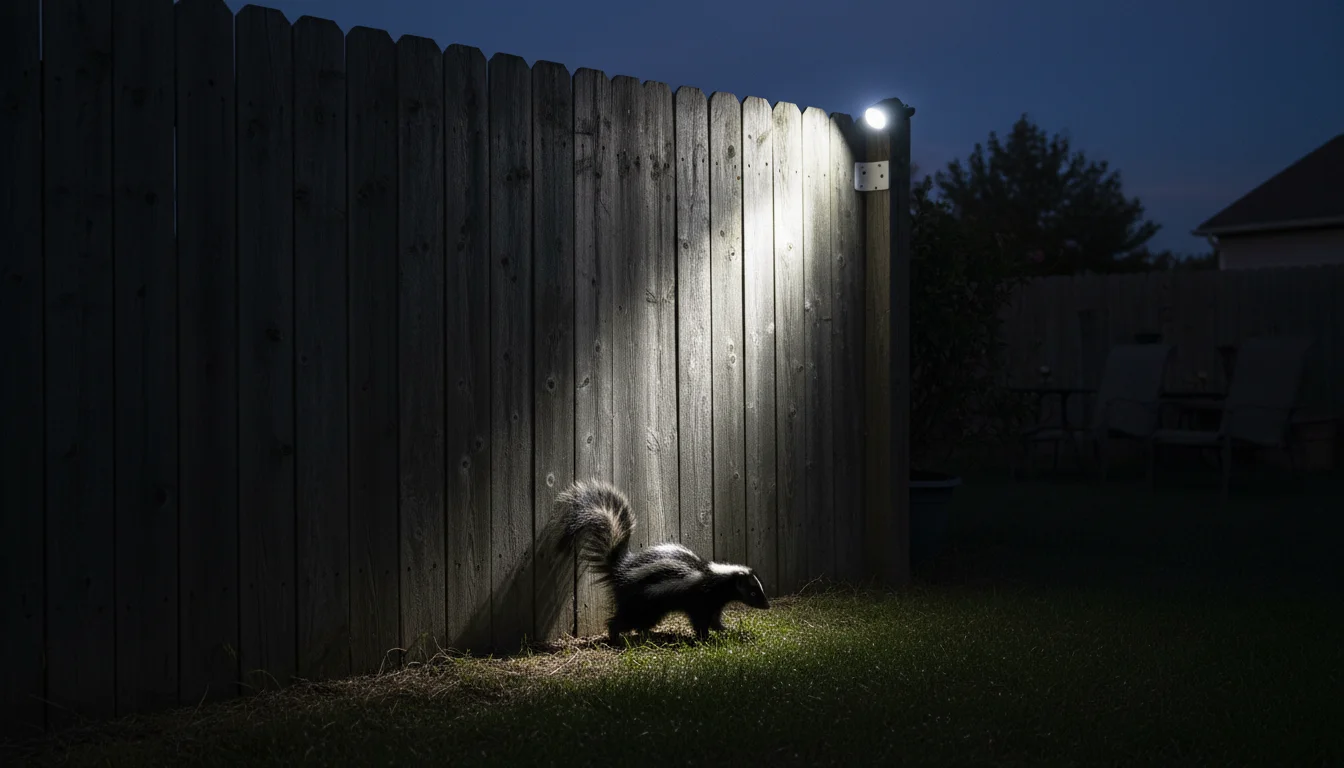
Skunks are nocturnal and strongly prefer dark areas for both foraging and denning. Motion-activated floodlights in areas of activity create repeated startling disruptions that make a space feel unsafe.
Works best at deterring skunks from choosing a den site. A skunk with established young won’t abandon them because you added lighting. But for general prevention and making your property less attractive to passing skunks, motion lights are a solid long-term investment that serves other purposes (security, visibility) beyond pest deterrence.
Electronic Repellent Systems
Ultrasonic devices and motion-activated water sprinklers. Real talk: ultrasonic devices are largely ineffective on skunks in practice. The frequency ranges that supposedly irritate them don’t reliably produce results in real-world conditions with walls, furniture, and background noise.
Motion-activated sprinklers are more credible – skunks don’t like being suddenly sprayed with water, and the startle effect has some deterrent value. But they’re triggered by anything that moves (including your own pets, blown leaves, and you getting up at 3am), and the deterrent effect fades as skunks habituate. If you try electronic repellents, use the sprinkler type over ultrasonic, and treat them as a layer in a broader approach rather than the solution.