Table of Contents
Stink bugs aren’t just a problem inside the house. In the garden they’re crop destroyers – they pierce plant tissue to feed, injecting enzymes that cause fruit to rot from within. Tomatoes, peppers, beans, and stone fruit are their favorites. By the time you see the discolored, dimpled damage on your harvest, they’ve been feeding for days. Getting ahead of them in the garden also means fewer of them migrating toward your house in fall.
Crush Eggs on Leaf Undersides
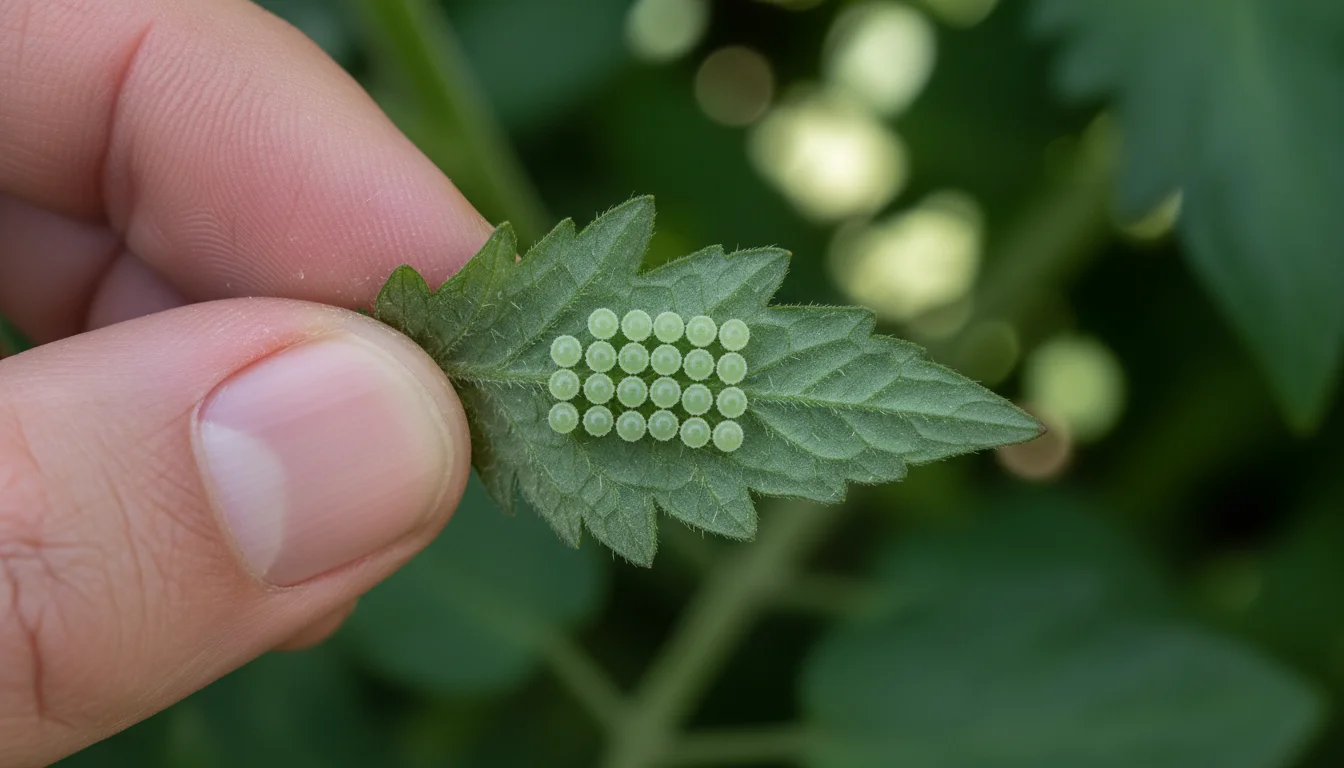
The highest-value thing you can do against stink bugs in the garden. Check the undersides of leaves weekly from late spring through summer. Stink bug eggs appear as pale green or white barrel-shaped clusters, usually 20-30 eggs in neat rows. You’ll find them on tomatoes, beans, peppers, ornamentals, and weedy plants near the garden edge.
Crush the eggs between your fingers or scrape them off into a container of soapy water. One female lays multiple egg clusters throughout the season, so this only works if you do it consistently – once a week during peak laying season. Wear gloves if you’re squeamish. The eggs don’t smell. Stopping one generation before it hatches is worth more than any spray treatment you’ll apply to adults later.
Remove Weeds from Garden
Stink bugs feed on weeds before they move to your crops, and they feed on crops before they migrate toward your house in fall. Mustard, pigweed, and legume weeds are favorites. Clear them from garden borders and along your foundation to remove their first food source and staging area.
Focus on the zone within 15-20 feet (5-6 m) of your house and garden. That’s where they build up population before transitioning to seek indoor overwintering sites. Pull weeds regularly from late spring through summer – this isn’t a one-time job but ongoing maintenance. A tidy perimeter doesn’t eliminate stink bugs, but it reduces the population pressure considerably compared to a garden with dense weedy borders, because you’re cutting off their early-season food supply before numbers build.
Botanical Insecticide (Pyganic)
When numbers are high enough that manual methods aren’t keeping up, Pyganic is the organic escalation. It contains pyrethrins derived from chrysanthemum flowers, kills stink bugs on contact by attacking their nervous system, and breaks down quickly in sunlight so it’s safer than synthetic alternatives.
Mix as directed on the label and spray in late afternoon or early evening when stink bugs are most active and beneficial insect activity is lower. You’ll see results within minutes for direct contact. For perimeter treatment around plants, reapply weekly during peak season – pyrethrins break down fast, which is both the safety advantage and the limitation. Available at garden centers and farm supply stores.
Garlic Spray
Blend 2 cloves of garlic with 17 fl.oz (500 ml) of water, strain it well through a fine mesh or cloth, and transfer to a spray bottle. Spray around window frames, door thresholds, plant stems, and along the garden perimeter where stink bugs travel. The smell irritates and repels them without killing them – they simply avoid treated areas.
Reapply every two to three days and after any rain, since it washes off and degrades quickly. Adding a drop of dish soap to the solution helps it stick to surfaces and plant foliage a bit longer. The garlic scent fades to human-undetectable levels within an hour or two outdoors, but remains perceptible to stink bugs for longer.
Garlic spray works best as a barrier treatment applied consistently before stink bugs build up in numbers, not after a heavy infestation is already established. It’s a preventive and deterrent measure – use it alongside egg removal and weed management rather than as a standalone fix, because it won’t clear an existing problem on its own.
Neem Oil
Neem oil disrupts stink bug feeding and development, acts as a repellent, and doesn’t harm beneficial insects once it dries. It targets pests at multiple life stages, which makes it useful against both adults and nymphs.
Mix 1-2 tablespoons per 1 gallon (3.8 L) of water with a few drops of dish soap as an emulsifier. Spray all plant surfaces, paying particular attention to leaf undersides and stem junctions where bugs feed and hide. Apply in early morning or evening – neem oil on leaves in hot sun can cause burn damage.
Reapply every 7-10 days throughout the growing season. The smell is noticeable but fades within a day. Test on a small section of plant first if you’re applying to something you haven’t used neem on before.