Table of Contents
If you’re trying to figure out how to get rid of a stye, that red, painful bump on your eyelid, you’re in the right place. It forms when an oil gland at the base of an eyelash gets blocked and infected, usually by Staphylococcus bacteria. The good news: most styes resolve within a week with basic home treatment. The bad news: there’s no shortcut. Anyone promising you’ll get rid of a stye in 5 minutes is lying.
Here’s the escalation path, from home remedies to doctor’s office.
What Causes a Stye
A stye is a small abscess in an eyelid oil gland. The gland gets plugged with dead skin and dried oil, bacteria move in, and the result is a tender, swollen bump that looks like a pimple but hurts more.
External styes form at the lash line. Internal styes form deeper inside the lid and tend to be more painful. Both have the same root cause: a blocked gland plus bacteria.
Risk factors: touching your eyes with unwashed hands, sleeping in eye makeup, using expired cosmetics, wearing contact lenses for extended periods, and previous blepharitis (chronic lid inflammation).
1. Warm Compress
This is your first-line treatment. Every eye doctor on the planet will tell you the same thing.
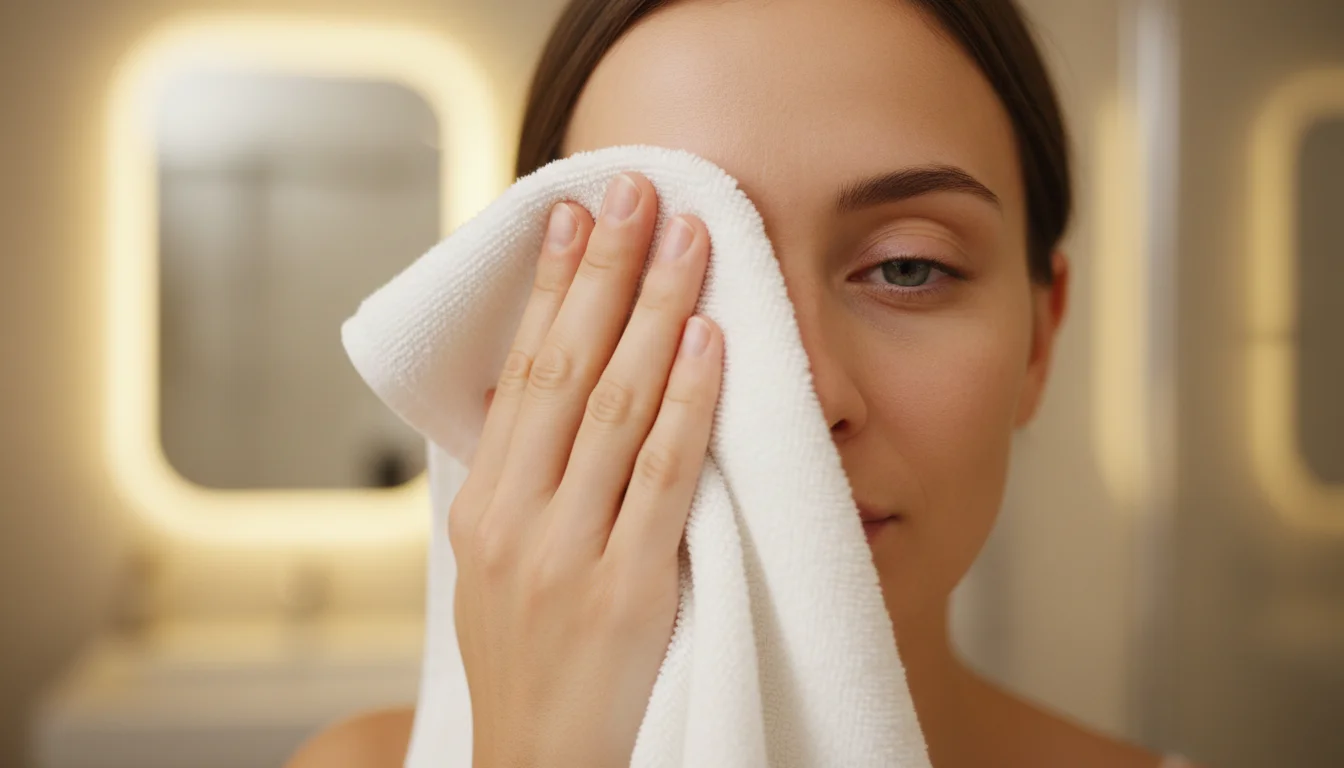
Soak a clean cloth in warm (not hot) water, wring it out, and hold it against the closed eye for 10-15 minutes. Do this 4-5 times a day. The heat softens whatever is plugging the gland and encourages it to drain on its own.
Re-wet the cloth when it cools down. A compress that’s gone room temperature isn’t doing anything. Some people microwave a damp cloth for 10-15 seconds instead of using the tap, which keeps it warmer longer.
Don’t touch the stye. Don’t try to pop it. You’ll spread the infection or push bacteria deeper into the gland.
2. Lid Scrub with Baby Shampoo
The mechanical companion to warm compresses. The compress softens the blockage; the scrub clears it out.
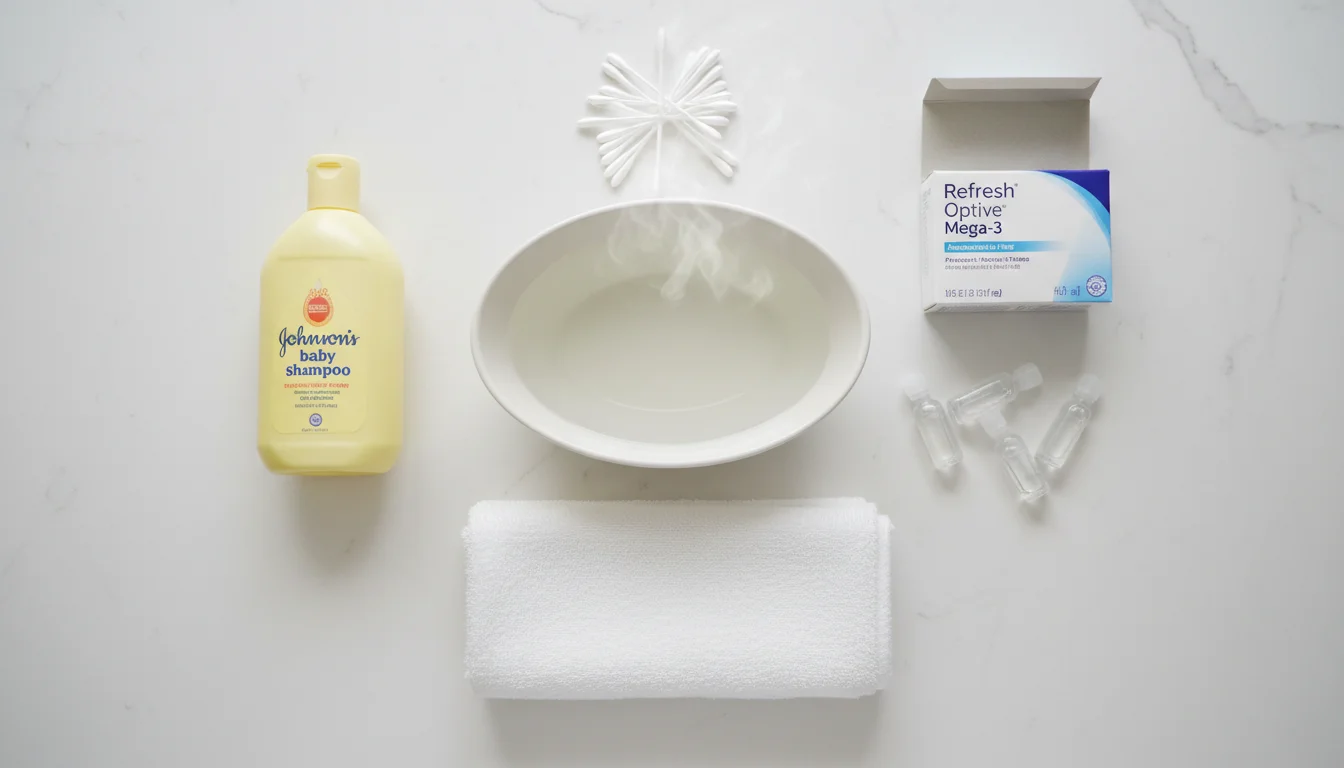
Mix a few drops of tear-free baby shampoo into warm water (about a 1:10 ratio). Dip a clean cotton swab into the solution, close your eye, and gently scrub along the base of your lashes. Work from the inner corner outward, about 15 seconds per lid. Rinse with warm water.
Do this twice daily. The diluted shampoo breaks down the oily debris clogging the gland without irritating the delicate eyelid skin. Commercial lid scrub products like OCuSOFT do the same thing for more money.
Keep up the routine for several days after the stye resolves. Recurrences often happen because people stop lid hygiene the moment symptoms disappear.
3. Over-the-Counter Eye Drops
Artificial tears won’t treat the stye itself, but they’ll make you a lot more comfortable while the compress and scrub do their work.
A blocked gland disrupts your normal tear film, leaving the eye surface dry and gritty. Preservative-free artificial tears fill that gap. Use them 3-4 times daily, or whenever your eye feels irritated. Pull the lower lid down, instill one drop, and blink to spread it.
Skip the redness-relief drops (Visine, Clear Eyes). They constrict blood vessels to reduce redness but don’t address the problem and can cause rebound redness with repeated use.
4. See an Eye Doctor
If the stye hasn’t improved after a week of consistent warm compresses and lid scrubs, see an ophthalmologist. They’ll prescribe antibiotic drops or ointment that targets the bacterial infection directly.
Prescription treatment typically clears things up in a few days. Worth it if you’ve got an event coming up or if the stye is affecting your vision.
5. Surgical Drainage
Last resort. If a stye hangs around for weeks and hardens into a chalazion (a firm, painless lump), your eye doctor can lance and drain it. It’s a quick in-office procedure: they numb the area, make a small incision on the inner lid surface, and drain the contents. Takes a few minutes.
This isn’t common. Most styes never get to this point. But if yours does, the procedure is routine and recovery is fast.
Prevention
There’s no way to guarantee you’ll never get a stye, but you can cut the odds significantly:
- Wash your hands before touching your face or eyes
- Remove all eye makeup before bed, every night
- Replace mascara every 3 months (bacteria love the tube)
- Don’t share eye makeup, brushes, or applicators
- Clean contact lenses properly and don’t overwear them
- If you get a stye, switch to glasses until it’s fully healed
When to See a Doctor
Most styes resolve with home treatment. See a doctor if:
- The stye hasn’t improved after a week of warm compresses
- Swelling spreads beyond the eyelid to the cheek or other parts of the face
- Your vision is affected
- You keep getting styes repeatedly (could indicate underlying blepharitis)
Frequently Asked Questions
How can I get rid of a stye ASAP?
You can’t speed it up beyond warm compresses 4-5 times daily plus lid scrubs. That’s the fastest home treatment gets. If you need it gone faster, see a doctor for antibiotic drops. There is no 5-minute cure despite what clickbait titles claim.
Are styes contagious?
Technically the bacteria that cause them (Staph) can spread, but styes themselves aren’t contagious in the way a cold is. You’re not going to give someone a stye by being near them. That said, don’t share towels, pillowcases, or eye makeup with anyone while you have one.
How long does a stye last?
Most clear up within 7-10 days with consistent warm compress treatment. Without treatment, they can linger for 2-3 weeks. If it hardens into a chalazion, it can persist for months without medical intervention.
Can I pop a stye?
No. Squeezing or popping a stye pushes bacteria deeper into the tissue and can cause a much worse infection. Let it drain on its own with the help of warm compresses. If it needs draining, let a doctor do it with sterile instruments.