Table of Contents
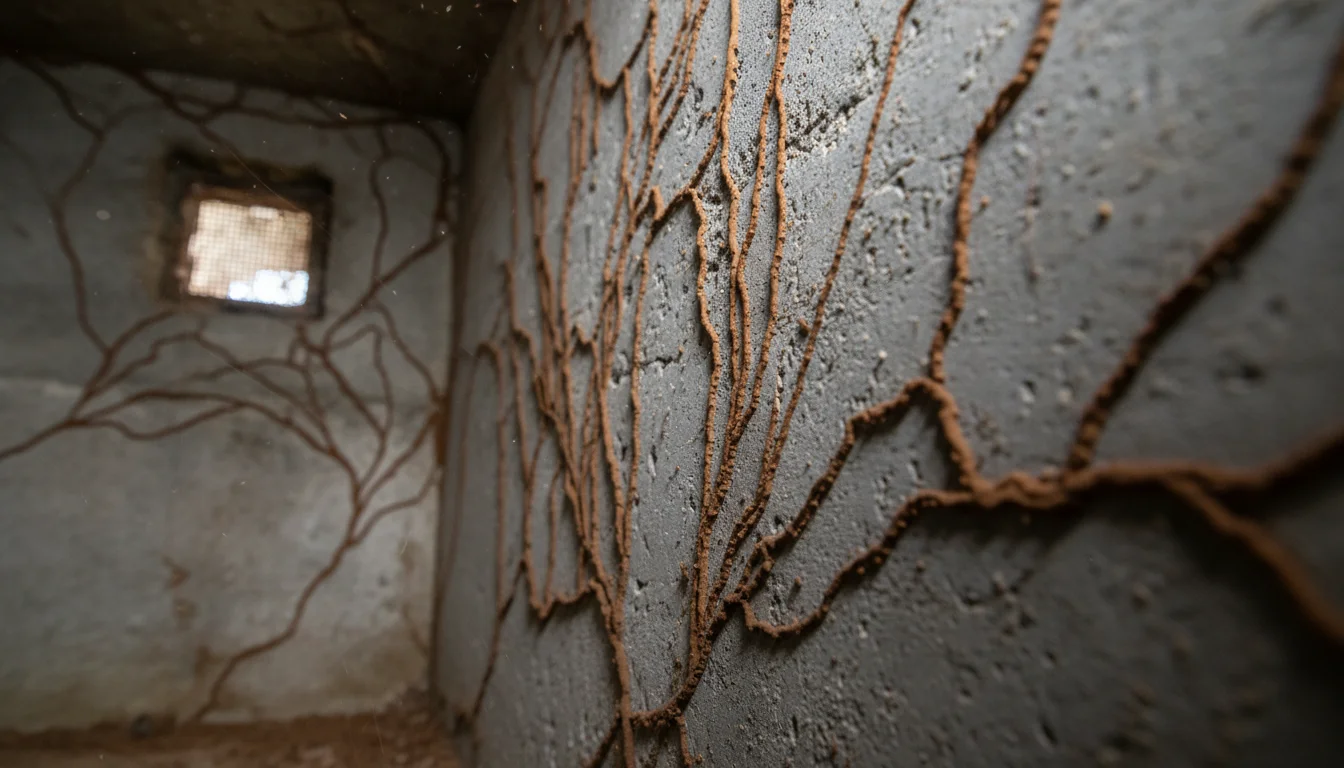
Knowing how to get rid of termites starts with understanding the scale of the problem. Finding termites isn’t like finding ants – it’s a structural emergency in slow motion. By the time you see mud tubes on your foundation or notice wood that sounds hollow when you knock on it, they’ve typically been working for months. A mature colony of 60,000 subterranean termites can eat a linear foot of 2×4 pine in about five months. A colony of 500,000 can do it in under a month.
The good news: you can stop them. The realistic caveat: if they’re already in your structural framing, you probably need professional treatment. These methods work best as a one-two punch – active treatment to kill the colony, then structural prevention to stop the next one from establishing.
1. Chemical and Physical Termite Barriers
The most reliable active treatment for subterranean termites is a liquid barrier treatment applied to the soil around and under your foundation. Professionals trench around the perimeter, drill through concrete slabs if necessary, and inject termiticides like fipronil or imidacloprid into the soil. Termites crossing the treated zone either die on contact or carry the chemical back to the colony.
Chemical barriers last 5-10 years depending on soil type, moisture, and how disturbed the treated zone gets. This isn’t a DIY-friendly option in most cases – proper application requires a licensed applicator with specialized equipment, and the effectiveness depends heavily on getting continuous coverage with no gaps.
Physical barriers are the construction-phase version. Stainless steel mesh (Termi-Mesh and similar products) or crushed basalt rock of a specific particle size (1-3mm) installed around footings and penetrations during construction. Termites can’t chew through steel mesh and won’t tunnel through properly graded rock. If you’re building or doing a major renovation, ask your builder about physical barrier inclusion – it’s much cheaper at that stage than retrofitting.
2. Termite Bait Stations
Bait stations are the alternative to liquid barrier treatment, and they work differently – instead of creating a chemical perimeter, they intercept foraging workers and rely on their behavior to distribute toxicant through the colony.
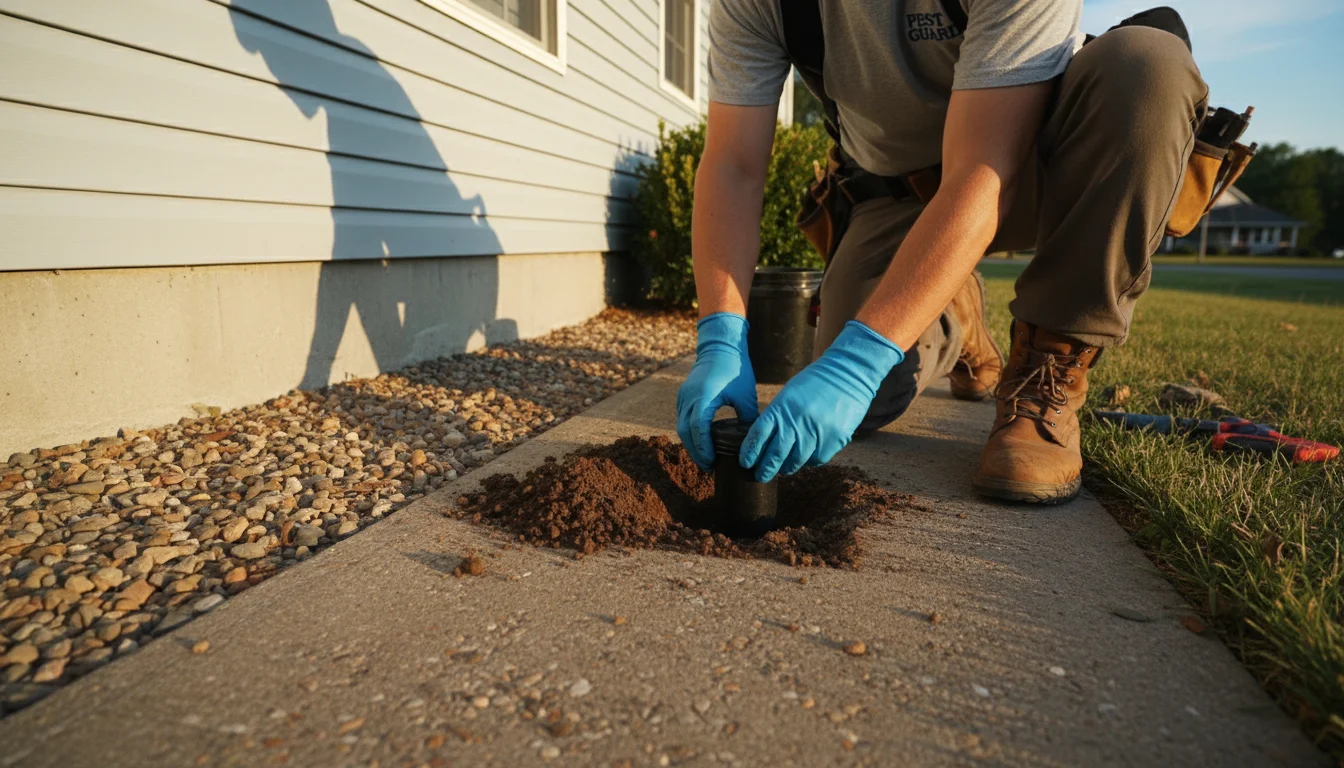
Stations go in the soil every 10-20 feet (3-6 m) around the building perimeter, with extras near any confirmed activity (mud tubes, damaged wood). Workers find the stations, feed on the cellulose bait, and carry slow-acting growth inhibitors back to the colony. The active ingredient prevents the queen and workers from molting, which eventually collapses the colony. This takes time – expect several months of monitoring before the colony is eliminated. If you need fast results, liquid barriers are faster.
Above-ground stations attach directly to active mud tubes on walls, piers, or slabs and are the most targeted approach when you know exactly where foragers are traveling.
Professional systems are monitored every 1-3 months and bait is refreshed as needed. DIY bait stations (Spectracide Terminate, etc.) are available at hardware stores and work on the same principle, but the monitoring commitment is real. A station left unchecked for months while termites route around it accomplishes nothing.
3. Eliminate Wood-to-Ground Contact
This is the most impactful structural fix you can make, and a lot of homes have it. Termites move through soil, and any wood in direct contact with the ground is accessible without them needing to build exposed mud tubes – they go straight in.
Ensure wood siding starts at least 6 inches (15 cm) above grade. Wooden porch steps, deck posts set directly in soil, door frames that reach grade, and fence boards touching the ground are all risk points. Replace wooden steps with concrete or masonry, or at minimum install concrete pads under them. When replacing deck posts or other structural supports, use pressure-treated lumber rated UC4B or UC4C for in-ground contact – UC3B is only for above-ground use, and the distinction matters. Check the end tag on the lumber, not just what it says on the bin at the hardware store.
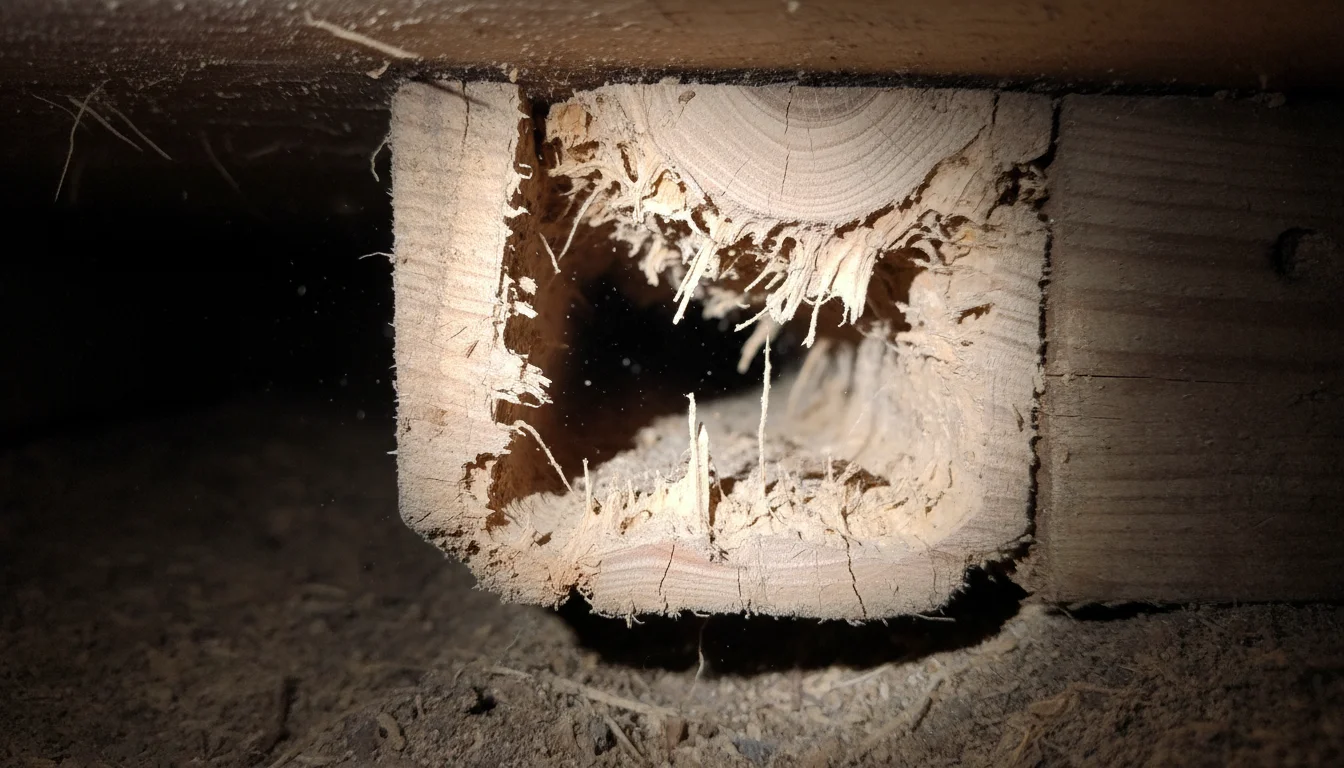
For any wood-to-ground contact that can’t be eliminated immediately, inspect it annually by probing with a screwdriver. Hollow, papery, or soft spots that accept the screwdriver easily indicate active damage.
4. Fix Leaks and Eliminate Moisture Problems
Subterranean termites need moisture. They build mud tubes partly to maintain humidity as they travel through dry zones. A dripping pipe, a wet subfloor from a slow leak, or chronic condensation around foundation walls makes your house dramatically more hospitable.
Fix leaks as soon as you find them. Check under sinks, around water heaters, and at any plumbing penetrations into the subfloor. In crawl spaces, look for standing water or wet soil after rain – this is a termite magnet. A dehumidifier in a wet crawl space makes a material difference. So does regrading if water runs toward the foundation after heavy rain.
Condensation on pipes in unconditioned spaces is worth addressing too – pipe insulation is cheap and eliminates a steady moisture source. Chronic condensation at home often indicates a bigger airflow or vapour barrier issue worth diagnosing properly.
5. Ventilate Attics and Crawl Spaces
Crawl spaces are prime subterranean termite habitat: dark, enclosed, close to soil, and often humid. Proper ventilation is one of the most effective long-term deterrents.
Each 150 sq ft (14 sq m) of crawl space floor area needs roughly 1 sq ft of ventilation. Cross-flow venting – vents on opposite sides of the crawl space – works better than vents on just one side. Check existing vents to confirm they’re not blocked by debris, rodent nests, or insulation that has sagged over them. Screen all vents with 1/8 inch (3 mm) mesh.
If your crawl space has a bare dirt floor, install a vapor barrier – 6 mil polyethylene sheeting covering the entire floor area, lapped up the foundation walls and sealed at seams. This dramatically reduces ground moisture evaporating into the space.
6. Remove Mulch and Debris from the Foundation Perimeter
Wood mulch against your foundation is an extremely common problem that homeowners underestimate. It retains moisture, provides cellulose (termite food), and sits directly against the structure. Create a bare zone of at least 12 inches (30 cm) between any mulch and your foundation. If you want something in that zone for aesthetics, use stone or gravel – they don’t hold moisture or provide food.
Firewood stored against the house is equally problematic. Termites establish themselves in the woodpile, then bridge directly to the structure. Keep firewood at least 20 feet (6 m) from the house on a rack that keeps it off the ground. Leaf piles, old lumber, and any cellulose debris near the foundation should go. These aren’t just harborage sites – they’re staging areas that make it easy for termites to find and access your house.
7. Clear Vegetation Near the Foundation
Shrubs, climbing vines, and dense ground cover planted against foundation walls do several harmful things at once: they retain moisture against the structure, block airflow, create a sheltered environment, and can obscure mud tubes and early damage signs so that infestations go undetected longer.
Trim everything back at least 12 inches (30 cm) from the foundation. Remove climbing vines from the walls entirely – they cause moisture retention and make it genuinely harder to spot early warning signs during inspections. Overhanging branches that touch or nearly touch the roofline should be cut back; they’re less relevant for termites than for other pests, but they do deposit debris that retains moisture on the roof and in gutters.
8. Keep Gutters Clean and Functional
Clogged gutters overflow and deposit water against your foundation continuously during rain events. For subterranean termites, this is a direct moisture subsidy. Clean gutters twice a year minimum – spring and fall. After cleaning, check that downspouts discharge at least 6 feet (1.8 m) from the foundation and that the ground slopes away from the house so the discharge doesn’t pool against it.
Gutter guards reduce the frequency of cleaning needed and are worth the investment if you have significant tree coverage. The goal is simple: water that hits your roof should end up well away from your foundation, not trickling down the side of your house to sit at the base.
9. Seal Cracks and Entry Points
Sealing alone won’t stop termites – they’re determined and creative – but it’s part of a layered defense and it forces them to build visible mud tubes to cross sealed surfaces, making inspections more effective.
Check the foundation for cracks and seal them with concrete patching compound or hydraulic cement. Seal gaps where utility lines (pipes, electrical conduit, gas lines) penetrate the foundation – these are common unprotected entry routes. Around crawl space vents and access doors, check that weatherstripping is intact and that there are no gaps at the frame.
Foam board insulation on foundation exteriors is worth noting: termites can tunnel through foam undetected to reach the structure above. In high-pressure regions, either skip exterior foam or protect it with termiticide-treated coating or a rigid cover termites can’t penetrate.
When to Call a Professional
Call a licensed pest control company if you find:
- Active mud tubes on your foundation, piers, or interior walls
- Wood that sounds hollow when tapped or accepts a screwdriver easily
- Swarmers (winged termites) inside your home, especially near windows or light sources
- Damage to structural framing visible in your crawl space or basement
DIY approaches work well for prevention and for creating conditions hostile to new colonization. They are not adequate for eliminating an active infestation in structural wood. Professional treatments come with warranties (typically 1-5 years with re-treatment if termites return) and include monitoring visits that catch new activity before it causes significant damage. Get quotes from at least two companies and ask specifically whether they use liquid barrier or bait system treatment – both have valid use cases and the right choice depends on your situation.
Frequently Asked Questions
What is the fastest way to get rid of termites?
For an active infestation, professional liquid barrier treatment (fipronil or imidacloprid applied to the soil perimeter) works within weeks. Bait stations take several months to collapse a colony but don’t require trenching. DIY methods won’t reliably eliminate an established colony in structural wood.
Can I treat termites myself?
For prevention – yes. Eliminating wood-to-ground contact, managing moisture, clearing perimeter debris, and installing DIY bait stations as monitoring tools are all reasonable homeowner tasks. For an active infestation in structural framing, wall voids, or subflooring, professional treatment is strongly recommended. The risk of incomplete treatment is ongoing damage while you think you’ve solved the problem.
How do you get rid of termites permanently?
No single treatment is permanent, but the combination of professional liquid barrier treatment plus elimination of moisture sources plus removal of wood-to-ground contact gives you 5-10 years of effective protection. Annual inspections and maintenance of the perimeter conditions keep re-infestation risk low after that.
Are termites hard to get rid of?
Surface-level activity (small colonies in mulch or debris, early-stage mud tube construction) can be managed with targeted treatment and habitat removal. Established colonies in wall voids, subfloor systems, or structural framing require professional treatment. The difficulty scales with how long they’ve been there and where they’ve established.