Table of Contents
A lawn-sized weed problem gets a weekend with a weeding knife. An acre of blackberry, thistle, or kudzu gets a completely different playbook. Machinery tears up slopes, herbicides drift onto everything you didn’t want killed, and hand-pulling a half-hectare of poison ivy is nobody’s idea of a good time. These methods scale. Most involve animals, physics, or both.
1. Selective Grazing with Goats
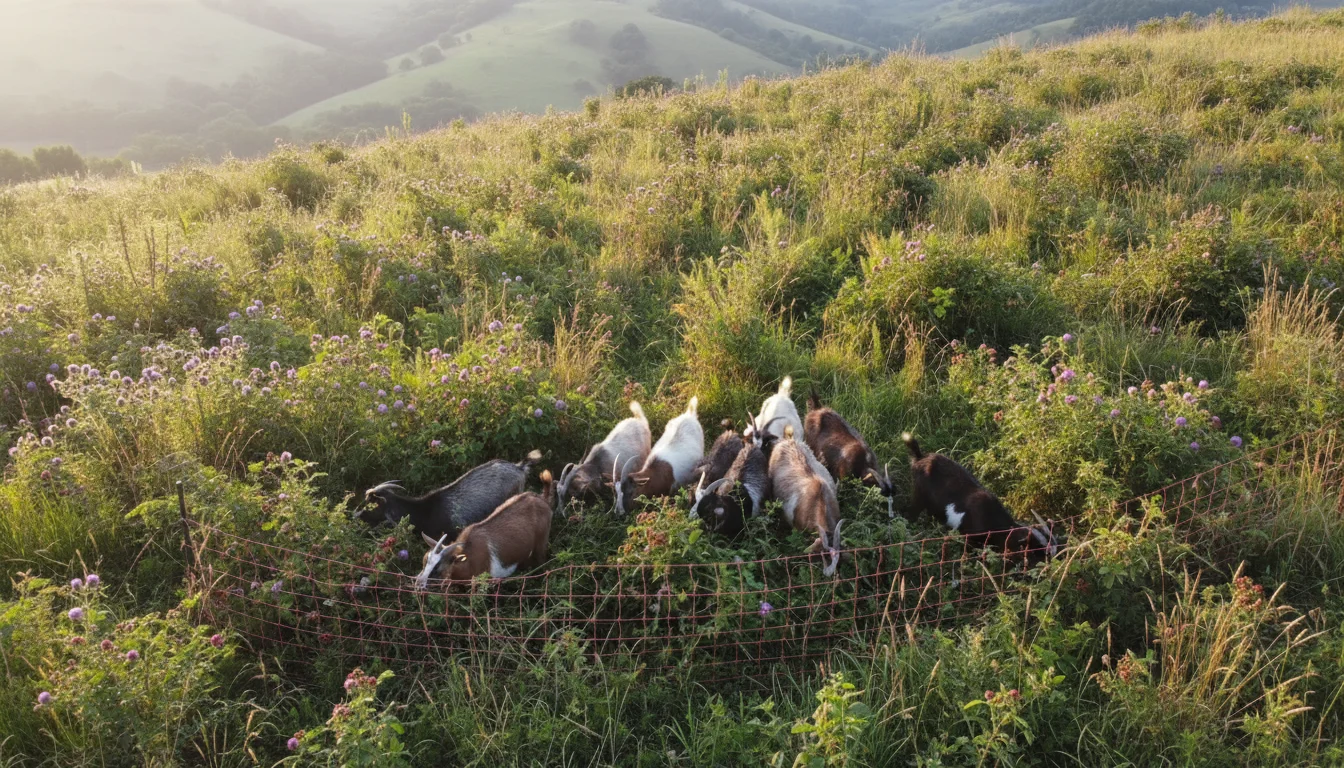
Goats eat the weeds most people won’t touch. Poison ivy, blackberry brambles, thistles, stinging nettle, kudzu, ragwort. They’ll browse steep hillsides, rocky terrain, and overgrown fence lines where no mower or tractor can go, and they fertilize as they work.
This isn’t "turn goats loose and hope." You need portable electric fencing to concentrate them on problem areas. Rental services handle the logistics: they drop off goats, rotate them through sections, and pick them up when the job’s done.
One pass won’t eliminate persistent weeds. Plan for 2-3 grazing cycles per season across 2 years to weaken root systems enough that native plants can reclaim the space.
2. High-Density Stocking for Tough Weeds
Casual grazing won’t dent blackberry or scotch broom. You need 30-40 goats per hectare for 3-4 days, rotating them off before they overgraze. The intensity shocks the weed population and prevents regrowth faster than spaced-out browsing.
Expensive if you’re buying the service, but it cuts years off the timeline for reclaiming heavily infested land. Coordinate with the rental company to hit peak growing season when plants are most vulnerable.
3. Seasonal Grazing Timing
Spring grazing (March-April) catches weeds young and tender. Goats prefer them at this stage, and cutting back early prevents seed production later in the season.
Peak season grazing (June-July) targets flowering weeds before they set seed. Late summer follow-up (August-September) exhausts root reserves before winter dormancy.
Miss the spring window and you’re fighting mature plants all year. The timing matters more than the duration.
4. Combination Method: Grazing Plus Competitive Planting
Goats clear the weeds. You follow immediately with aggressive ground covers (clover, vetch, native grasses) that establish faster than weeds can return. The goats did the hard part. The plants hold the ground.
Seed within a week of the goats leaving while the soil is still disturbed and weed competition is minimal. Water if rain doesn’t cooperate. Wait a month and the weeds will beat you back into the dirt.
5. Trampling Action
Goat hooves do more than people expect. As they move and graze, they break up compacted soil, disrupt shallow weed roots, and create bare patches where you can seed competitive plants immediately after they leave.
Works best on slopes and areas with thin topsoil where machinery would cause erosion. The disturbance level sits between "doing nothing" and "rototilling everything," which is exactly what established perennial weeds hate.
6. Tarping Large Areas
Black plastic or heavy landscape fabric blocks all light and smothers everything underneath. Stake it down over problem zones for 8-12 weeks during growing season. Weeds die, roots rot, and you’re left with bare soil ready for planting.
This works where goats aren’t practical (small properties, urban lots, areas near decorative plants you want to keep). Slow, ugly while it’s happening, and brutally effective.
No chemicals, no ongoing labor beyond the initial setup. Just time and physics.
7. Deep Mulch Suppression
A 4-6 in (10-15 cm) layer of wood chips, straw, or shredded bark prevents weed seeds from germinating and smothers existing growth. This is maintenance after you’ve knocked back the initial infestation, not a first-line treatment for established weeds with deep roots.
Mulch around vegetables, ornamentals, fruit trees, and any cleared area you want to hold. Replenish annually. Weeds that push through are shallow-rooted and pull out easily because the mulch keeps soil loose underneath.
8. Manual Removal Before Seed Set
Annual weeds (chickweed, crabgrass, purslane) in manageable patches: pull them before they flower. One generation stopped is thousands of seeds prevented.
Perennials with taproots (dandelions, dock, plantain) need the whole root out or they’ll resprout. Dig them with a weeding knife or dandelion tool. Don’t just yank the tops off.
This only scales to small sections within your larger property. Use it for cleanup around structures and borders. Anything bigger and you’re burning time better spent on goats, tarps, or mulch.
9. Spot Treatment with Vinegar or Boiling Water
For driveways, patios, gravel paths, and other hardscaping where you don’t want anything growing: horticultural vinegar (20% acetic acid, not kitchen strength) kills top growth on contact. Boiling water does the same for free.
Both need repeated applications because they don’t kill roots. That’s fine for paved areas where roots can’t establish deeply anyway. Not worth the effort in open ground or garden beds where the problem just comes back.
Goats handle the big jobs and the dangerous weeds. Tarps and mulch handle areas where animals aren’t practical. Manual removal and spot treatment are cleanup tools, not solutions at scale. Pick the method that matches your infestation, then commit. Weeds are persistent. Your approach needs to outlast them.