Table of Contents
Natural treatments for termites are a mixed bag. Some – boric acid, orange oil – have genuine efficacy for localized infestations. Others are best understood as deterrents or stopgaps. None of them replaces professional treatment for a well-established colony eating your structural timbers. Use them for early-stage problems, isolated infestations in furniture or small wooden items, or as one layer in a broader approach.
Boric Acid
The strongest natural option on this list. Boric acid dehydrates termites and shuts down their nervous systems when they ingest it or crawl through it. It’s also one of the few natural treatments that can reach termites you can’t directly see.
Mix 1 tablespoon per cup of water for a spray solution, or use boric acid dust directly. The dust form is more effective for structural applications because it doesn’t evaporate – apply it inside walls through small drill holes, under flooring, along foundation cracks, and in any void or cavity where termites travel. Termites walk through the dust, pick it up on their bodies, and carry it back to where others congregate. Reapply every few weeks until you see no activity.
For furniture or smaller wooden items, spray the solution into any visible galleries and onto active surfaces. Boric acid is low toxicity to humans and pets but harmful to termites consistently. It’s your best natural starting point for an active infestation.
Salt
Salt dehydrates termites on contact by drawing moisture out of their bodies. Mix equal parts salt and warm water until fully dissolved and spray directly onto termites, into mud tubes, and around known entry points. For a barrier treatment, sprinkle dry salt along foundation perimeters and in crawl spaces.
Honest assessment: salt works as a deterrent and spot treatment, not a colony killer. You’re not going to dissolve an established colony with a salt spray. It’s best used as supplementary prevention – harder to reach insects, barrier reinforcement – rather than a primary treatment. Keep salt away from structural metal hardware (it accelerates corrosion) and plants. Reapply after rain.
Cayenne Pepper
Capsaicin, the active compound in cayenne, works as an irritant that repels termites from treated surfaces. Mix 2 tablespoons of cayenne per cup of water with a few drops of dish soap and apply to surfaces, entry points, and travel paths.
The effect is temporary. Capsaicin degrades within a few days, so you need to reapply regularly during active periods to maintain deterrence. It won’t kill a colony or penetrate into galleries, but it can redirect termite movement away from treated surfaces – useful for protecting specific wooden items or access points while you implement more substantive methods elsewhere.
Diatomaceous Earth
Food-grade diatomaceous earth (DE) is a fine powder that mechanically damages the waxy coating on termite exoskeletons, causing them to dehydrate and die over 24-48 hours. Spread a thin layer around the perimeter of affected areas, in crawl spaces, and along any surface where you can see termite activity or mud tubes. Reapply after any moisture exposure – wet DE clumps and loses effectiveness.
DE won’t reach termites inside wood or deep in the soil, so it’s surface-level defense only. Combined with other methods and habitat changes, it provides persistent low-level attrition against termites moving through treated zones. Non-toxic to humans and pets at food-grade concentration.
Orange Oil
D-limonene, the active compound extracted from orange peel, dissolves termite exoskeletons on contact and kills them quickly. It’s one of the more effective natural treatments for localized infestations in accessible wood, and it’s particularly popular for drywood termite treatment in furniture and smaller wooden items.
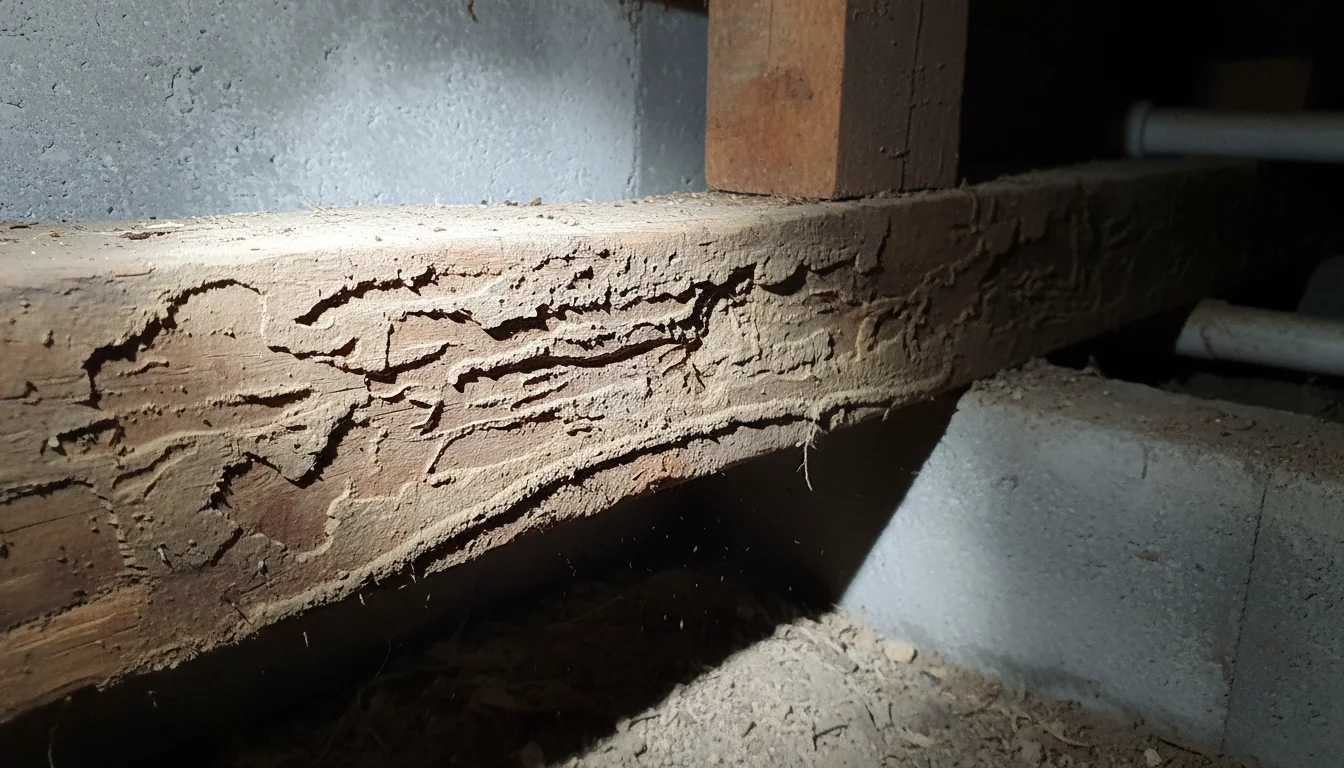
Drill small holes (1/8 to 1/4 inch diameter) into infested wood, spacing them about 6-8 inches apart across the infested area. Inject orange oil using a syringe or applicator bottle until the wood is saturated in each treated zone. You’ll need to treat multiple injection points systematically across the whole infested section, not just the spots where you can see activity.
Repeat every 2-4 weeks, working through the affected area methodically. You’ll typically know it’s working when you stop finding fresh frass (termite droppings) near the treated areas.
The limitation is penetration depth. Orange oil doesn’t travel far through dense wood and evaporates within days. It works well for furniture, window frames, small structural members, and accessible joinery. For whole-house structural infestations or large timbers inside walls, it’s not practical – you can’t get enough product into enough places. Use it for what it actually does well rather than stretching it beyond its range.
Neem Oil
Neem oil disrupts termite feeding and development. It doesn’t kill on contact, but the active compound azadirachtin interferes with their ability to molt and reproduce properly, gradually reducing the colony’s numbers and vitality. Mix 1-2 tablespoons per 1 gallon (3.8 L) of water with a few drops of dish soap as an emulsifier.
Apply to wood surfaces, into visible galleries, and around the base of infested timbers. For wood that’s accessible, you can drill small holes and inject diluted neem directly into the termite galleries. Reapply every 7-10 days.
Neem works across multiple life stages, which is an advantage over simple contact killers that only affect adults and leave eggs and juveniles untouched. It’s more useful as a long-term suppression treatment than emergency knockdown. For structural timber applications, concentrate on surfaces and accessible galleries – neem doesn’t penetrate deep into dense wood, so direct application to active areas is more effective than relying on diffusion.
Vinegar Solution
White vinegar mixed 50/50 with water kills termites on contact via acetic acid damage. Spray it directly onto any termites you can see and saturate wood surfaces where they’re active.
Be clear-eyed about what this does: it kills surface termites immediately but doesn’t penetrate wood, doesn’t reach galleries, and evaporates quickly. As a standalone treatment it’s a stopgap at best. Reapply daily if you’re using it while you arrange something more substantive. The main value is as immediate knockdown for termites you can see right now, not as a treatment for the infestation itself.