Termites cause more structural damage annually in the US than fires and floods combined. They work silently, underground or inside walls, and by the time you find evidence of them, they may have been present for years. Prevention is the right frame here – the goal is to make your property structurally hostile to termite entry and establishment before they arrive, not after.
Termite Barriers
Physical barriers stop subterranean termites before they reach the wood in your house. Stainless steel mesh installed around the foundation during construction or renovation creates a barrier termites can’t chew through. Crushed granite or rock with particles sized 10-20mm works similarly – termites won’t tunnel through properly sized angular rock because they can’t move the particles to create stable galleries. Both approaches are popular in Australia and parts of the US where termite pressure is high enough to justify installation during new construction.
These physical barriers work best installed during construction or major renovation when the foundation is fully accessible. For existing structures, retrofitting physical barriers is difficult and expensive. Chemical barriers are the practical option for most existing homes.
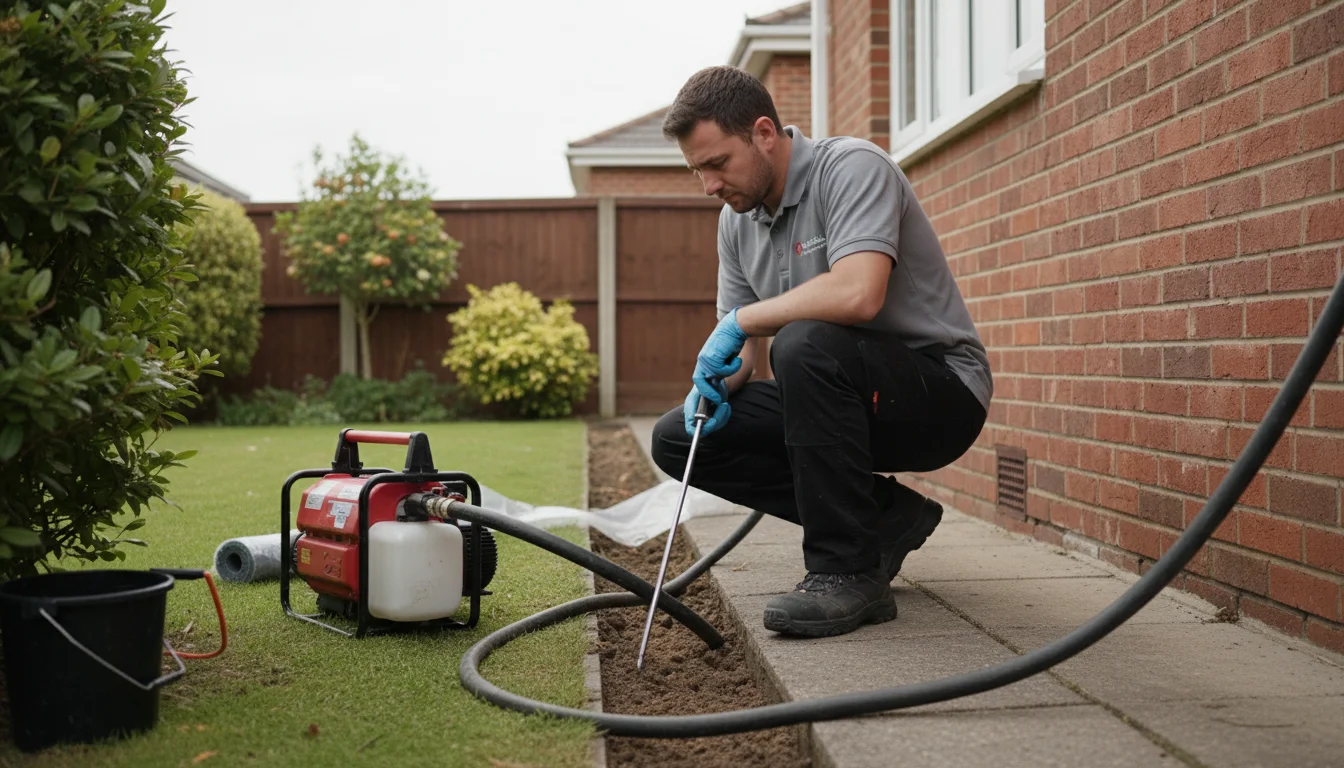
Chemical barrier treatments involve trenching around your foundation perimeter and injecting termiticide (typically fipronil or imidacloprid) into the soil at regulated concentrations. Termites crossing the treated zone either die from contact or carry the chemical back to the colony, which can eliminate the whole population over weeks. A licensed pest controller applies these – DIY application at hardware store concentrations won’t achieve the distribution required for a complete barrier. Chemical barriers typically last 5-10 years depending on soil type, moisture, and the specific product. Annual inspections by the company that installed it confirm the barrier remains intact.
Moisture Control
Termites need moisture to survive and navigate. Subterranean termites travel through moist soil and build mud tubes to retain humidity as they move above ground. Both subterranean and drywood termites establish infestations more readily in wood that already has elevated moisture content. Drying out your structure and its immediate environment makes it genuinely less viable as termite habitat.
Run dehumidifiers in basements and crawl spaces, targeting below 50% relative humidity. Fix leaking pipes promptly – even slow drips inside wall cavities create the damp wood conditions termites prefer, and a slow leak can go undetected for months while the damage accumulates. Ensure gutters are clear and direct water at least 6 feet (1.8 m) from your foundation. Grade soil away from the building if water pools near the foundation after rain.
Installing a vapor barrier in crawl spaces is one of the highest-impact single improvements for termite prevention in susceptible climates. Heavy polyethylene sheeting laid over the dirt floor dramatically reduces soil moisture under the structure and eliminates the humidity gradient that draws termites upward. Seal the seams and run the barrier up the walls a few inches. If you have a crawl space with a bare dirt floor and no vapor barrier, this is worth installing regardless of whether you currently have termites.
Keep firewood, lumber, and wood debris away from your foundation. Wood stored against the house creates both a food source and a bridge straight past any soil barrier treatments.
Professional Chemical Treatment
For an active infestation or a high-risk property in a termite-prone region, professional treatment is the appropriate call. Pest controllers have access to termiticide concentrations and application equipment that aren’t available to consumers, and they can assess the full scope of infestation and structural damage – including things you’d never find on a DIY inspection.
Standard professional treatment involves trenching around the perimeter and injecting termiticide into the soil at regulated depths and intervals, drilling and injecting termiticide into interior slab areas where needed, and often installing bait stations. The bait station approach uses slow-acting toxicant that workers carry back to the colony, eventually reaching the queen. Whole-colony elimination via bait stations takes months rather than days, but it’s thorough in a way that a liquid barrier alone isn’t.
Expect to pay $1,000-$3,000 for a typical house, with variation based on size, construction type, access difficulty, and infestation extent. Most reputable companies include warranties that cover retreatment if termites breach the barrier within the warranty period (typically 1-5 years). Ask about this before signing.
If you’re finding multiple mud tubes, hearing hollow-sounding wood when you tap on structural members, noticing doors or windows that have started sticking without an obvious reason, or finding frass (small pellet-like droppings) near wood surfaces, don’t attempt to manage it with natural methods alone. Get an inspection. Inspections are often free, and the cost of catching an infestation early is a fraction of the structural repair costs that follow from letting it run.