Table of Contents
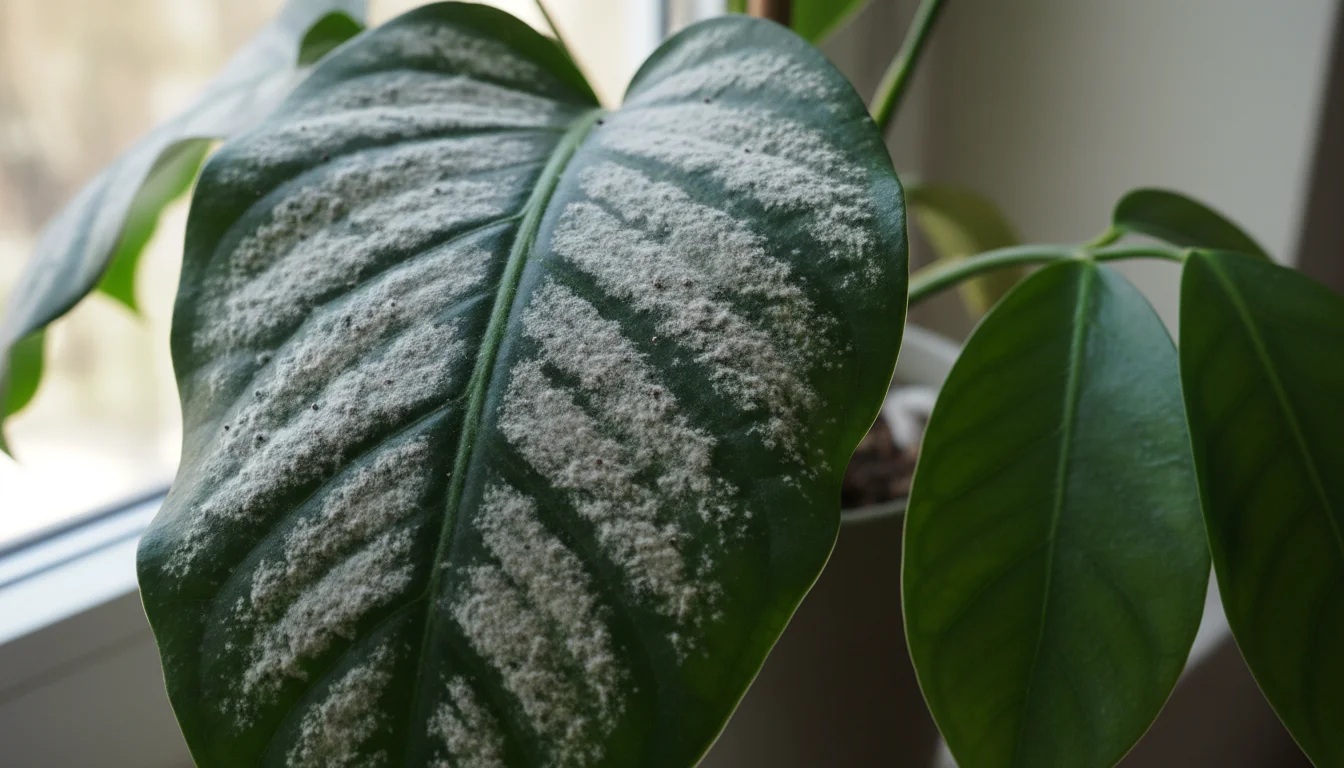
That white powdery coating on your plant’s leaves is powdery mildew – a fungal infection, not dust. Knowing how to get rid of powdery mildew on houseplants before it spreads to the rest of the collection is the whole game: it travels by airborne spores, and once conditions allow it on one plant, others follow. Quick clarification if you’re unsure: white powder on leaves is powdery mildew (treat it); white crust on the soil surface is mineral deposits from tap water (different problem, harmless).
The good news is powdery mildew on houseplants responds well to treatment if you catch it early. The approach that works: start with physical removal to cut the spore load, fix the airflow that let it establish, then spray to clear what’s left.
1. Remove Infected Leaves
Cut off any leaves with heavy coverage – where more than half the leaf surface is coated – and bag them immediately. Don’t compost them. Powdery mildew spores survive composting and you’ll just reinoculate the problem. Bin them in the regular trash.
For leaves with only partial spots, you can leave them and treat with spray. It’s the heavily infected ones you want gone before you do anything else – they’re the main spore source. Removing them first means any spray you apply afterward is dealing with a much smaller infection.
Check back every few days. New spots will appear as you work through an outbreak. Cut and bag as you go.
2. Space Plants Apart and Improve Airflow
Powdery mildew doesn’t need wet leaves or high humidity to spread – it needs still air. That’s what makes it different from most fungal diseases. Leaves touching other leaves, pots packed tightly on a shelf, collections in corners with no air movement – these are the conditions where an outbreak starts and sustains itself.
Move pots at least 2-4 inches (5-10 cm) apart. That’s often all it takes. For plants crammed on a windowsill, spread them out even temporarily until the outbreak clears.
If you have a small fan, run it on low across your plant area. Not a direct blast – just enough air movement to prevent the still microclimate that powdery mildew thrives in. This also dries leaf surfaces faster after watering, which helps.
3. Spray with Neem Oil
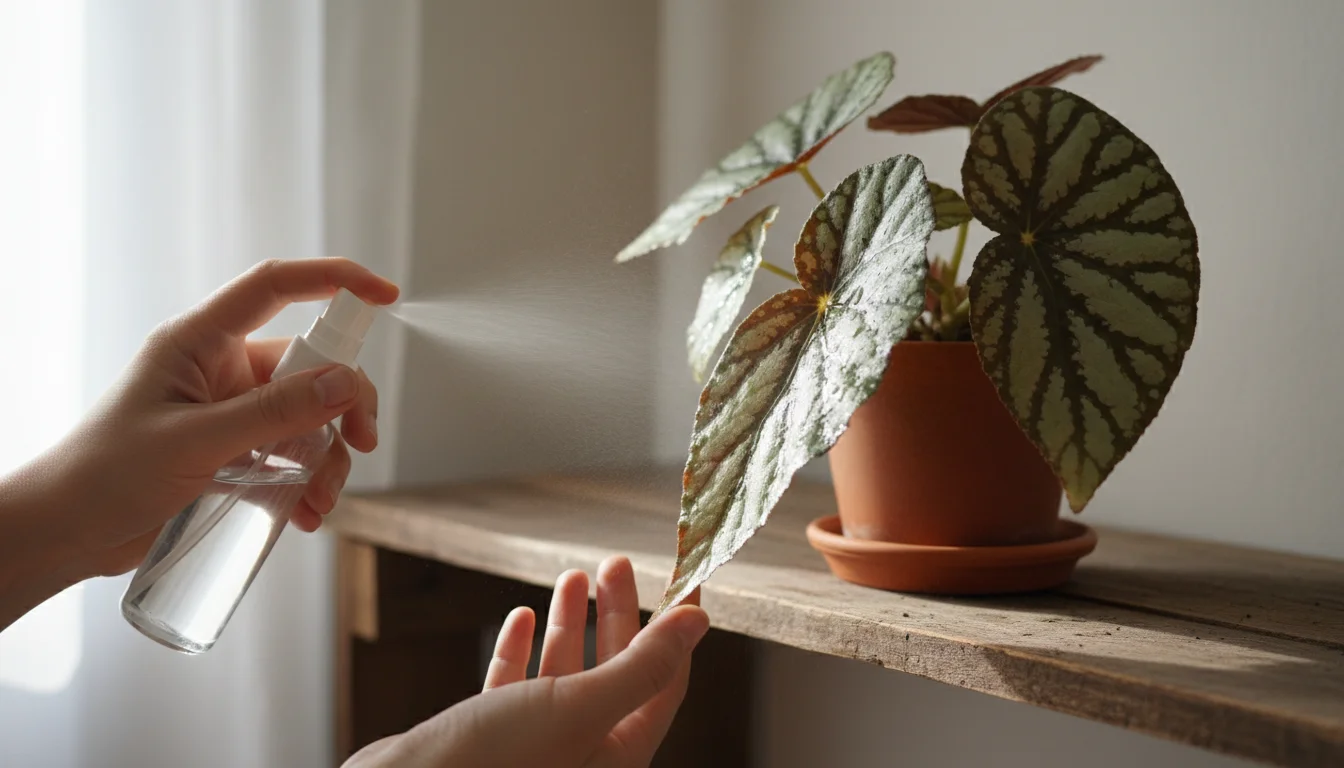
Neem oil is the most accessible treatment and works well on mild to moderate infections. Mix 1-2 teaspoons of cold-pressed neem oil with 1 qt (1 L) of water and a few drops of liquid dish soap as an emulsifier. Shake well before each use – neem separates fast. Spray all foliage, top and bottom of leaves. Repeat every 7-14 days while symptoms persist.
Apply in the morning or evening, not in direct sun. The smell (somewhere between peanut butter and garlic) fades within a day. It’s slower than sulfur but better tolerated by most houseplants. For ferns, succulents, or newly rooted cuttings, test on one leaf first.
4. Apply Sulfur Fungicide for Established Infections
If the infection has spread across multiple plants or the neem oil isn’t keeping up, escalate to sulfur. It’s the most effective readily available fungicide for powdery mildew and works on contact by disrupting fungal metabolism directly.
Sulfur comes in wettable concentrate, ready-to-spray, or dust form. Coat both upper and lower leaf surfaces. Reapply every 7-14 days. It leaves a visible yellow-white residue and smells faintly of onions, both of which fade.
Two rules: don’t apply above 90°F (32°C) or you’ll get leaf burn worse than the mildew. And don’t combine with horticultural oils within the same application window.
5. Switch to Biofungicide for Prevention
Once you’ve knocked back an active outbreak with neem or sulfur, rotating to a biofungicide prevents it from returning without continuing to use chemical treatments. Products like Serenade contain Bacillus subtilis bacteria that colonize the leaf surface and outcompete the powdery mildew fungus.
Mix per label instructions and spray every 7-14 days. Biofungicides work best as prevention – they’re not fast enough to clear an established infection on their own, but for maintenance after treatment they’re highly effective and have essentially no toxicity to pets, people, or beneficial insects.
If you have plants that reliably get powdery mildew every year (begonias and African violets are common culprits), start biofungicide applications before symptoms appear.
Frequently Asked Questions
Is Dawn dish soap good for powdery mildew?
As part of a neem oil mix, yes – a few drops of dish soap emulsifies the oil and water so they actually combine. As a standalone spray, dish soap has some surfactant effect on spores but it’s not a real fungicide. Use it as part of neem oil spray, not on its own.
What kills powdery mildew immediately?
Potassium bicarbonate is the fastest contact killer – it’s approved for organic growing and actually destroys spores on contact rather than just inhibiting them (unlike baking soda, which only inhibits). Sulfur works within days of first application. Neem oil is slower, taking 1-2 weeks of consistent application to clear an outbreak.
Can I save a plant with powdery mildew?
Yes, if you catch it before it’s taken over. Remove the worst leaves, treat with neem or sulfur, and fix the airflow. Plants where more than 50-60% of leaves are heavily infected may not recover – at that point the plant is more spore source than it is plant. If it’s a valued specimen, try anyway, but have realistic expectations.
Is vinegar or baking soda better for powdery mildew?
Neither is a great primary treatment. Vinegar at useful concentrations burns foliage. Baking soda changes the pH on the leaf surface to inhibit spores but doesn’t kill them, and you need very consistent application for it to matter. Potassium bicarbonate does what baking soda tries to do but actually kills spores. Neem oil or sulfur outperform both for clearing an active infection.