Table of Contents
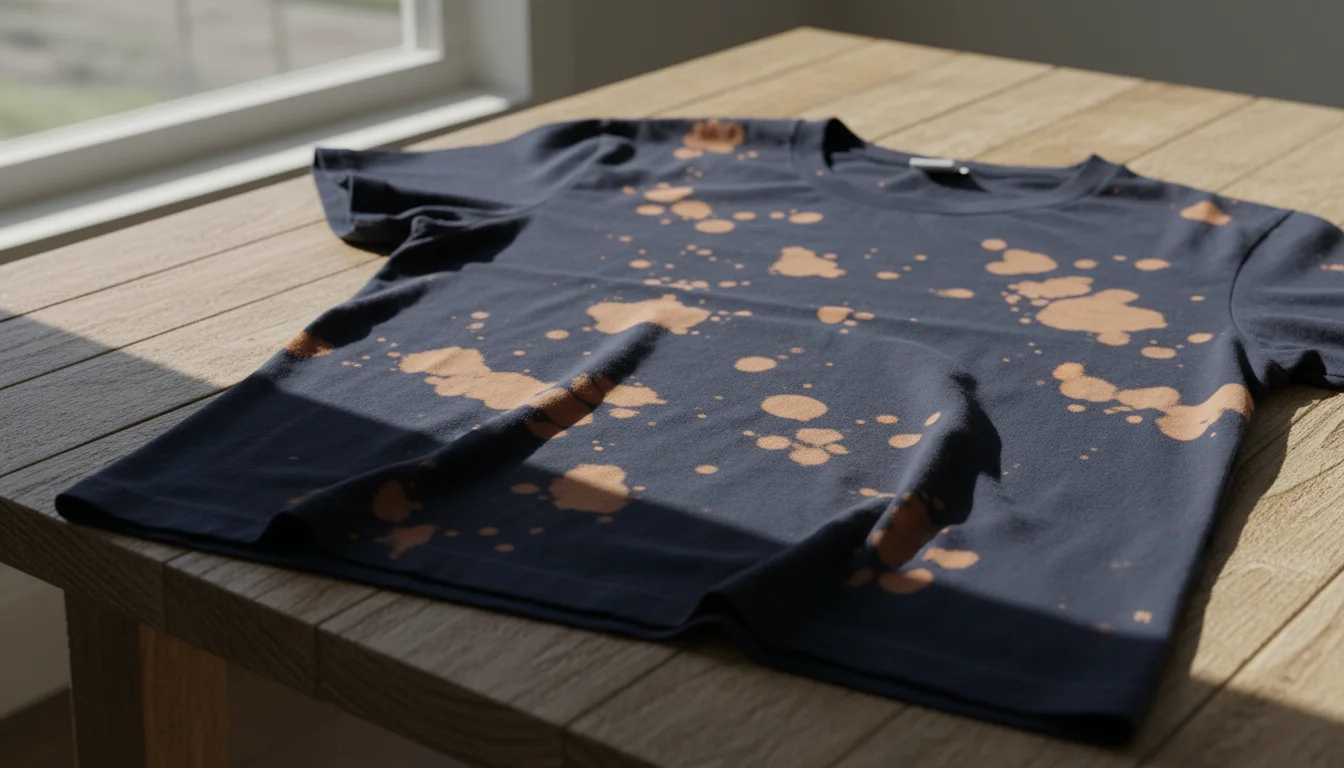
Bleach stains on colored clothes aren’t stains. They’re the opposite. Bleach strips dye from fabric at a molecular level, leaving a permanent discolored patch where color used to be. You can’t put the dye back the way it was. But you can disguise the damage, re-color the spot, or (if you’re feeling bold) lean into it.
First thing: neutralize the bleach before it eats through the fabric. Run cold water over the spot immediately. If you catch it early, mix 2 tablespoons of baking soda with 1 tablespoon of water into a thick paste and spread it over the stain. Let it dry completely, then brush it off. This stops the bleach from continuing to corrode the fibers while you figure out your next move.
1. Rubbing alcohol to blend the dye
Best for small stains on dark clothes. You’re stealing dye from the surrounding fabric and pulling it over the bleached area.
Dab rubbing alcohol on a cotton ball. Work from the outer edge of the stain toward the center, gently rubbing the fabric around the bleach spot. The alcohol loosens excess dye from the surrounding fabric and spreads it into the bleached zone. It won’t be a perfect color match, but on dark fabrics it blends well enough that nobody notices unless they’re looking for it.
2. Fabric markers for small spots
Got a tiny bleach splatter on dark jeans or a black t-shirt? A fabric marker saves you from the full re-dye ordeal. Match the color as closely as possible (bring the garment to the store), then dab the marker onto the bleach spot in light layers. Let each layer dry before adding the next. Heat-set with an iron on the reverse side.
Sharpie works in a pinch for black fabrics. It’ll bleed if it gets wet before it’s heat-set, but once set it holds up to a few washes.
3. Vinegar and rubbing alcohol solution
Mix equal parts white vinegar and rubbing alcohol. Soak a clean cloth in the mixture and dab (don’t rub) the stained area. This works on medium-sized stains where straight rubbing alcohol isn’t enough. The vinegar helps break down residual bleach while the alcohol redistributes dye. Rinse with cold water when the color starts to even out.
4. Dish soap for light bleach marks
If the bleach barely touched the fabric and the stain is faint rather than fully stripped, diluted dish soap can help. Mix 2 teaspoons of clear dish soap into a cup of cold water. Blot the solution onto the stain repeatedly with a clean cloth. This won’t restore deep bleach damage, but for light surface discoloration on pastel or light-colored clothes, it’s worth trying before you escalate.
5. Re-dye the garment with fabric dye
For large stains or when color matching small fixes isn’t working. Buy fabric dye that matches the original color (Rit or Dylon are the standards). Bring the garment with you to the store. Don’t guess the shade.
Strip the original dye first with a color remover so the new dye adheres evenly. Then re-dye the entire garment according to package directions. Use a plastic tub, not your washing machine, unless you want to explain to everyone why the next load came out purple. Wear gloves. Fabric dye stains everything it touches, including you.
6. Bleach the entire garment lighter
Can’t match the dye? Go the other direction. Bleach the whole garment to a lighter shade where the stain blends in.
Fill a sink with 2 gallons of cold water. Soak the garment for 5 minutes, then add 1/4 cup bleach and swish until it reaches the shade you want. Here’s the part most guides skip: you need to stop the bleach with hydrogen peroxide or it’ll keep working and eventually eat holes in the fabric. Drain, refill with 2 gallons of cold water, add 1/2 cup of 3% hydrogen peroxide, and soak for an hour. Rinse and dry.
7. Iron-on patches or appliques
Sometimes the honest move beats the sneaky one. If the stain is in a visible spot and none of the color fixes look right, cover it. Iron-on patches, embroidered appliques, or even strategic pinning can turn an accident into a design choice. This works best on casual clothes (denim jackets, jeans, tote bags). Nobody patches a dress shirt.
8. Dye it a completely different color
If the original color is gone and re-dyeing to match isn’t happening, pick a darker color and dye the whole thing. A bleach-stained navy shirt becomes a perfectly good black shirt. A ruined red top becomes burgundy. You’re not fixing the stain. You’re giving the garment a new identity. Dark colors hide everything.
Bleach damage is permanent. Every method here is a workaround, not a reversal. The faster you act, the more options you have. And keep hydrogen peroxide nearby whenever you’re using bleach. It’s the off switch.