Table of Contents
You know the smell before you know what it is. Sweet, rotten, and getting worse by the day. That dead mouse smell means something is decomposing in your house, pumping gases into your living space, and no amount of air freshener is going to fix it. The stench peaks in the first two weeks and can hang around for months if the carcass is sealed inside a wall. Here’s how to actually solve it, starting with the only step that matters.
1. Locate and Remove the Carcass
Nothing else works until this is done. Every other method on this list is damage control while the source is still rotting.
Follow your nose to the strongest concentration of odor. Press close to electrical outlets, baseboards, vent covers, and pipe gaps – these are the spots where smell escapes from wall cavities. Check behind appliances, inside insulation, attic corners near entry points, and under floorboards.
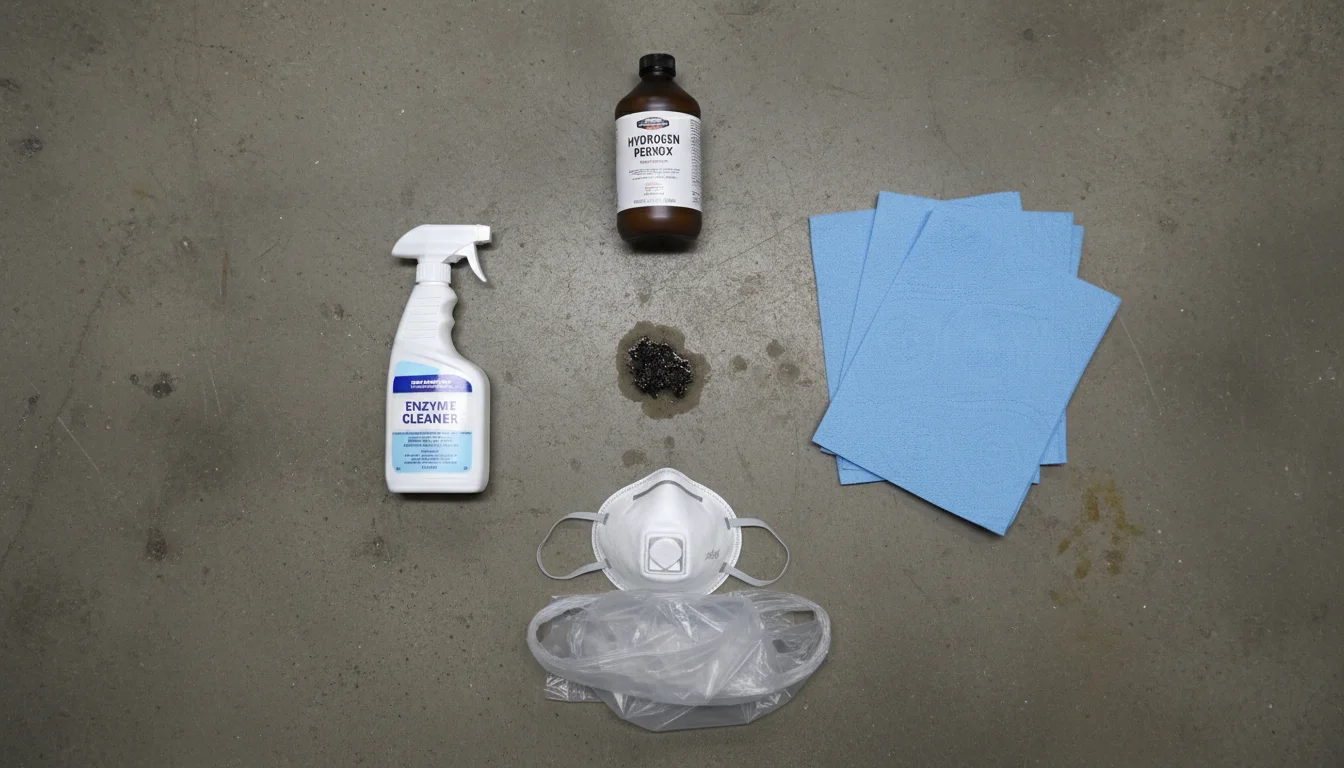
Wear gloves and a dust mask. Pick up the carcass with a plastic bag turned inside-out, double-bag it, seal it, and toss it in an outdoor bin.
Can’t find it?
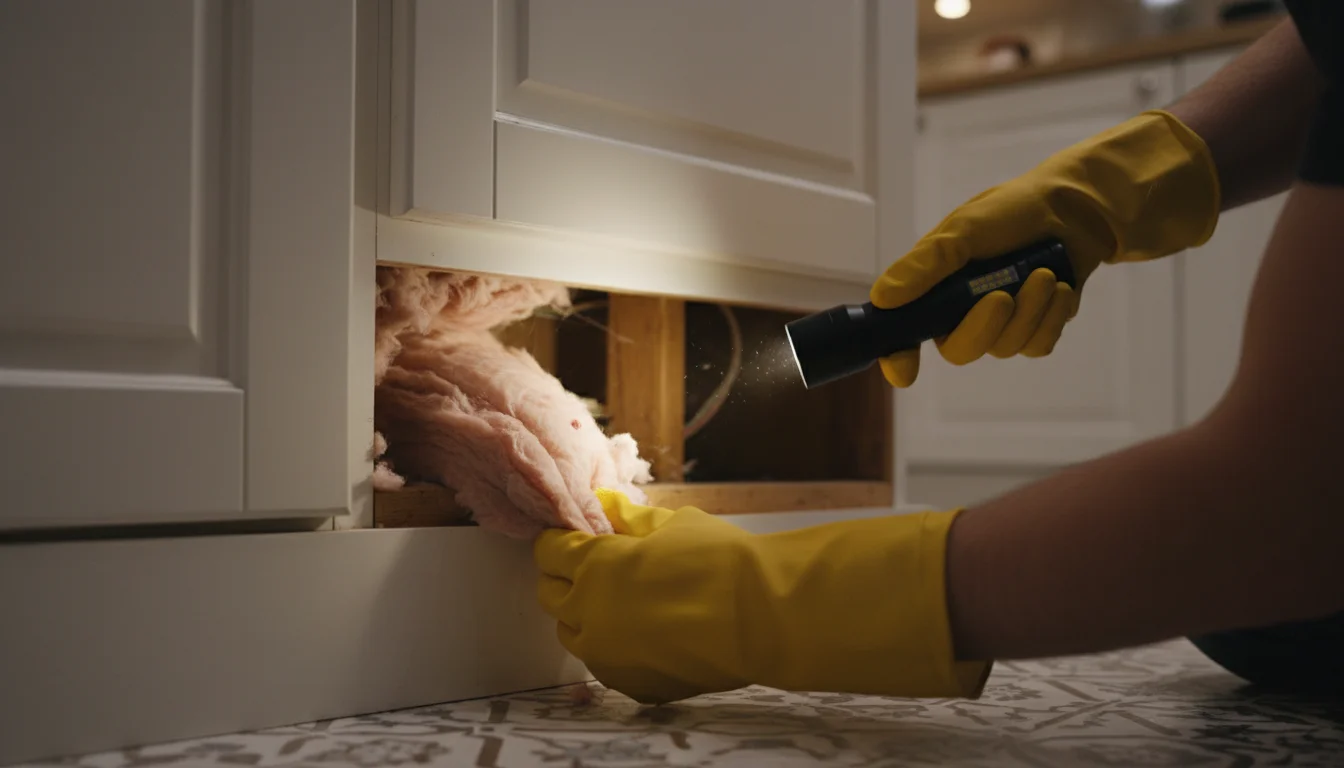
Systematically pull out every appliance, open vent covers, check ductwork, probe under cabinets. If you’ve ruled out every accessible area, it’s in a wall void or under the floor. Cut a small inspection hole where the smell is strongest and use a flashlight to probe the cavity. Worth doing – waiting it out takes 6 to 10 weeks minimum and the smell is brutal the whole time.
If it’s truly inaccessible, skip to the absorber and ventilation methods below while decomposition runs its course.
2. Apply Enzyme Cleaner to the Contaminated Area
Regular cleaners don’t touch this. Bleach kills bacteria but leaves behind the proteins and fats that actually smell. Enzyme cleaners digest those compounds at a molecular level.
Soak the contaminated surface generously. The enzymes need to stay wet for at least 10 to 15 minutes to work. On porous surfaces like carpet or concrete, apply more than you think you need and cover with plastic wrap to keep it damp. The contamination soaks deep, so the cleaner has to follow it down.
Look for products labeled for decomposition or crime scene cleanup. They’re more concentrated than pet urine enzyme cleaners and work significantly faster on this type of contamination.
3. Hydrogen Peroxide to Disinfect the Site
After enzyme treatment, disinfect. Decomposing rodents carry hantavirus and leptospirosis risk, so this isn’t optional.
Apply 3% hydrogen peroxide (the drugstore kind) directly to the contaminated surface. Let it fizz for 10 minutes, then wipe clean with paper towels and bag them immediately. Hydrogen peroxide breaks down into water and oxygen, so there’s no chemical residue.
4. Open Windows for Ventilation
Cross-ventilate: open windows on opposite sides of the house to pull fresh air through. A single open window doesn’t move enough air. Even in cold weather, 10 to 15 minutes of cross-ventilation makes a real difference.
Do this daily until the smell is gone. Focus on the affected room first, then let the airflow move through the rest of the house.
5. Place Activated Charcoal or Zeolite
These are your best passive absorbers for the residual smell that lingers after cleanup, or for managing odor when the carcass is inaccessible. Both outperform baking soda on severe decomposition smells.
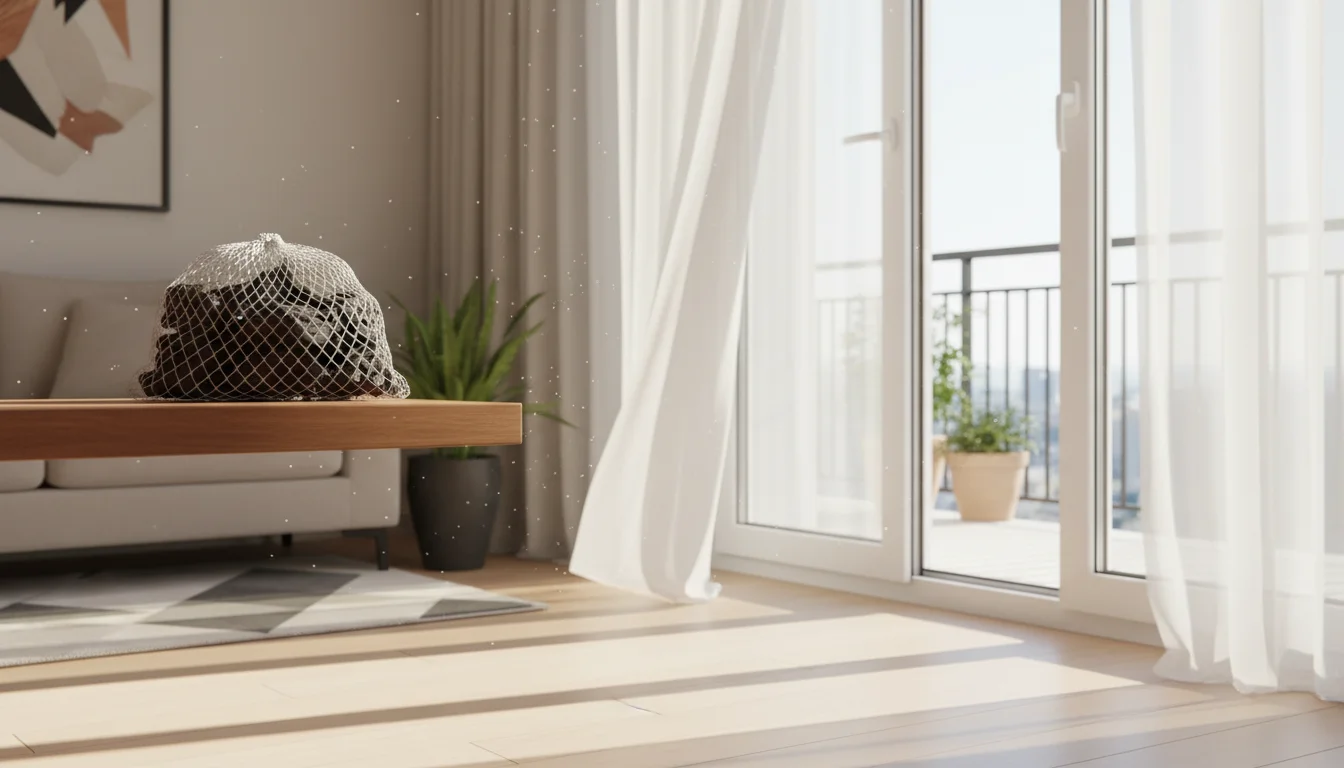
Place mesh bags or open containers of activated charcoal throughout the affected area – near the source, in corners, on shelves. Reactivate charcoal by leaving it in direct sunlight for a few hours each month. Zeolite refreshes with a rinse and dry. Both are reusable and last longer than disposable options.
6. White Vinegar Spray for Odor Neutralization
Vinegar’s acetic acid reacts with and neutralizes the alkaline odor compounds from decomposition. Spray a 50/50 water-vinegar mix on hard surfaces where the smell is strongest, or use it undiluted for severe spots. The vinegar smell dissipates within an hour, taking the dead mouse smell with it.
For ambient air treatment, place bowls of undiluted white vinegar in the room overnight. Replace daily. The vinegar absorbs surrounding odor molecules as it evaporates.
7. HEPA Air Purifier with Carbon Filter
A HEPA filter alone won’t help here. You need the activated carbon filter component, which traps odor molecules from the air. Run it continuously in the affected room during cleanup and recovery.
Most useful when the carcass is inaccessible and you’re waiting out the decomposition timeline. Change the carbon filter on schedule or it saturates and stops working.
8. Whole-Room Odor Fogger
Last resort for stubborn ambient odor after you’ve done everything else. Foggers release a fine mist that reaches inside wall gaps, ceiling cavities, behind furniture, and into ductwork openings – places sprays and wipes can’t touch.
Use chlorine dioxide formulations specifically made for biological odors, not fragrance-based "air freshener" foggers. For HVAC contamination, run the fogger near the return vent with the fan on to treat the ductwork simultaneously.
Seal the room, evacuate all people and pets, and ventilate thoroughly before re-entry. One treatment after proper cleanup usually handles residual ambient odor.
Prevention
The best way to prevent dead mouse smell is to prevent dead mice in your walls. Seal entry points with steel wool and caulk – mice can squeeze through gaps as small as 1/4 in (6 mm). Use snap traps in high-traffic areas so mice die in accessible locations. And don’t use poison bait indoors. Rodenticide is the number one cause of the die-in-wall problem: poisoned mice crawl into wall cavities to die.
When to Call a Professional
Call a pest control company if the carcass is in a sealed wall cavity you can’t access and the smell is severe, if your HVAC system is contaminated (smell comes through every vent), if you’re finding multiple carcasses (that’s an active infestation, not a one-off), or if immunocompromised household members are concerned about pathogen exposure.
Frequently Asked Questions
How long does it take for a dead mouse to stop smelling?
Peak smell hits in the first 1 to 2 weeks. A small mouse in a ventilated area can stop smelling within a week. In a sealed wall cavity, expect 6 to 10 weeks for the smell to fully dissipate. Larger animals take longer.
How do you get rid of dead animal smell when you can’t find the source?
Systematic search first: pull out appliances, open vents, check ductwork, probe under cabinets. If it’s truly inaccessible, combine charcoal absorbers, daily vinegar bowls, cross-ventilation, and an air purifier with a carbon filter. The smell will end when decomposition completes.
Is dead mouse smell dangerous?
The odor itself won’t harm you. The real risk is from hantavirus and leptospirosis bacteria present in rodent carcasses and droppings. Always wear gloves and a dust mask when handling a dead mouse or cleaning the contaminated area.