Table of Contents
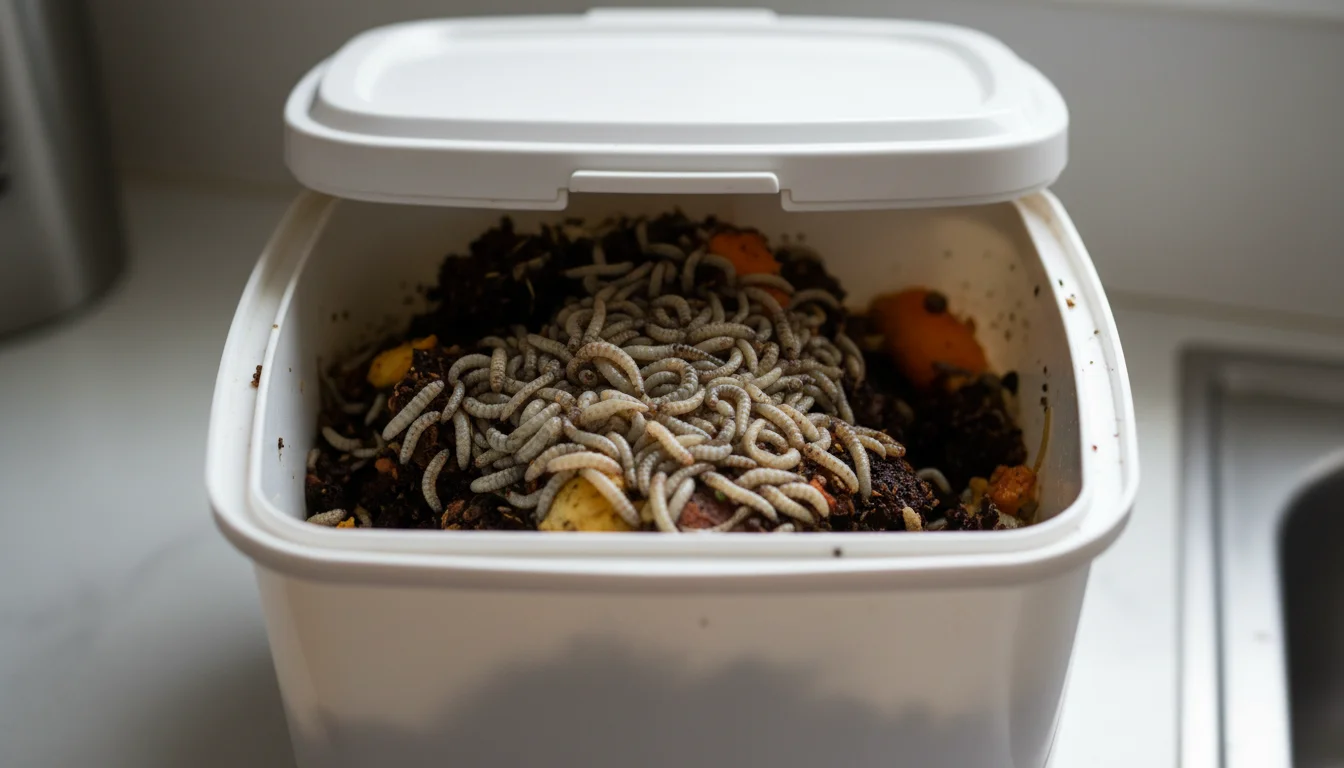
Knowing how to get rid of maggots starts with finding the source. Maggots are fly larvae – a female fly landed on something organic and rotting – your bin, a piece of meat, dead animal waste – and laid 75 to 150 eggs. In warm weather those eggs hatch in 8 hours. By the time you notice a problem, you’ve got larvae that are 2 to 5 days into a 5-8 day feeding cycle before they pupate into more flies.
Find the source first. Everything else is treating symptoms. Once you’ve located it – a bin, a forgotten bag, something dead in a corner – then you kill what’s there and address the breeding site at the same time.
1. Boiling Water
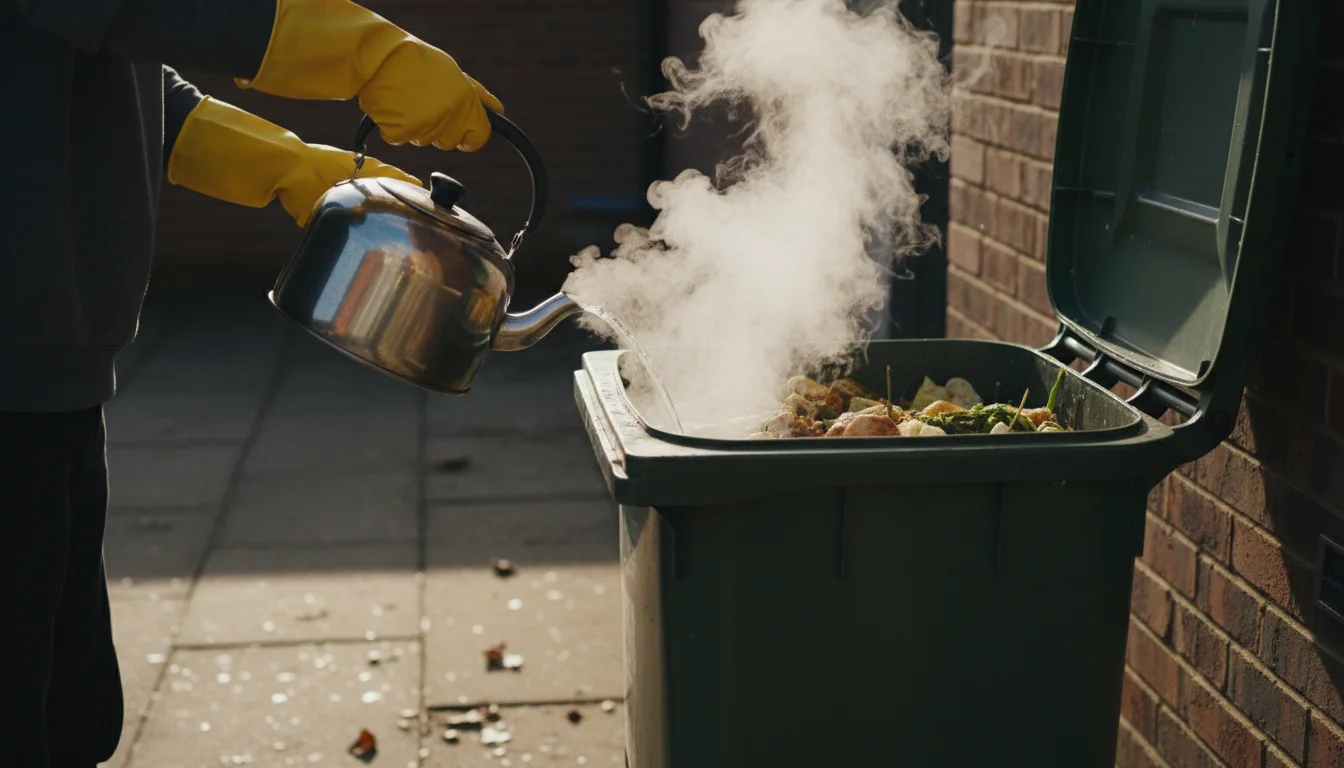
The fastest free method for outdoor bins and hard surfaces. Boil a full kettle and pour it directly over the maggots in a slow, controlled stream. For a bin, close the lid immediately after and let the steam do the rest – the trapped heat kills anything the water missed. Combine 3 parts boiling water with 1 part white vinegar if you want to disinfect the surface at the same time.
For a bin infestation, you’ll want to do this, then let it cool, scrub the interior with hot soapy water, and dry it in direct sunlight before using it again. Wet, dark bins stay attractive to flies. Dry, clean ones are less so.
Boiling water won’t work on carpets or inside the house. It’s an outdoor, hard-surface solution only.
2. Vinegar or Bleach Solution
For indoor maggots on hard floors or in drains, pour a 3:1 water-to-white-vinegar solution directly on them. Let it sit for an hour before wiping up. The acidity kills them and removes the organic residue that attracted flies in the first place.
If you’re dealing with a bin or container and want something stronger, mix equal parts bleach and hot water, pour it in, close the lid, and let the fumes work for 30 minutes. This is more aggressive than vinegar but more effective on heavy infestations. Don’t mix bleach with ammonia – that’s a dangerous gas combination.
A bleach-soaked paper towel laid directly on a small cluster kills them on contact and disinfects the surface underneath.
3. Vacuum Them Up
For maggots on carpets or floors where you can’t pour liquid, a vacuum is your best immediate option. Use a shop vac or a bagged vacuum – not a bagless one where you’ll have to empty the canister and risk spreading them.
The critical step: the moment you’re done, take the vacuum outside and remove or seal the bag. If you used a canister vac, empty it directly into an outdoor bin and wipe the canister with bleach solution before bringing it back in. A Reddit thread from someone who spent years cleaning industrial sites recommends pouring a small amount of bleach directly into the vacuum body or bag before sealing it – kills anything still moving inside.
Vacuuming handles the larvae you can see. It doesn’t address eggs or pupae. Follow up with DE or a bleach wipe on the surface.
4. Diatomaceous Earth for Maggots
Food-grade DE is a fine powder that damages the waxy coating on maggot cuticles, causing them to dehydrate and die within 48-72 hours. It’s not an instant kill, but it’s non-toxic to humans and pets and keeps working as long as it stays dry.
Dust a thin layer over affected areas – along floor edges, around bin bases, in any crack or gap where maggots are moving. The powder works through physical contact, so they have to crawl through it. Reapply after any wet cleaning since moisture clumps DE and stops it working.
Best used as a follow-up after you’ve removed the visible infestation. DE provides ongoing attrition against anything you missed and helps prevent re-establishment while the area dries out and loses its appeal.
5. Insecticide Spray
For a severe infestation or when you’re also dealing with a fly problem in the room, a pyrethrin or permethrin spray provides fast knockdown. Spray directly on maggot clusters and on surfaces where flies are landing. Follow label directions precisely – never spray food prep surfaces, keep pets and children away until dry.
The limitation: insecticide kills the larvae you can see and the adult flies in the immediate area, but it does nothing about eggs or pupae already developing nearby. Without removing the food source, you’ll have a new generation within a week. Use spray to knock down the active population while you deal with the root cause.
Outdoor-rated foggers and bug bombs are not appropriate here – they’re disproportionate and won’t reach where the problem is concentrated anyway.
6. Yellow Sticky Fly Traps
Sticky traps hung near windows, above bins, and around the kitchen intercept the adult flies before they can lay another round of eggs. They won’t solve an active infestation but they’re a useful monitoring tool that also reduces the population driving it.
Check them every couple of days to track activity. A trap covered in flies near a particular window or corner tells you where flies are entering – seal that gap. Replace traps when they fill or go dusty (they lose tackiness fast in a garage or outdoor area).
Prevention
Once you’ve cleared the infestation, maggots won’t come back if flies can’t breed. Three things matter:
- Seal your bins. Flies lay eggs through gaps in bin lids. A bin that closes firmly with no cracks gives them nowhere to land. Wash the bin interior monthly and dry it fully before the next use.
- Remove pet food. A bowl left out overnight is exactly the kind of organic matter flies target. Feed on a schedule, pick up bowls immediately, and store pet food in a sealed hard container – not the paper bag it comes in.
- Clean up organic waste fast. Meat packaging, fruit that’s gone off, animal waste in the yard – anything that smells to a fly is a potential breeding site. Bag it, seal it, and get it out of the house same day.
When to Call a Pro
If maggots keep appearing despite cleaning and you can’t find the source, there may be a dead animal in the wall void, under floorboards, or in an inaccessible part of the structure. This is especially likely in older homes after a rodent problem. Professionals have the tools to locate and remove it without tearing up the building.
Also worth calling a pest controller if flies are coming from a drain you can’t access – fly larvae in drain pipes need drain treatment products and sometimes physical inspection of the line.
FAQ
What causes maggots in the house?
A female fly found something organic and decaying – garbage, meat, pet waste, a dead animal – and laid eggs. They hatch in as little as 8 hours in warm weather. The presence of maggots means a fly got in and found a food source. Find what that source is and you’ve found the real problem.
Can vinegar kill maggots?
Yes. A 3:1 water-to-white-vinegar solution poured directly on them kills them within the hour. It also cleans the surface. Boiling water is faster for larger volumes; vinegar is better for indoor situations where pouring boiling water isn’t practical.
Can Dawn dish soap kill maggots?
Yes – soap coats their breathing pores and suffocates them. Add a generous squeeze to hot water and pour it on. Works faster if the dish soap contains borax. Not as fast as boiling water or bleach solution, but fine for smaller clusters on sensitive surfaces.
How long does a maggot infestation last?
Larvae live 5-8 days before pupating. If you kill them all and remove the food source, it’s over. Without action, each generation of pupae becomes adult flies that lay more eggs – the cycle repeats every 2-3 weeks indefinitely.