Table of Contents
Scars don’t just show up on your skin – they stick around, sometimes for years, sometimes forever. That’s the honest version of what you’re dealing with. The good news is that scar tissue is living tissue. It remodels over time, and you can influence how that process goes, anywhere from fading a post-acne mark with kitchen staples to booking a laser appointment and getting serious.
What actually works depends on the scar type you’re dealing with. Acne scars (the pitted, atrophic kind) respond to very different treatments than raised keloids or flat surgical scars. Burn scars are their own category entirely. And the age of the scar matters too – fresh scar tissue is far more responsive than something you’ve had for a decade.
The range of options here is wide. On one end: silicone sheets and aloe vera, things you can start tonight at no real cost. On the other: subcision, punch excision, scar revision surgery – dermatologist territory, meaningful results, meaningful price tags. Most people land somewhere in the middle, using a couple of topical treatments consistently while deciding whether the scar is worth clinical investment.
This hub covers the full picture. Two deep-dive articles break things down by context: one for clinical treatments that require a professional, one for everything you can do at home. Both are worth reading before you commit to anything.
Clinical Procedures
If you want the most significant improvement in the least amount of time, you’re in clinical territory. These aren’t magic (no scar treatment is), but they’re the heaviest tools available, and several of them produce results that home remedies simply can’t replicate.
Microneedling is probably the most widely available clinical option right now. It uses a device covered in tiny needles to create controlled micro-injuries in the skin, triggering a collagen-production response. For atrophic (pitted) acne scars especially, a series of three to six treatments spaced four to six weeks apart produces real, measurable textural improvement. It won’t erase deep ice-pick scars, but it makes a visible difference on rolling and boxcar types.
Laser therapy comes in several varieties – ablative lasers resurface the skin’s top layer, fractional lasers go deeper while leaving surrounding tissue intact. Ablative treatment gets you more dramatic results in fewer sessions; fractional gets you meaningful improvement with less downtime. For burn scars and surgical scars, laser is often the first clinical recommendation.
Chemical peels at clinical strength (not the gentle versions in retail skincare) accelerate cell turnover and can reduce post-inflammatory hyperpigmentation significantly. They work better on surface discoloration than on textural scarring.
For raised scars – keloids and hypertrophic scars – corticosteroid injections are the standard first line. They flatten and soften raised tissue over a series of appointments. Some dermatologists combine them with cryotherapy (freezing) for stubborn keloids. Dermal fillers go the opposite direction: injecting volume under depressed scars to bring them level with the surrounding skin. It’s a temporary fix (fillers dissolve over 12 to 18 months) but an immediate one.
Subcision is a minor surgical technique where a needle is inserted under a depressed scar to break the fibrous bands tethering it down. It’s particularly effective on tethered rolling acne scars that don’t respond well to surface-only treatments. Punch excision physically removes individual ice-pick scars and closes with a suture or skin graft. And scar revision surgery is the option for large, functionally problematic, or cosmetically significant scars where other methods have failed.
Pressure therapy – sustained compression using garments or silicone – is primarily used in burn scar management and is typically prescribed as part of a formal rehabilitation program.
Topical Treatments
Topical treatments won’t deliver the same level of change as clinical procedures, but several are genuinely effective, especially for newer scars, and they’re the right starting point before spending money on appointments.
Silicone gel sheets are the most evidence-backed option in this category. They work by maintaining hydration at the scar surface and regulating collagen production in healing tissue. You wear them over the scar for 12 or more hours per day – commitment is the catch, but studies back them for reducing raised scar height and improving texture, particularly in hypertrophic scars. Silicone gel (the spreadable version) works by the same mechanism if sheeting isn’t practical for your scar location.
Over-the-counter scar creams vary a lot in quality. The better ones contain silicone, onion extract, or retinol as active ingredients. The ones that lean heavily on vitamin C and botanical extracts are mostly marketing. Read the label before spending $40 on something that won’t do much.
Onion extract gel (the best known brand is Mederma) has mixed evidence. Some studies show modest improvement in scar redness and texture; others show minimal effect versus plain moisturiser. It doesn’t hurt, and it does seem to help some people, so it’s worth a trial on newer scars. Don’t expect dramatic results.
For scars that are red or hyperpigmented rather than textured, niacinamide serums and azelaic acid are worth knowing about – both inhibit melanin production and reduce post-inflammatory discoloration more reliably than most dedicated scar creams.
Natural Remedies
Most natural remedies work modestly, if at all. A few are worth using because they’re inexpensive, low-risk, and have some supporting evidence. Most of the rest are internet folklore.
Rosehip oil is the standout. It’s high in linoleic acid and vitamin A precursors, both of which support skin regeneration. There’s actual clinical data (not just anecdote) showing it reduces post-surgical scar discoloration and improves texture when applied twice daily. It’s not going to resurface a pitted acne scar, but for general scar fading it earns its reputation.
Aloe vera – fresh from the plant or pure gel – does reduce inflammation and supports wound healing. Applied consistently to a healing scar, it’s a reasonable supporting treatment. The caveat is that most aloe products on the market are watered-down and won’t do much. Pure, fresh gel is the version worth using.
Honey (medical grade) has legitimate wound-healing properties, and there’s reasonable evidence it reduces scar formation when applied during the active healing phase. Manuka honey is the version with the most research behind it.
Vitamin E oil is one of the most repeated scar recommendations on the internet and one of the least supported by evidence. Multiple controlled studies have found no significant improvement in scar appearance from topical vitamin E – and in some people it causes contact dermatitis. It’s not dangerous, but it’s probably not doing what people think it is.
Apple cider vinegar and lemon juice are both acidic enough to cause chemical burns if used undiluted on healing skin. They get recommended for fading hyperpigmentation, but the risk-to-benefit ratio is bad when gentler options exist. If you want to try them, dilute significantly (1 part to 10 parts water) and patch-test first.
Coconut oil is a decent moisturiser. As a scar treatment specifically, the evidence is thin. It keeps the skin supple, which isn’t nothing, but don’t expect it to fade or flatten anything.
Where It Shows Up
For a full breakdown of dermatologist-grade treatments – microneedling, laser, subcision, corticosteroid injections, and the rest – with specifics on how each is administered and what to expect from results: How to Get Rid of Scars with Clinical Treatments.
For the home-based side of things – silicone sheets, rosehip oil, onion extract gel, and what’s actually worth buying versus what’s hype: How to Get Rid of Scars with Home Remedies.
How Scars Form
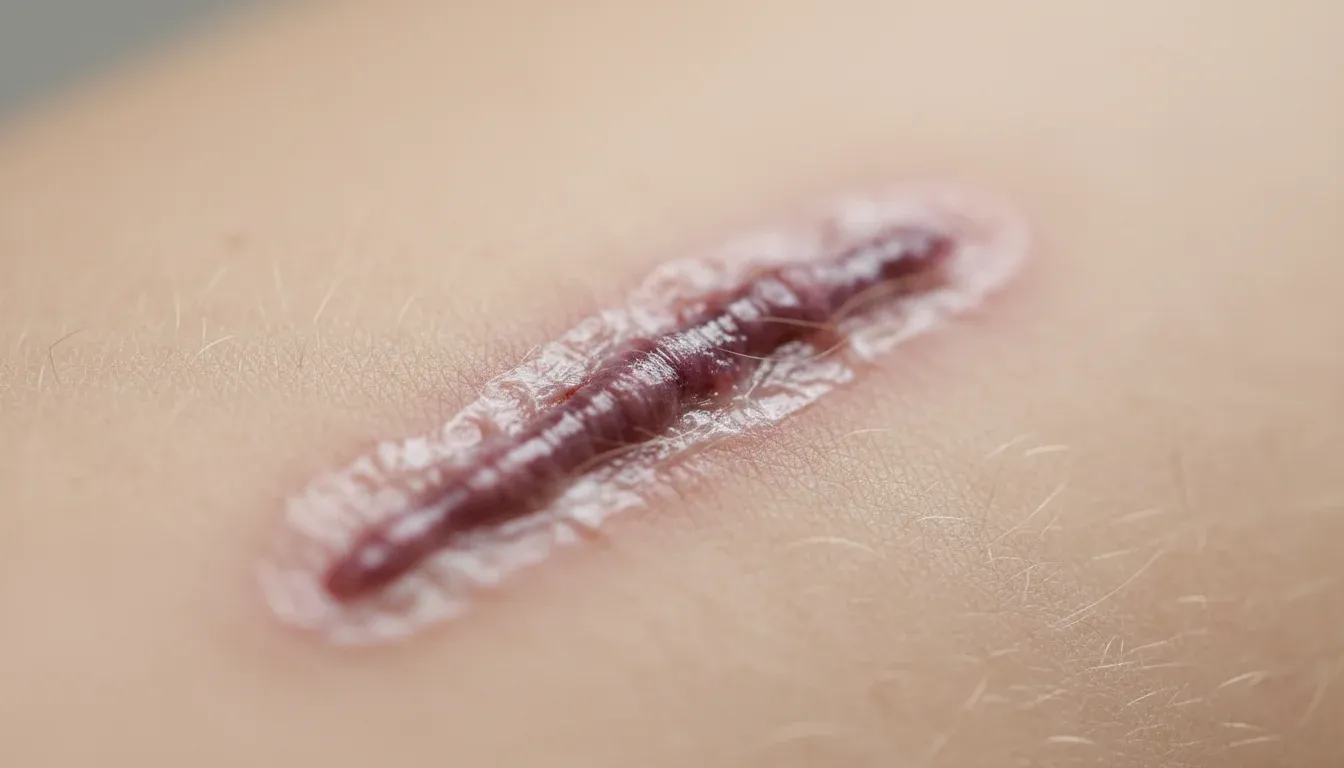
Scars are the skin’s repair mechanism. When the dermis (the deeper layer of skin) is damaged – by injury, surgery, acne, or burns – the body fills the wound with collagen fibres to close it. The problem is that repair collagen is laid down fast and in a disorganised way, not in the structured pattern of normal skin. That difference in collagen organisation is what makes a scar visible.
The outcome varies by person and by wound type. Genetics play a large role – some people scar minimally from significant injuries, others form keloids from small cuts. Darker skin tones are more prone to keloids and post-inflammatory hyperpigmentation. Age matters: younger skin heals faster but can also produce more robust scar tissue.
The healing phase – the first several weeks after a wound closes – is the most critical window for influencing what the scar becomes. Keeping the area moisturised and protected from sun exposure during this period is the single most important thing you can do to minimise final scar appearance.
Prevention
You can’t prevent scarring entirely, but you can reduce severity. The basics:
Keep wounds clean and moist during healing. Dry scabs are not the goal – they increase scar formation. Cover healing wounds with a non-stick dressing and apply petroleum jelly or a wound-healing ointment.
Sun protection matters. UV exposure causes hyperpigmentation in healing scars that can persist for years. SPF 30 or above on any healing scar that’s exposed to sunlight, every day, until the skin has fully matured (which takes up to 12 months for surgical scars).
Don’t pick. Acne scars form because the wound gets disrupted repeatedly. Every time you pick at a healing spot, you’re restarting the wound-healing clock and increasing the chance of a textural scar.
For people prone to keloids: tell your surgeon before any elective procedure. There are pre- and post-operative protocols (including pressure dressings and steroid injections immediately post-surgery) that reduce keloid formation in susceptible people.
When to See a Professional
See a dermatologist if:
- The scar is raised, thickened, or growing beyond the original wound boundary (these are keloids and need clinical management – they won’t resolve on their own)
- The scar is restricting movement (common in burn scar contractures near joints)
- Scar tissue is painful or itchy long after the wound has healed
- The scar is significantly affecting your appearance and home treatment hasn’t moved the needle after six months of consistent use
A dermatologist can assess the scar type and recommend whether the best path is topical prescription treatments, in-office procedures, or a combination. For keloids especially, early treatment is better – they’re much harder to manage once they’re established.
Frequently Asked Questions
Do scars ever go away completely?
Most don’t, but they do improve significantly over time. The first 12 to 18 months of healing bring the most visible change – redness fades, texture smooths somewhat, and raised scars flatten. After that, improvement slows. With active treatment, results improve further, but complete elimination is only possible with procedures like excision (and even then, you’re trading one scar for a smaller, better-positioned one).
How long does it take for a scar to fully form?
Skin continues to remodel for up to two years after a wound. The scar is considered "mature" at that point. Treatment is most effective while the scar is still maturing, but even mature scars respond to clinical procedures like laser and microneedling.
Are OTC scar treatments worth the money?
Silicone-based products: yes, if you’re consistent. Most other scar creams: probably not. The marketing is far ahead of the evidence for vitamin-C-heavy scar gels and most herbal formulas. If you’re going to spend money, spend it on silicone sheeting or a tube of silicone gel – they have the best evidence base outside of clinical treatment.
Can I treat a scar while it’s still healing?
Some treatments are appropriate during active healing (keeping the wound moist, gentle aloe, medical-grade honey). Most treatments – silicone sheeting, retinol, chemical exfoliants, and all clinical procedures – should wait until the wound is fully closed. Starting aggressive treatment on an open or recently closed wound can damage healing tissue and worsen the outcome. When in doubt, give it at least four to six weeks after full closure before reaching for anything beyond basic wound care.