Table of Contents
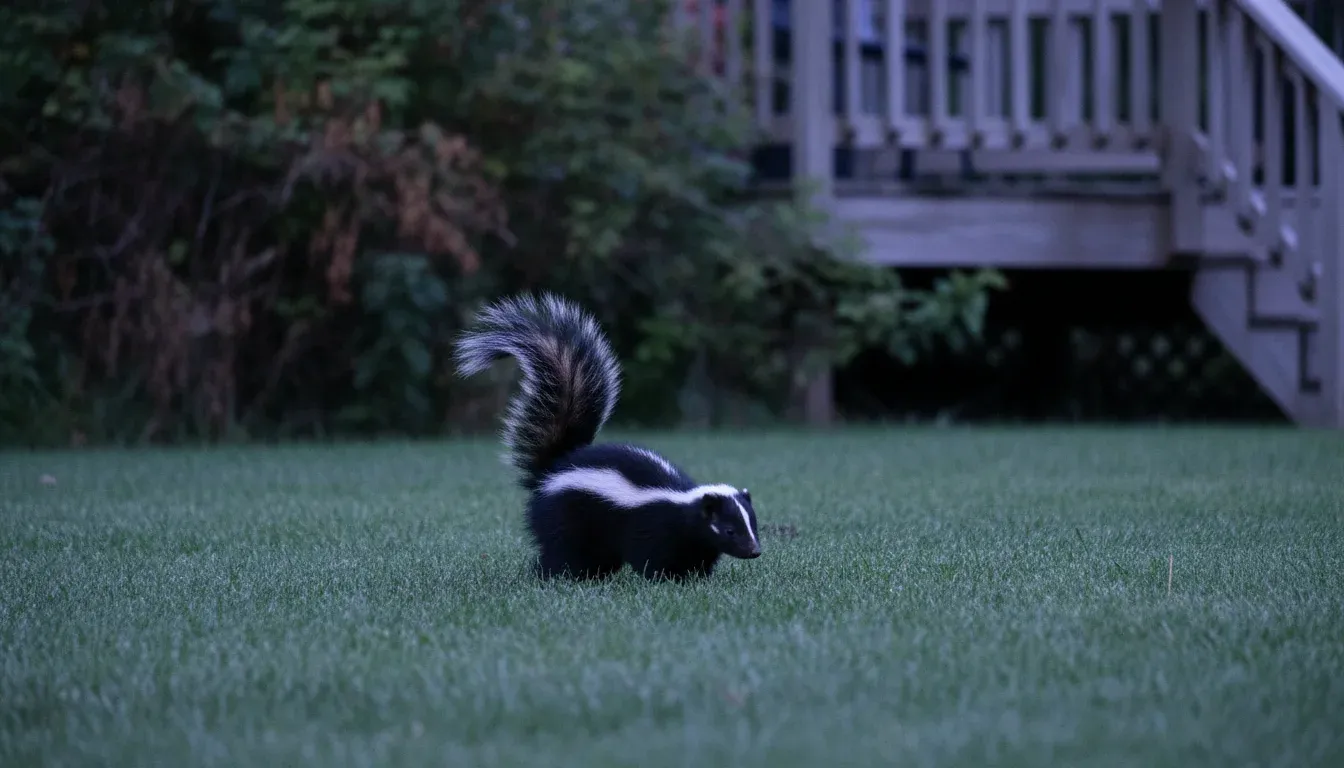
Skunks don’t want to be near you any more than you want to be near them. They’re there because you’re offering something useful: food, shelter, or both. The fix is usually simpler than people expect – cut off the attractants, close up the access points, and they move on. The spray is a last resort for them too; they prefer to avoid the situation entirely.
The problem is most people do things in the wrong order. They try to trap the skunk before sealing the den site, or they scatter repellents without addressing why the skunk is there in the first place. Skunks are persistent enough that half-measures don’t work. You need to do this properly.
Repellents and Deterrents
Repellents work best as deterrents before an animal establishes a den – they’re less reliable once a skunk has decided somewhere is home. That said, they’re a useful tool in the right context.
Ammonia-soaked rags or white vinegar-soaked cloths placed near den entrances irritate the skunk’s sensitive nose and encourage it to move on. Reapply after rain. This works better for casual visitors than for established dens.
Citrus peels scattered around garden beds and entry points are mildly effective repellents. Skunks don’t like the scent. Replace them every few days as they dry out and lose potency.
Homemade spicy repellents – cayenne pepper, chili flakes, or a capsaicin solution sprayed around the perimeter – irritate the nasal passages and paws. Apply along fence lines and around structures. Reapply after rain.
Predator urine (coyote or fox urine, available at garden centers) triggers an avoidance instinct. Apply around the perimeter of the yard or near den sites. It requires consistent reapplication – once a week or after rain.
Bright lights and motion-activated floodlights exploit skunks’ preference for darkness. They’re crepuscular animals that prefer to forage at dusk and dawn. A well-lit yard is a less appealing yard.
Electronic repellent systems – motion-activated sprinklers – are the most reliably annoying deterrent for persistent animals. The combination of sudden noise, movement, and water is effective. Place them at den entrances or along known travel paths.
Habitat and Attractant Removal
This is the step most people skip, and it’s why their repellent efforts fail. Remove the attractants and the skunk has no reason to be there.
Removing attractants means: securing garbage in heavy bins with locking lids, removing pet food from outdoors overnight, eliminating accessible bird feeders or switching to hanging feeders with catch trays, and cleaning up fallen fruit from trees. Grubs in your lawn are also a major attractant – skunks dig for them. A grub treatment in late summer can reduce the food source significantly.
Yard maintenance keeps skunks from setting up. Short grass, cleared brush piles, stored firewood kept elevated, and sealed gaps around decks and sheds remove the habitat options. A tidy yard is a boring yard for a skunk.
Exclusion and Structural Barriers
Once you’ve dealt with the attractants, sealing the access points is what permanently solves the problem. This is the most important step for skunks under decks, sheds, porches, or any structure.
Hardware cloth (1/4 inch / 6mm galvanized wire mesh) buried 12 inches (30cm) underground and extending 12 inches (30cm) outward at an L-shape along the foundation will stop skunks from digging under. Fasten it securely to the structure above ground. This is the permanent fix.
Fencing around the property perimeter should extend at least 2 feet (60cm) underground if you have persistent burrowing. An electric wire at the base of an existing fence is an alternative for chicken coops and garden beds.
Trapping and Eviction
If a skunk is already denning under a structure, you have two real options: one-way door eviction or trapping.
One-way door eviction is the preferred method. Install a one-way door at the active den entrance (after verifying it’s the only entrance) and seal all other access points. The skunk exits to forage at night and can’t return. Seal permanently after 3-4 days. Don’t do this in spring if there’s any chance of young in the den – you’ll trap juveniles inside.
Baiting and trapping uses a live trap baited with canned fish or peanut butter. Cover the trap with a tarp before approaching it (this reduces panic and therefore spray risk). Relocate the skunk at least 5 miles (8km) away. Check local regulations first – many states have rules about wildlife relocation.
Professional wildlife removal is worth calling if you’re dealing with a mother with young, a large group, or repeated infestation despite your own efforts. Professionals have the equipment and experience to handle the spray risk.
When to Call a Professional
A skunk that’s active during daylight hours, moving erratically, or showing no fear of humans is potentially rabid. Don’t approach it. Call animal control. Skunks are one of the primary rabies vectors in North America.
Otherwise, professional removal is a convenience rather than a necessity for most situations. But if you’re not comfortable with the trapping process, there’s no shame in letting someone else handle it.
Where It Shows Up
How to get rid of skunks with repellents – Ammonia, citrus, spicy sprays, predator urine, motion lights, and electronic deterrents. The tools for discouraging skunks before they settle in.
How to get rid of skunks with exclusion and removal – Hardware cloth installation, attractant removal, yard maintenance, one-way door eviction, trapping, and professional removal. The complete playbook for getting skunks out and keeping them out.