Table of Contents
You probably can’t identify the bug. That’s fine – most people can’t, and knowing how to get rid of tiny bugs in house doesn’t require it. The common culprits (book lice, silverfish, psocids, grain weevils, springtails) all respond to the same environmental controls: reduce moisture, remove food sources, close the gaps they’re coming through. This guide covers those methods in order, from most broadly effective to most targeted.
Where you find them tells you which methods to prioritize. Bathroom or kitchen? Moisture-dependent species – silverfish, springtails, psocids. Start with humidity control. Pantry or dry food storage? Grain pests – weevils, psocids, grain beetles. Start with method 3. Everywhere with no clear pattern? General infiltrators coming in from outside. Start with sealing.
1. Reduce Indoor Clutter
Pests need cover. Stacked cardboard boxes, paper piles, and cluttered shelves give crawling insects dozens of places to hide, breed, and go undetected for months. Clearing clutter forces them into the open where traps and treatments can reach them.
Focus on basements, garages, and laundry rooms first – dark, low-traffic areas where clutter accumulates and pests establish themselves undisturbed. Replace cardboard boxes with sealed plastic bins. Cardboard absorbs moisture, provides shelter, and is a food source for several species of small bugs all by itself.
2. Seal Entry Points and Remove Outdoor Habitat
Small insects get in through gaps around door frames, window wells, utility penetrations, and foundation cracks. Caulk the cracks, add weatherstripping to doors that have gaps at the bottom, and use expanding foam around pipes and cables where they enter the wall.
Outside: move firewood, leaf piles, and compost bins at least 2 ft (60 cm) from your foundation. Replace organic mulch right against the house with gravel – many small pests breed in decomposing organic material and the switch removes their staging ground. Trim vegetation so nothing is touching the siding.
Gutters matter too. Decomposing leaves in clogged gutters create pest habitat directly above your home’s entry points. Clean them in fall before insects start moving indoors for winter.
3. Store Dry Foods in Airtight Containers
Grains, cereals, pasta, and flour go into glass, metal, or thick plastic containers with tight-fitting lids. An unsealed bag of rice or flour will attract grain pests within weeks of being opened.
This matters most for pantry pests – grain weevils, psocids, and flour beetles don’t need a gap in your building envelope; they often come in inside infested store packaging. Once in, they spread to anything else that isn’t sealed. Check your existing dry goods: look for webbing, clumping, or tiny moving specks in older products. If you find them, bin the affected items sealed in a bag before they spread further.
4. Run a Dehumidifier in Damp Areas
Silverfish, springtails, and psocids all require humidity above 50% to thrive. Drop the humidity below that threshold and moisture-dependent species die off or leave on their own without any other treatment.
Place a portable dehumidifier in the dampest areas – bathrooms with poor ventilation, basements, or any room where you see condensation on windows regularly. Set the target between 40 and 50%. Below 40% feels uncomfortably dry; above 50% sustains the insects. Empty the collection reservoir daily, or use a model with a continuous drain hose.
For persistent bathroom moisture, improving ventilation often does the same job for less money. Run the exhaust fan during and for 20 minutes after every shower.
5. Vacuum Regularly Along Baseboards
Most small crawling insects travel along walls rather than crossing open floor space. The gap where the baseboard meets the floor is their primary corridor. Use a crevice attachment and work that gap weekly – under furniture, behind appliances, inside closets.
Empty the canister immediately into an outside bin every time. Eggs can hatch inside a warm vacuum canister, and that’s a problem you don’t want. Do this consistently for four to six weeks while environmental fixes take effect and you’ll see numbers drop significantly.
6. Use Sticky Traps for Monitoring and Reduction
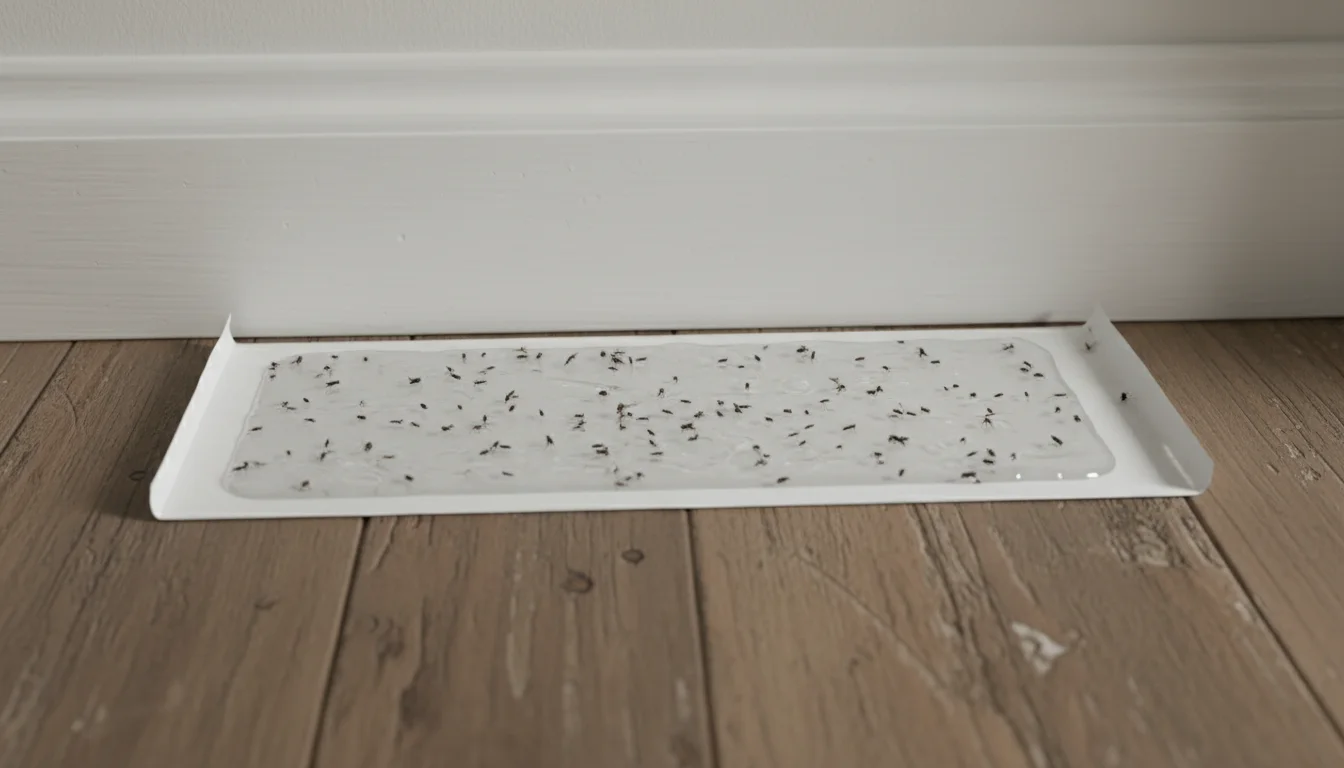
Sticky traps along walls and behind appliances do two things: catch insects and tell you where the problem is concentrated. Small bugs travel edges, not open floor space, so placement matters – a trap in the middle of the room catches almost nothing.
Check traps weekly. Heavy catches in a specific zone (under the kitchen sink, behind the washing machine, in a closet corner) tell you where to focus your sealing and treatment effort. Traps won’t eliminate an infestation on their own, but they’re the best way to track whether your other methods are working.
7. Apply Residual Insecticide to Entry Points
When environmental fixes haven’t fully resolved the problem after four to six weeks, targeted insecticide adds a second line of defense. Apply it at entry points – baseboards, window trim, door frames – not at the insects directly.
Choose a pyrethroid-based residual insecticide labeled for crawling insects. Spray or dust lightly into cracks and along the baseboard-floor gap. The product stays active for weeks and kills insects as they cross those treated zones. Keep pets and children away from treated areas until dry, and follow label rates.
This doesn’t replace sealing. It catches what gets past your physical barriers.
When to Call a Pro
Call a pest control professional if: you’ve done all of the above consistently for four to six weeks and still have active infestation, or you find any sign of bed bugs (a completely different problem that requires professional heat or chemical treatment). Also worth calling if you find wood dust, exit holes, or structural damage that suggests furniture beetles or wood-boring beetles – those need targeted treatment beyond residual spray.
A good pest control inspection also identifies entry points and harborage zones you’ve missed, which is often more useful than any treatment they apply.
FAQ
What are the tiny bugs you can barely see?
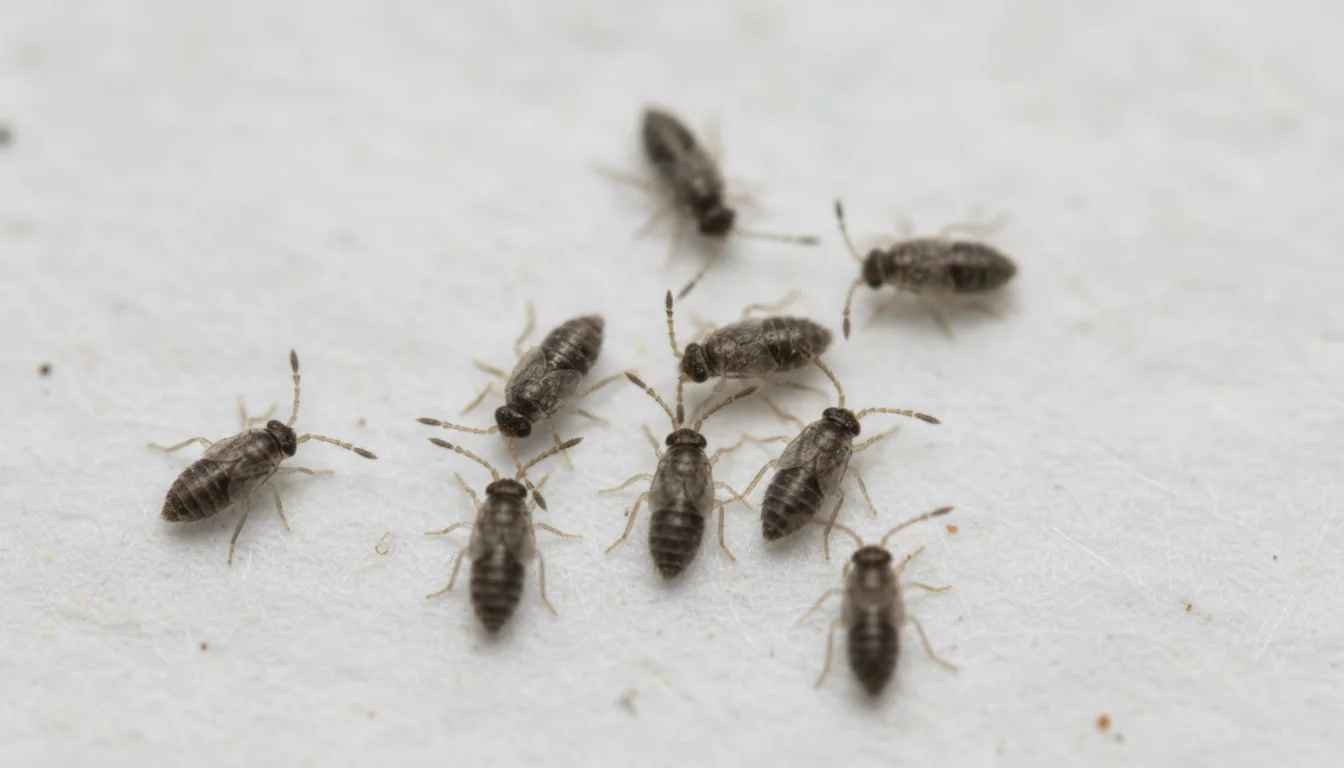
The most common are psocids (book lice – dust-grey, about 1 mm, found in humid areas and old paper or cardboard), springtails (white or grey, jump when disturbed, found near drains and damp areas), silverfish (silver, fast-moving, found in bathrooms and closets), and grain weevils or grain beetles (brown, found specifically in dry food storage). Where you find them points to which one: near food, check your pantry; near drains or bathrooms, reduce humidity; everywhere, start with sealing.
Why am I suddenly finding bugs in my house?
Seasonal pressure is the most common cause – small insects move indoors when temperatures drop in fall, or when outdoor conditions turn dry in summer. A new food source is another trigger: an unsealed bag of rice or flour will attract grain pests within weeks. Moisture changes matter too – a plumbing leak, increased humidity, or wet cardboard all create conditions that didn’t exist before. "Suddenly" usually means the conditions changed, not that the bugs appeared from nowhere.
What attracts tiny bugs indoors?
Moisture, food, and shelter – roughly in that order. For moisture-dependent species (silverfish, springtails, psocids), humidity above 50% is the primary attractor. For food-storage pests, any open grain product will do it. For general infiltrators, gaps in your building envelope let them in and clutter keeps them there. Fix those three things and most small bug problems resolve without ever needing to identify the species.
What is the best home remedy to get rid of bugs?
Clutter removal and sealing are more effective than any spray. Reduce humidity to below 50% if you’re seeing bugs in bathrooms or basements. Store all dry foods in sealed containers. Vacuum weekly along baseboards with a crevice attachment. These environmental fixes are less satisfying than spraying something, but they produce results that last because they remove the reason the bugs are there.