Table of Contents
Knowing how to get rid of toilet stains means knowing what caused them. Hard water deposits and limescale are alkaline, so they need an acid. Organic stains – mold, mildew, bacteria – need an oxidizer. Most people reach for bleach for everything and wonder why the stain won’t budge. Bleach on limescale whitens the bowl but leaves the deposit intact. Vinegar on a mold stain works slower than it should. Identify what you’re dealing with, then pick your weapon.
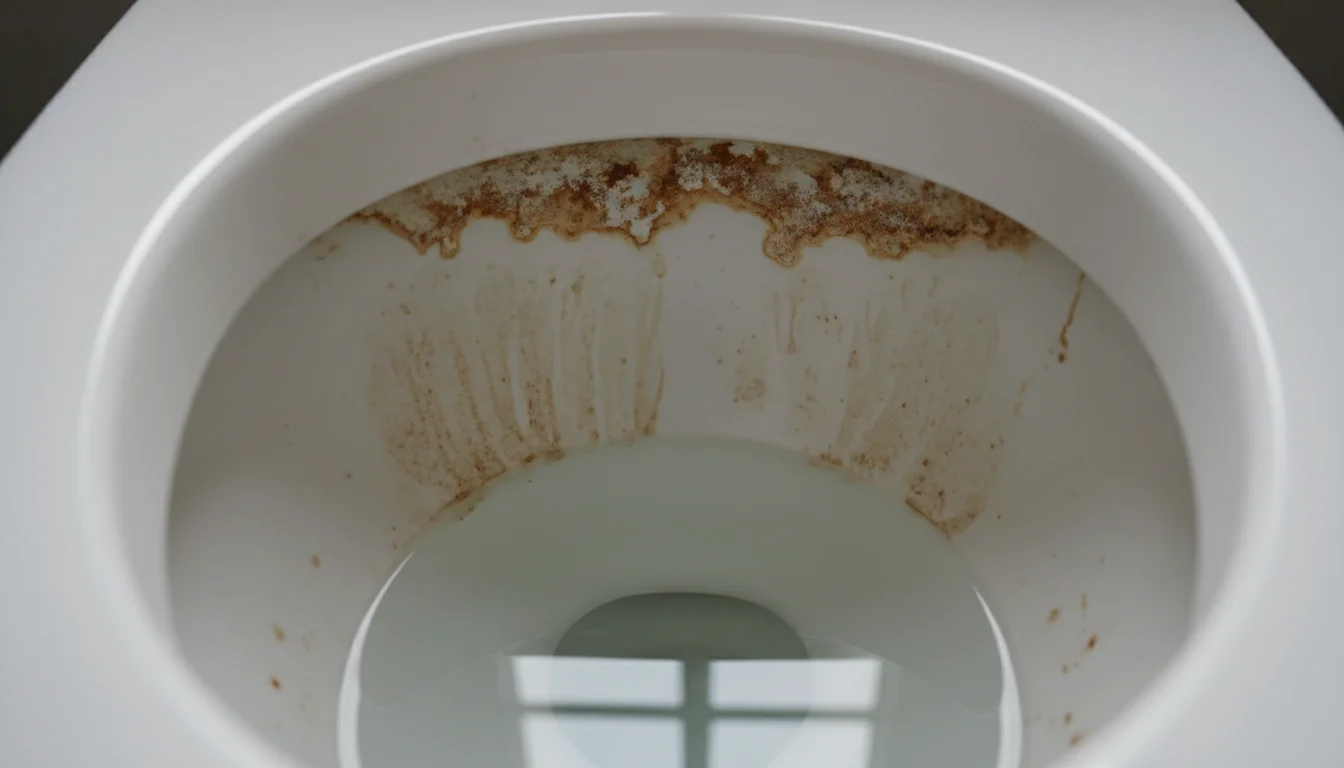
Brown or grey ring at the waterline? Hard water. Pink or orange discoloration? That’s bacteria (Serratia marcescens). Dark blotchy growth under the rim? Mold. General grime and odor with no distinct color? All three of the methods below will work.
1. Vinegar Soak
This is the go-to for the most common toilet problem: hard water stains and limescale. The acetic acid in vinegar reacts with alkaline mineral deposits and dissolves them. No scrubbing required for fresh buildup – just time.
Pour 2 cups (475 ml) of distilled white vinegar directly into the bowl. Let it sit for at least 30 minutes. For the brown ring that’s been there for months, do this overnight – pour it in before bed, scrub in the morning. That’s when you get real results.
Scrub with a toilet brush after soaking, focusing on stained areas and under the rim. For anything that still won’t move, sprinkle baking soda on it after the vinegar soak (not before – more on that below) and scrub while it fizzes.
One tip for stains above the waterline that vinegar keeps draining away from: tear off strips of toilet paper, soak them in vinegar, and press them against the stained area. Leave for an hour or two. The paper holds the acid in contact with the surface long enough to do the work.
5% cleaning vinegar is slightly more concentrated than standard white vinegar and works faster on heavy deposits. Regular white vinegar is fine for maintenance cleaning and moderate buildup.
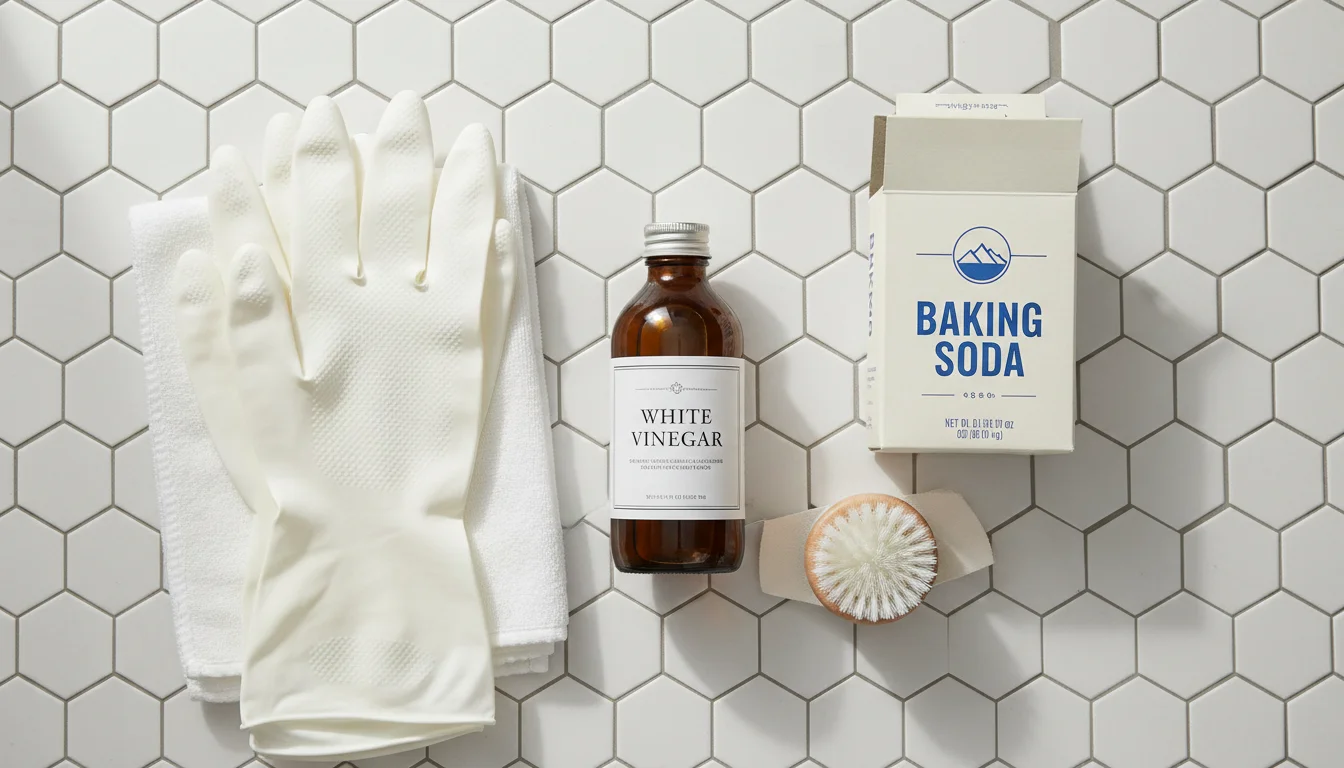
2. Baking Soda
Baking soda on its own is mild – it deodorizes well and has some abrasive cleaning power, but it won’t dissolve mineral deposits or kill mold. Where it earns its place is as a follow-up to vinegar.
The combination works like this: vinegar soaks and dissolves the deposit, then baking soda gives you something to scrub with. Sprinkle 1 cup (240 g) into the bowl after the vinegar has done its job. The fizzing reaction (CO2 bubbles) helps lift whatever the acid loosened, and the gritty texture scrubs the surface without scratching porcelain.
Don’t add baking soda at the same time as vinegar. They neutralize each other before either can do anything useful. Vinegar first, let it soak, then baking soda.
For odor only – no visible stain – baking soda alone works fine. Sprinkle it in, leave for 15 minutes (or overnight), scrub, and flush.
3. Bleach
Bleach is the right tool for organic stains: mold, bacteria, general biological buildup. It’s also the fastest option – you don’t need a long soak.
Pour half a cup (120 ml) of standard household bleach (5.25-6.15% sodium hypochlorite) into the bowl. Scrub the sides and under the rim to coat the surfaces. Close the lid, leave it for 2-5 minutes. Flush.
That’s it. Bleach kills on contact; prolonged soaking doesn’t add much and can degrade the rubber seals inside the tank if bleach gets in there.
Two things that matter: ventilate the bathroom (bleach vapors in an enclosed space are genuinely unpleasant), and never mix bleach with vinegar or any other acid. That reaction produces chlorine gas. If you’ve been using vinegar and want to switch to bleach, flush thoroughly in between.
Bleach whitens and disinfects but doesn’t dissolve mineral deposits. If you’ve got brown limescale plus biological staining, do the vinegar soak first (flush), then follow with bleach.
4. Hydrogen Peroxide
Hydrogen peroxide is the gentler version of bleach – same oxidizing mechanism, lower concentration, safe for septic systems. It’s the better choice for pink or orange discoloration (bacterial staining from Serratia marcescens) and for households on septic.
Pour half a cup (120 ml) of 3% hydrogen peroxide – the standard brown bottle from any pharmacy – into the bowl. Let it sit for 30 minutes. Scrub, flush.
The 30-minute soak matters more here than with bleach because peroxide works more slowly. Don’t use higher concentrations (food grade 35%) – they’re corrosive and unnecessary.
You can follow with baking soda here too: add it after the peroxide soak as an abrasive before scrubbing.
Frequently Asked Questions
How do I get rid of brown buildup in my toilet?
Depends on what it is. Brown deposits at the waterline are almost always hard water/limescale – use vinegar, soak overnight if it’s thick. Brown slimy buildup is biological – bleach or hydrogen peroxide. If it’s a combination, do vinegar first, flush, then bleach.
Does vinegar and baking soda actually work on toilet stains?
Yes, but the order matters: vinegar first, then baking soda after the soak. Adding them at the same time creates a fizzing reaction that looks impressive but neutralizes both cleaners before they can do their job. Let the vinegar soak do the chemical work, then use baking soda as an abrasive scrub.
What’s the strongest toilet stain remover?
For mineral deposits (limescale, hard water): cleaning vinegar or a commercial limescale remover (look for citric acid or hydrochloric acid formulations). For biological stains: bleach. For deposits that won’t respond to either, a pumice stone wetted with water can scrub without scratching porcelain.
How do I clean stains above the waterline?
Standard pouring won’t keep the cleaner in contact with above-waterline stains. Soak toilet paper strips in vinegar and press them against the stained area. Leave for an hour or two. The paper keeps the acid on the surface instead of letting it drain away.