Table of Contents
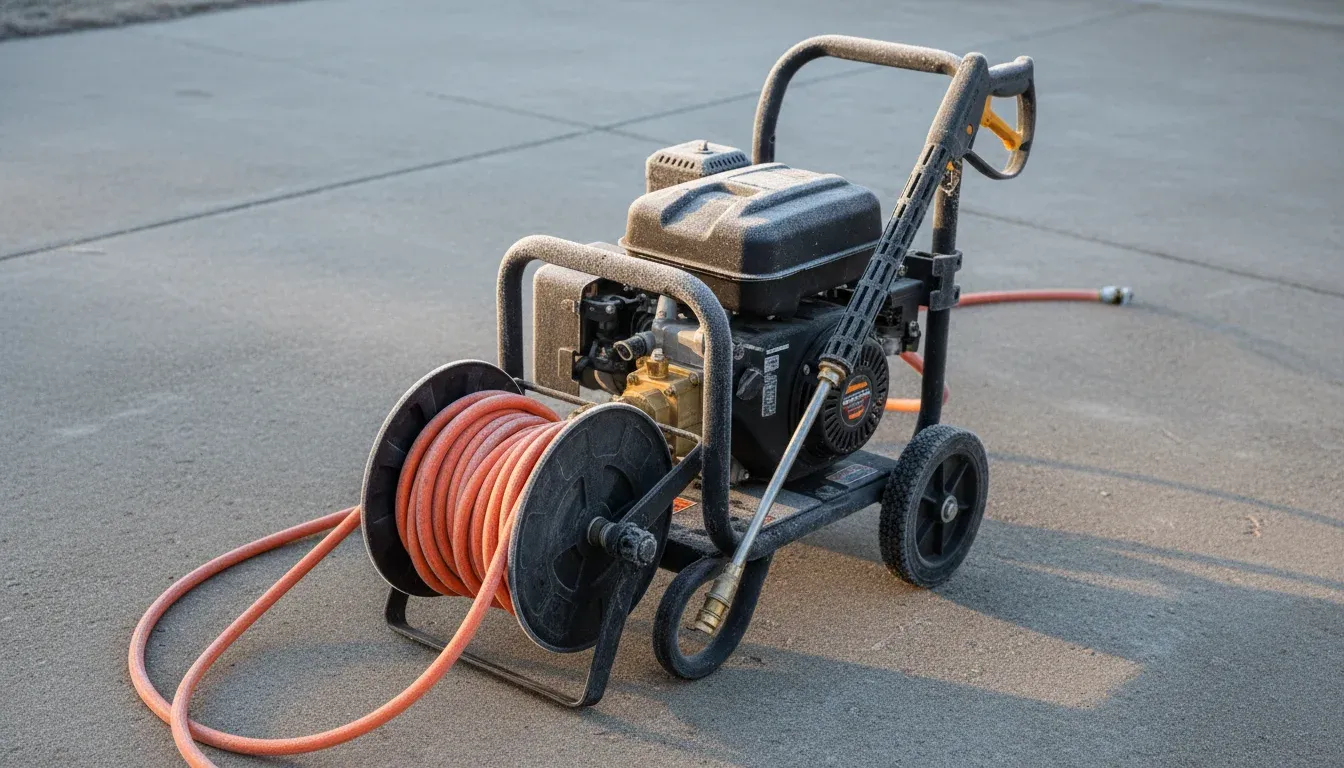
Leave water in your power washer pump over winter and you’ll end up with a cracked pump when that water freezes and expands. Happens every year. Here’s how to actually get all the water out before storage.
1. Drain Hoses and Trigger Gun
Turn off the machine and disconnect it from any water source. Remove the high-pressure hose from both the gun and the pump. Hold each end of the hose up and let gravity do the work. Water will drain out both ends. Do the same with the trigger gun and wand. These parts trap water even when you think they’re empty. Give them a shake for good measure.
2. Squeeze Trigger to Remove Water
With everything disconnected, point the trigger gun downward and squeeze it repeatedly. You’ll be surprised how much water is still sitting in there. Keep squeezing until nothing comes out. This gets water out of the gun, wand, and any remaining pockets in the system. Simple but people skip it and regret it later.
3. Use Compressed Air to Blow Out Water
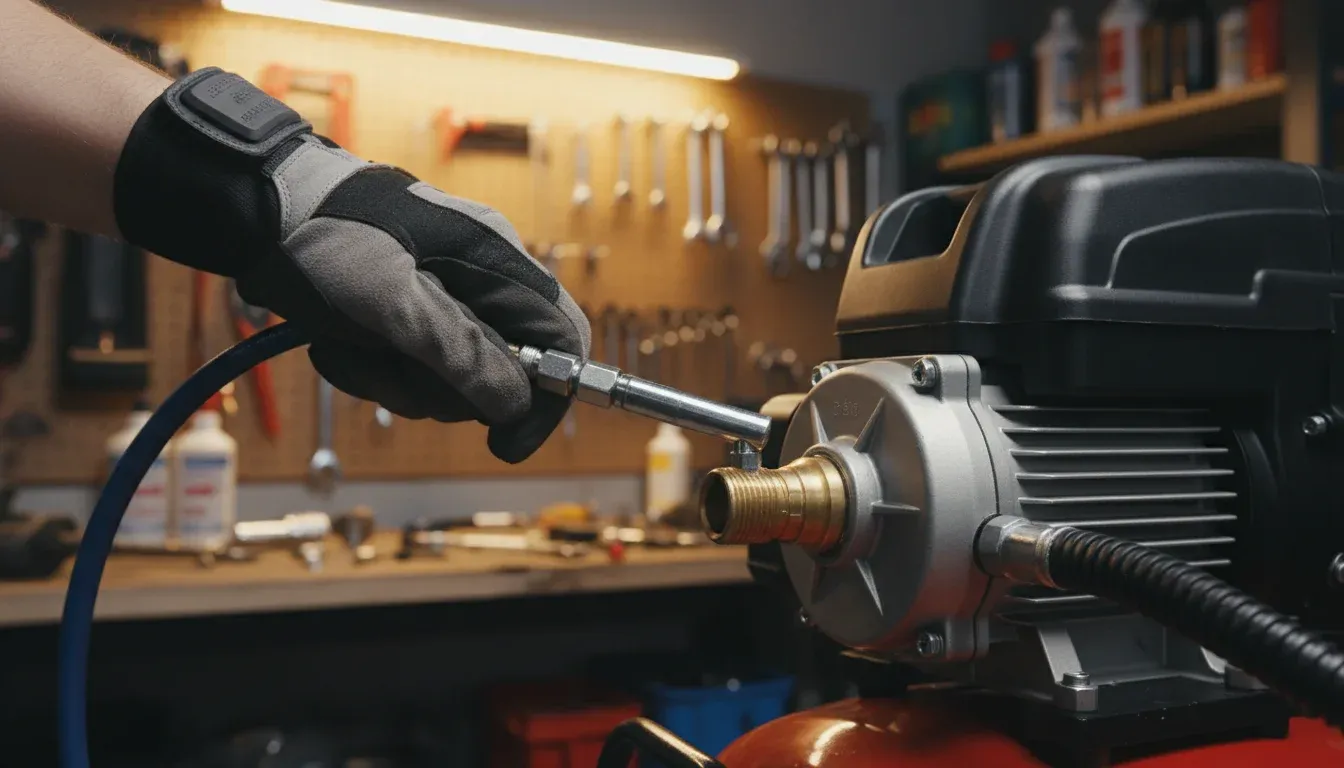
Connect an air compressor to the water inlet where your garden hose normally goes. Use low pressure (around 20-30 PSI, not your compressor’s max). Turn it on and let air blow through the entire system for about 30 seconds. This forces water out of all the internal passages that gravity won’t reach. You’ll hear water sputtering out of the other end. Keep going until you only hear air.
If you don’t have a compressor, you can use canned air, but it takes longer and you’ll need several cans. Worth it to avoid a $200 pump replacement.
4. Flush Pump at Low Pressure
Attach a short garden hose to the inlet and run clean water through the pump for 30 seconds while the machine is off. This clears out any debris or dirty water that could freeze and cause problems. After flushing, disconnect the hose and let the pump drain completely. Tilt the machine at different angles to make sure everything flows out. Old water sitting in the pump all winter will corrode seals even if it doesn’t freeze.
5. Pull Recoil Handle to Empty Pump
For gas-powered washers, pull the recoil starter handle 5-10 times with the engine off. This cycles the pump and pushes out residual water trapped in the cylinders and valves. You should see water dripping from the outlet. Electric models don’t have this option, but you can manually rotate the pump shaft if you can access it. Check your manual for specifics.
6. Pump Saver/Antifreeze Solution
Buy a pump saver product (also called pump antifreeze). These are specifically made for pressure washers. Connect the bottle directly to the water inlet, turn it upside down, and pull the trigger gun until you see the pink antifreeze solution coming out the other side. Takes about 15 seconds. This leaves a protective coating inside the pump that prevents corrosion and handles any water you missed.
RV antifreeze works too if you can’t find pump saver, but make sure it’s non-toxic and rated for potable water systems. Never use automotive antifreeze. That’ll destroy the seals.
7. Store in Temperature-Controlled Location
After draining, move the washer to a garage, basement, or shed that stays above freezing. Even with perfect draining, condensation can form inside the pump during temperature swings. A stable environment prevents this. If you have to store it outside, cover it with a tarp and elevate it off the ground on boards or pallets. Check on it mid-winter to make sure no ice has formed.
Some people store their washers upside down to encourage drainage, but that can cause oil to leak into places it shouldn’t be. Keep it upright unless your manual says otherwise.