Table of Contents
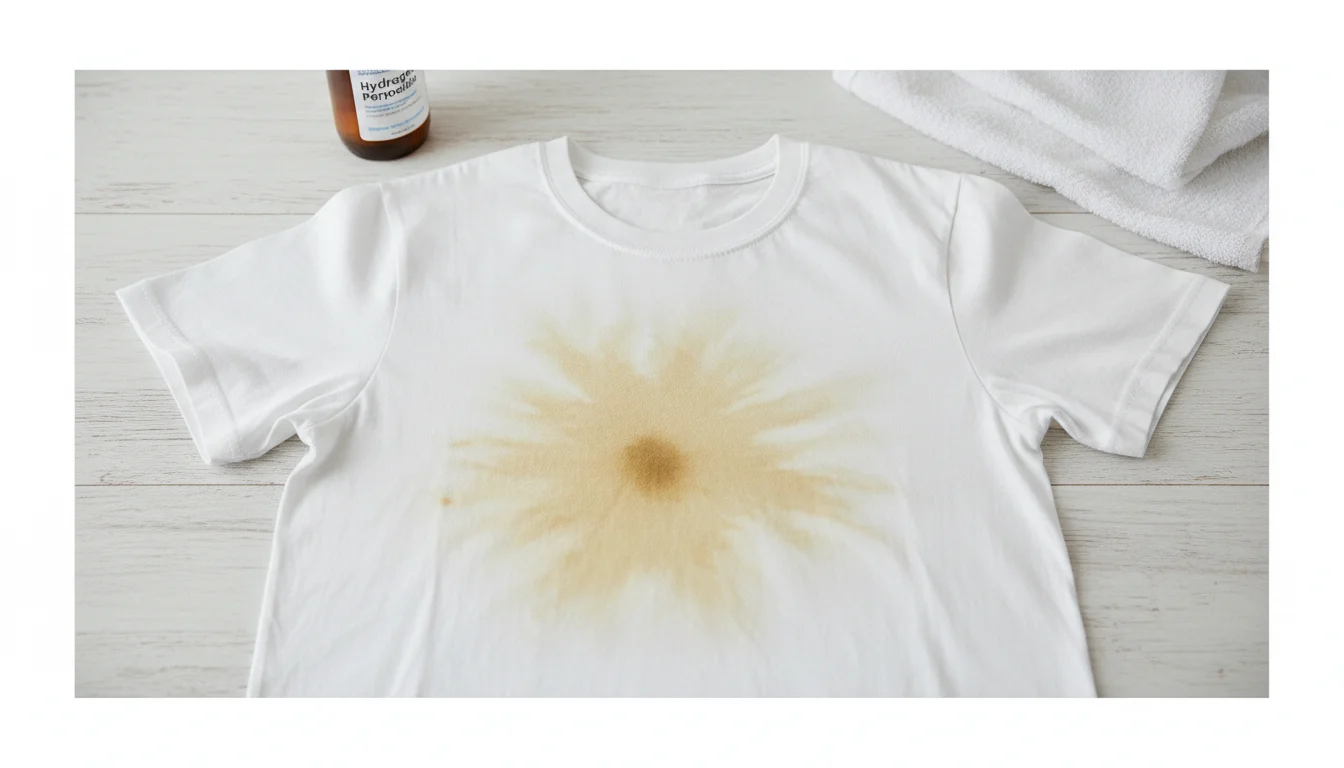
Yellow bleach stains are the opposite of what you expected when you reached for the bleach. You used it on white fabric and somehow made it more yellow. That’s not a stain in the normal sense. Chlorine bleach reacted with proteins, body oils, or iron in your water supply and deposited a yellow compound on the fibers. The good news: unlike actual bleach damage (where dye gets stripped), this yellowing is a chemical residue sitting on the surface. It can usually be reversed.
The same thing happens on countertops, toilet seats, and sinks. Different surface, same chemistry.
What Causes This Problem
Three culprits, usually working together. Too much bleach overwhelms the fabric and leaves chlorine residue behind instead of rinsing clean. Hot water accelerates the reaction between chlorine and the natural oils in fabric (sweat, skin cells, deodorant residue), producing that yellow tinge. And iron in your water supply reacts with bleach to form iron oxide deposits, which are literally rust particles bonded to the fibers.
Synthetic fabrics are especially prone because they don’t absorb and release chlorine the way cotton does. The residue just sits on the surface and yellows over time.
1. Hydrogen Peroxide Soak
The cheapest fix and the one Reddit swears by. Pour enough 3% hydrogen peroxide (the brown bottle from the drugstore) to submerge the yellowed fabric. Soak for 2 to 8 hours. The peroxide oxidizes the chlorine compounds causing the yellow and converts them to colorless byproducts. Wash normally after.
Dollar-store peroxide works identically to the pharmacy stuff. Don’t waste money on the "premium" version.
2. White Vinegar Soak
Best for light yellowing where chlorine residue hasn’t fully set. Rinse the garment first to remove any active bleach (vinegar and bleach together produce toxic chlorine gas). Then pour undiluted white vinegar onto the yellow patches. Let it sit 10 minutes, rinse with cold water. For the whole garment, soak in 1 cup (240 ml) of white vinegar per gallon (3.8 L) of cold water for 30 to 60 minutes.
If two rounds don’t move it, the stain is deeper than vinegar can reach. Escalate.
3. Baking Soda and Hydrogen Peroxide Paste
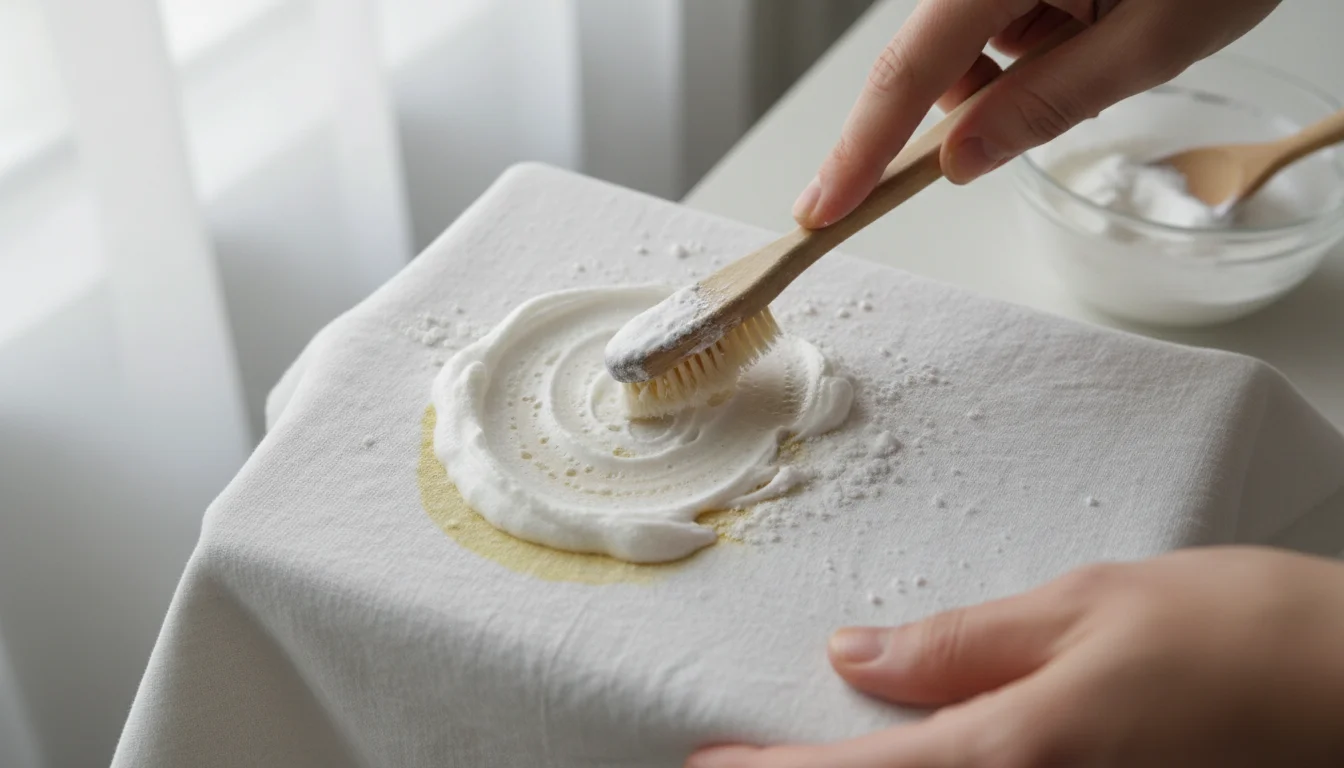
The spot-treatment version for concentrated yellow patches that a full soak won’t shift. Mix 2 tablespoons (30 g) of baking soda with enough hydrogen peroxide to make a thick paste. Spread it on the stain, leave it 30 minutes, scrub lightly with an old toothbrush. Rinse cold, wash normally. The baking soda adds gentle abrasion while the peroxide does the chemistry.
4. Lemon Juice and Sun
Slow but effective on cotton. Squeeze fresh lemon juice onto the stain, sprinkle table salt over it, rub gently with a soft brush. Lay the garment flat in direct sunlight for 2 to 3 hours. Citric acid and UV light work together to bleach the discoloration without the chlorine that caused it. Rinse with cold water after.
Skip this if you need results today or live somewhere overcast.
5. Cream of Tartar Paste
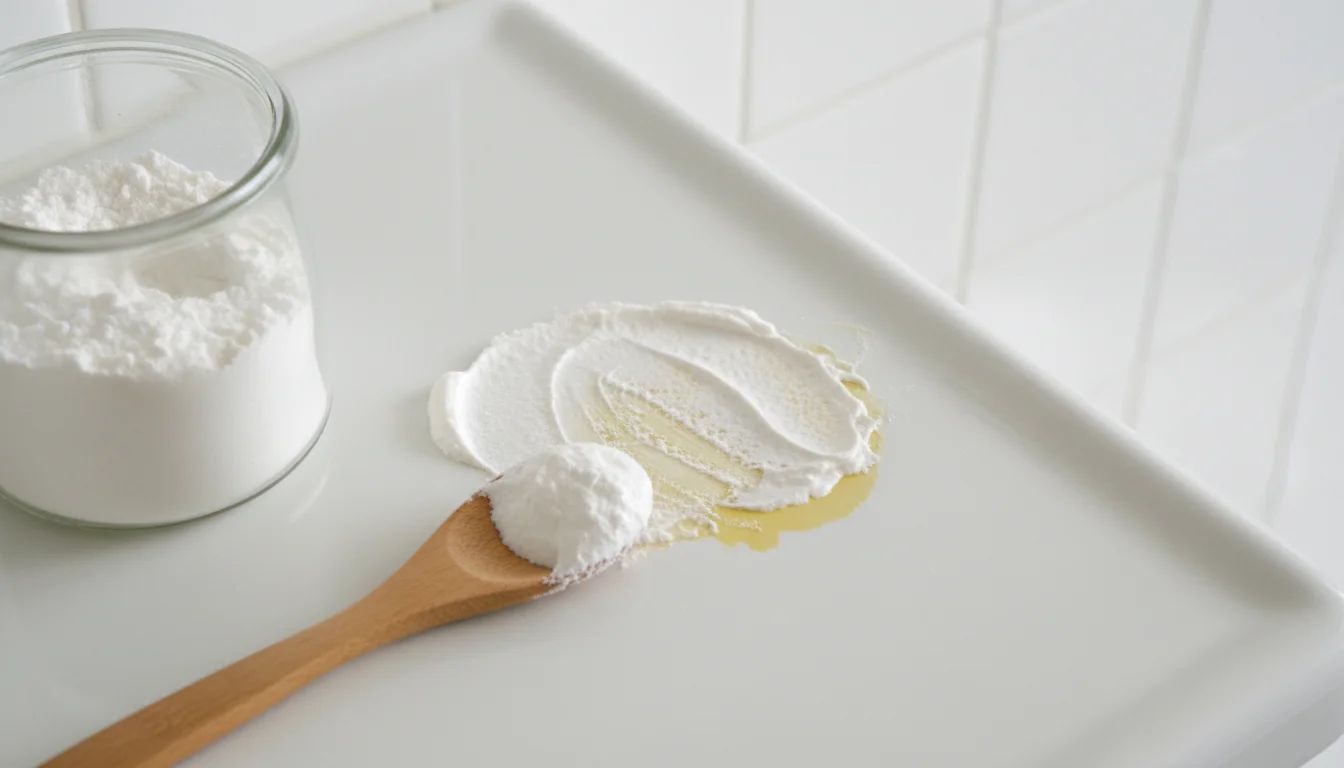
This one works on fabric and hard surfaces, which makes it uniquely useful. Mix 1 tablespoon of cream of tartar with enough water or lemon juice to form a thick paste. Spread it on the yellow stain, wait 30 minutes, scrub gently, rinse thoroughly. The tartaric acid breaks down chlorine residue that causes yellowing.
For countertops and sinks, you can leave the paste on longer (up to 2 hours) covered in plastic wrap. Avoid marble or granite, though. The acid etches natural stone.
6. Oxygen-Based Bleach Soak
Heavy duty. For yellowing that peroxide alone didn’t crack. OxiClean (and similar products) is sodium percarbonate, which releases hydrogen peroxide when dissolved in water. It’s a more concentrated version of method 1. Dissolve per package directions in warm water and soak for 1 to 4 hours, then wash normally.
This is where you go after hydrogen peroxide fails. Not before.
7. Sodium Thiosulfate Dechlorination
The nuclear option for chlorine removal. Sodium thiosulfate is a chemical dechlorinating agent used in darkrooms and aquarium water treatment. It doesn’t just mask the chlorine. It converts it to harmless sulfate compounds.
Dissolve 1 to 2 teaspoons in a gallon (3.8 L) of water. Soak fabric for 15 to 20 minutes, then wash normally. For hard surfaces, wipe down with the solution, leave 3 to 5 minutes, rinse. Find it at aquarium supply stores or online. Costs almost nothing.
8. Bluing Agent in the Rinse Cycle
Not a fix. A visual trick. Bluing deposits a microscopic amount of blue dye that optically cancels out yellow tones. Add a capful to the rinse cycle (follow the bottle’s dilution instructions exactly). Don’t pour it directly on the fabric or you’ll swap yellow for blue.
The yellow is still there. It just doesn’t look yellow anymore. For synthetics where actual chemical reversal isn’t possible, this is a legitimate solution. Mrs. Stewart’s Bluing is the standard brand.
Prevention
Dilute bleach properly. Always. The bottle says 1/2 cup (120 ml) per standard load, and that’s the maximum. Use cold water instead of hot when bleaching (hot water accelerates the yellowing reaction). Rinse garments an extra cycle after a bleach wash. And if your water has high iron content, consider switching to oxygen-based bleach as your default. It whitens without the chlorine chemistry that causes yellowing in the first place.
Frequently Asked Questions
Are yellow bleach stains permanent?
Clorox’s official line is that yellowing from misuse is "unfortunately permanent." That’s overstated. Light to moderate yellowing responds well to hydrogen peroxide, vinegar, or sodium thiosulfate treatment. Severe yellowing on synthetic fibers can be permanent because the chlorine bonds differently to synthetic polymers. Try methods 1 through 7 before giving up. Bluing (method 8) handles whatever’s left.
Why does bleach turn white clothes yellow?
Chlorine bleach reacts with proteins from sweat, skin cells, and deodorant residue. It also reacts with iron in tap water. Both reactions produce yellow compounds that deposit on fabric fibers. Too much bleach, hot water, or insufficient rinsing all increase the risk.
Can you reverse yellow bleach stains?
Most of the time, yes. The yellowing is a surface residue, not structural fiber damage. Hydrogen peroxide, sodium thiosulfate, and oxygen-based bleach all break down the compounds causing the color. The harder cases are old stains that have been heat-set in a dryer, or stains on synthetic fibers where chemical bonds are stronger.