Table of Contents
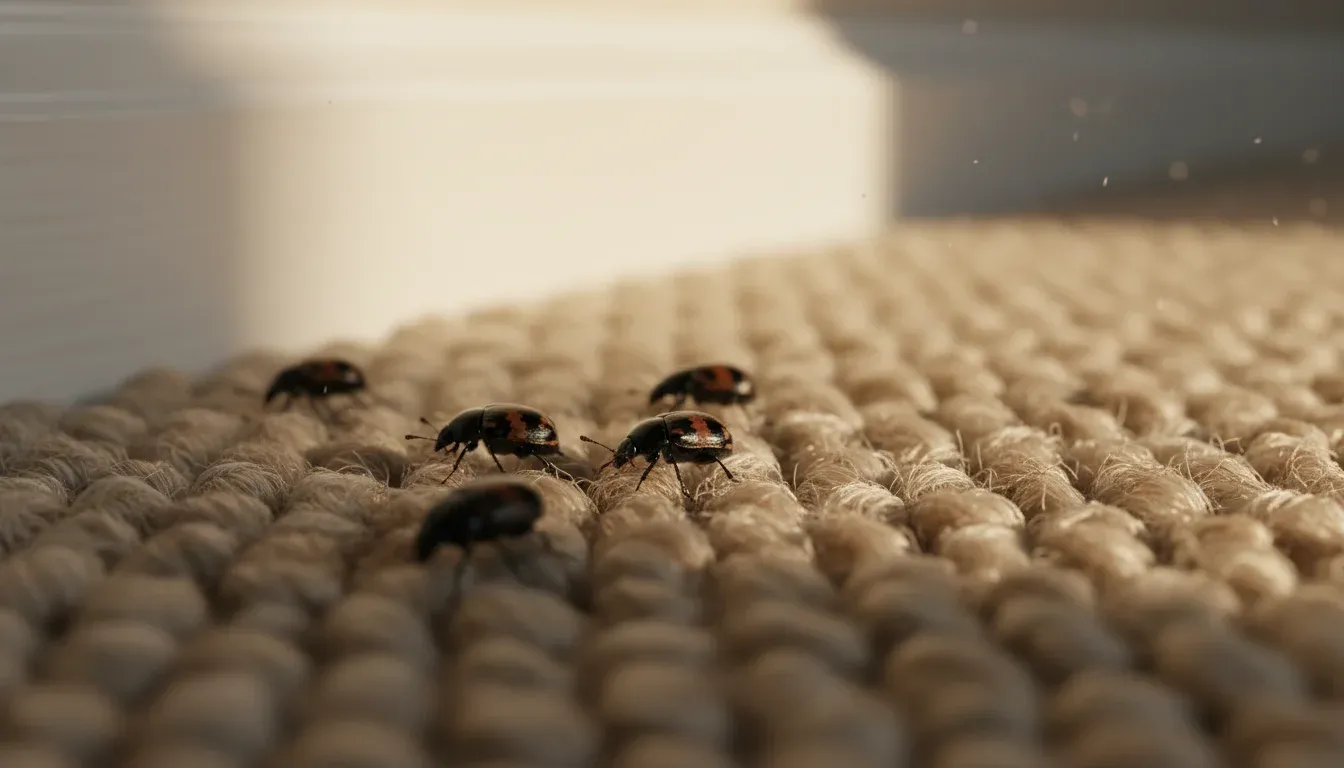
Carpet beetles are deceptive. The adults fly in through open windows, hitch a ride on cut flowers, or migrate from a bird nest under the eaves. They lay eggs and leave. It’s the larvae that do the actual destruction, eating through wool, silk, fur, feathers, and anything else with keratin. They’re small enough (about the size of a grain of rice) that you typically find the damage before you find them.
Most homes have some carpet beetles. It only becomes a problem when they find a reliable food source and the population builds. These ten methods address both the active infestation and the hidden sources that keep it coming back.
1. Vacuum Everything
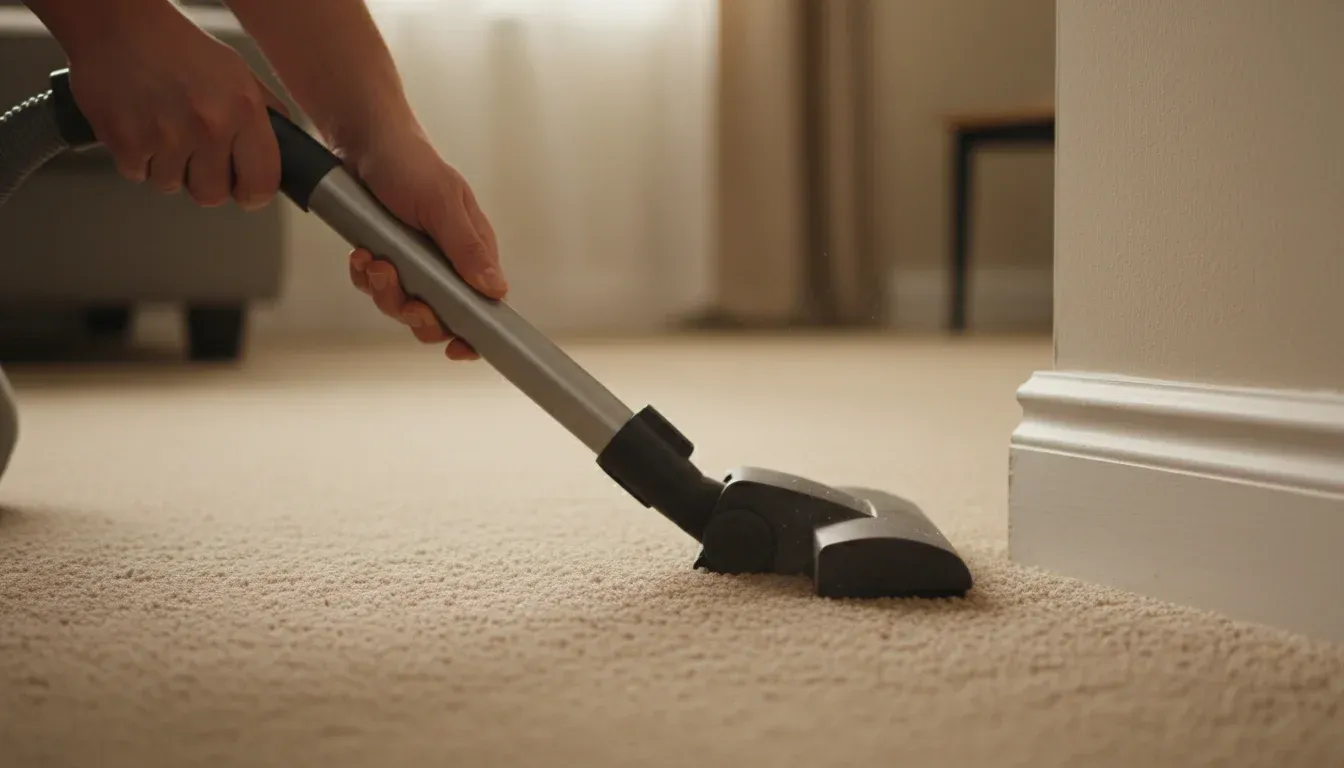
Start here. Vacuuming physically removes adults, larvae, eggs, and the hair and lint debris that larvae feed on. No products, no prep, immediate results.
Use the crevice attachment and work methodically: baseboards, carpet edges, under furniture, inside closets, along curtain hems, around any stored natural-fiber items. Larvae congregate where dust and pet hair collect, not out in the open.
Seal the bag or empty the canister into a plastic bag and take it straight outside. A canister left sitting in your home is a beetle nursery. Vacuum daily during an active infestation. Weekly once the worst is past.
2. Wash or Dry Clean Infested Fabrics
Heat kills carpet beetles at every life stage. Wash anything that can handle it at 120°F (49°C) or hotter and dry on high for at least 30 minutes. Clothing, bedding, curtains, throw blankets – anything near the infestation.
Delicate items that can’t be washed go to the dry cleaner. For things that can’t be washed or dry cleaned (antique textiles, certain wool pieces), seal them in plastic bags and freeze for two weeks. Cold kills larvae and eggs just as effectively as heat.
Inspect everything before it goes back. One untreated item next to a treated one and you’re starting over.
3. Diatomaceous Earth
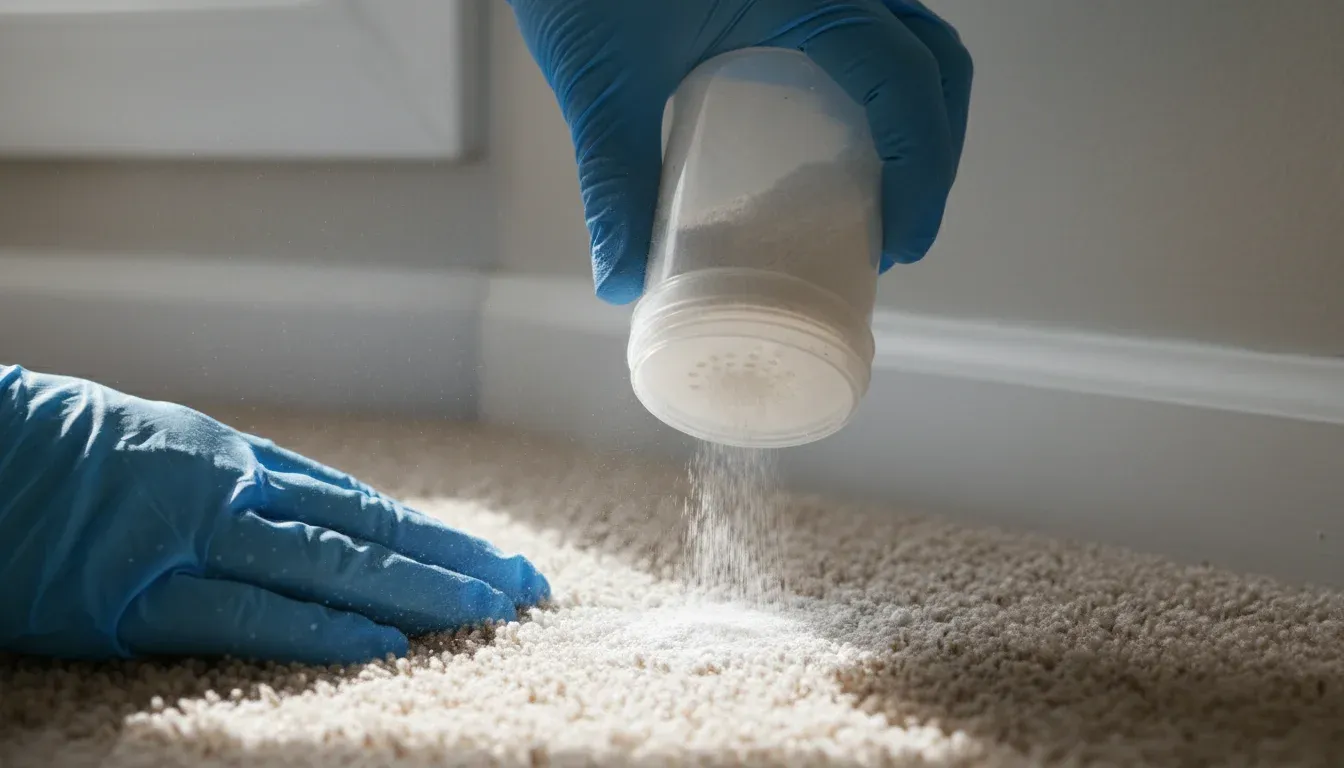
Food-grade DE is a fine powder that shreds the waxy coating on beetle exoskeletons, causing dehydration and death over 48-72 hours. Sprinkle a thin layer along baseboards, closet corners, under furniture, and carpet edges where you’ve seen activity. Wear a dust mask when applying – not toxic, but the fine particles irritate lungs.
Leave it for a few days, vacuum, reapply weekly while the infestation is active. DE only kills beetles that physically crawl through it and it works slowly. Treat it as a persistent perimeter layer alongside the faster methods, not a standalone fix.
4. Clean Air Vents and Ducts
This is the one most people skip, and it’s often why the problem keeps coming back. Carpet beetles breed in the dust, hair, and debris that builds up inside HVAC ductwork. Every time the system runs, it distributes larvae and eggs through the house.
Remove vent covers and vacuum inside ducts as far as the hose reaches. Change or clean air filters monthly while active. For severe or persistent cases, professional duct cleaning is worth the cost – beetles can live deep in ductwork where no consumer vacuum reaches.
5. Remove Bird and Wasp Nests
Treated the whole house and they keep coming back? Look outside. Carpet beetles regularly originate from bird nests, wasp nests, and rodent nests in attics, eaves, crawl spaces, and sheds. Those nests are packed with feathers, fur, dead insects – exactly what beetle larvae eat.
Clear old nests from eaves and attic spaces. Seal the entry points: gaps in siding, unsealed chimney openings, damaged vent covers. If there’s an active wasp or bird problem, deal with that first. The beetles are a downstream symptom.
6. Use Pheromone Traps
Pheromone traps attract and capture adult male beetles, disrupting the breeding cycle. They won’t eliminate an established infestation on their own. What they’re good for is monitoring.
Place them in closets, storage areas, and anywhere you’ve seen activity. Replace every 1-3 months or when full. The trap count tells you if your treatments are working: fewer beetles each week means progress. Flat or climbing numbers mean something’s still breeding.
7. Seal Food Sources in Containers
Carpet beetles eat more than fiber. Dried foods, spices, pet food, and dead insects at the back of a cupboard are all fair game.
Transfer pantry staples to airtight glass, metal, or thick plastic containers. Throw out anything old and forgotten. Clean shelves and check for the telltale signs: holes in packaging, webbing, beetles on shelves. A clean pantry removes one of their two main food sources.
8. Store Clothing Properly
Store off-season clothing in airtight containers or vacuum-sealed bags. Before anything goes in, make sure it’s clean – body oils, perspiration, and food stains attract beetles. Cedar blocks repel them but won’t kill an existing infestation. Important distinction.
Mothballs work, but they’re toxic and smell awful. Only use them in sealed containers away from living spaces. Check stored items every few months – a quick visual inspection catches problems before they spread.
9. Essential Oil Repellents
Cedar oil, peppermint oil, and eucalyptus oil all repel carpet beetles. Mix 10-15 drops per 8 fl oz (250 ml) of water with a small squirt of soap so the oil actually disperses, and spray around closets, storage areas, drawers, and doorways.
This won’t kill an active infestation. What it does is make treated areas less attractive to beetles looking for somewhere to settle. Reapply every few weeks as the scent fades. Test on a hidden spot first if spraying near fabric – some oils stain.
10. Call Pest Control
If you’ve worked through the methods above and the infestation persists, professionals can treat wall voids, deep ductwork, and structural cavities you can’t reach. They also identify harborage sources you may have missed entirely.
For anyone with valuable natural-fiber collections (wool rugs, fur, antiques), calling before the damage gets worse is the smart move.
Prevention
Your primary prevention tools are sealing food sources (method 7) and proper clothing storage (method 8). Beyond those: inspect stored items every few months, keep entry points around vents and eaves sealed, and address any wildlife nesting near the house before beetles use it as a staging ground.